

Focus is a trainable cognitive skill, not a fixed trait you either have or lack. The most effective ways to support focus daily combine quality sleep, single-tasking, mindfulness, and proactive distraction control into consistent routines that build measurable concentration gains within weeks. Recent research from Stanford Medicine and Harvard Health confirms that these habits work by strengthening the brain’s attentional networks over time. Whether you are a student, a professional, or someone managing attention challenges, the right daily practices make a real difference.
1. Ways to support focus daily start with quality sleep
Sleep is the single most impactful lever for cognitive function, with 7–9 hours per night recommended for optimal focus. That number matters because sleep deprivation directly impairs working memory and attentional stability, the two systems you rely on most during demanding tasks. You cannot compensate for poor sleep with caffeine or willpower alone.
A consistent sleep schedule strengthens your brain’s ability to sustain attention throughout the day. Going to bed and waking at the same time each day regulates your circadian rhythm, which governs alertness cycles. Irregular sleep patterns disrupt this rhythm and leave you mentally scattered even after a full night’s rest.
Good sleep hygiene practices include:
- Keeping your bedroom cool and dark
- Avoiding screens for at least 30 minutes before bed
- Limiting alcohol in the evening, which fragments sleep architecture
- Avoiding large meals within two hours of bedtime
Pro Tip: Set a consistent wake time even on weekends. Your brain’s attentional systems calibrate to a rhythm, and weekend “sleep ins” can shift that rhythm by two or more hours, creating a Monday focus deficit.
2. Single-tasking and managing distractions

Single-tasking prevents cognitive bottlenecks and improves short-term memory storage in ways that multitasking never can. Every time you switch between tasks, your brain pays a switching cost. That cost accumulates across a workday and leaves you mentally depleted by early afternoon.
Proactive distraction control is the practical side of single-tasking. Willpower alone is not enough to resist pervasive interruptions. Physical removal of temptations frees cognitive resources far more reliably than trying to ignore them.
Concrete steps to reduce distractions include:
- Removing your smartphone from your workspace entirely (its mere presence reduces cognitive capacity even when it is off and face down)
- Turning off all non-urgent notifications during focus blocks
- Using website blockers during deep work sessions
- Closing unnecessary browser tabs before starting a task
Pro Tip: Before each work session, write down the one task you are doing and place it where you can see it. This physical cue anchors your attention and reduces the urge to drift.
3. Daily mindfulness and focused breathing
Ten minutes of daily mindfulness practice yields measurable focus improvements within two weeks. That is a remarkably short time for a meaningful cognitive shift. The key is consistency, not duration.
A simple daily mindfulness routine that works:
- Two minutes of focused breathing. Inhale for four counts, hold for four, exhale for four. This activates the parasympathetic nervous system and quiets mental noise.
- Three minutes of guided meditation. Use a free audio guide or a meditation app focused on attention training.
- Set one clear daily intention. Name the single most important thing you will accomplish. This primes your attention toward a specific target.
- One minute of body scan. Notice physical tension and release it. Tension in the shoulders and jaw competes with cognitive focus.
- Three minutes of open awareness. Sit quietly and observe thoughts without following them. This trains the brain’s ability to return attention after distraction.
Mindfulness works by strengthening the prefrontal cortex’s control over the default mode network, the part of the brain responsible for mind-wandering. You can build this routine into your morning before checking email or messages.
4. Caffeine timing and natural energy management
Delaying caffeine intake by 90–120 minutes after waking maximizes its sustained focus benefits. The reason is cortisol. Your body naturally produces a cortisol surge in the first hour after waking, which provides alertness on its own. Drinking coffee during that window blunts the cortisol effect and accelerates caffeine tolerance. Waiting lets cortisol do its job first, then caffeine extends the alert window.
Avoid caffeine after early afternoon. Caffeine has a half-life of roughly five to six hours in most people, meaning an afternoon coffee can still be active in your system at bedtime and degrade sleep quality.
Additional energy management habits:
- Take a 10-minute walk after lunch to moderate blood sugar spikes and support creative problem-solving
- Drink water consistently throughout the day, since even mild dehydration impairs concentration
- Eat a protein-rich lunch rather than a high-carbohydrate meal to avoid the 2 PM energy crash
Pro Tip: Treat your post-lunch walk as a non-negotiable appointment. Ten minutes of light movement after eating is one of the highest-return focus habits you can build, and it costs nothing.
5. Working in 90-minute focus blocks
Working in 90-minute blocks aligned with ultradian rhythms optimizes attentional stamina. Ultradian rhythms are natural biological cycles that repeat roughly every 90 minutes throughout the day. Your brain’s capacity for deep focus peaks within these windows and drops sharply at the end of each cycle.
Protecting a 90-minute block means treating it like an important appointment. You would not interrupt a meeting with your most important client to check social media. Apply the same standard to your focus blocks.
After each 90-minute session, take a genuine break of 10–20 minutes. Scheduled breaks with hydration and stretching sustain daytime cognitive performance across multiple work cycles. This is not laziness. It is how the brain recharges for the next block.
6. Cognitive offloading and habit stacking
Cognitive offloading means writing down distracting thoughts so your working memory does not have to hold them. When a random idea or worry surfaces during a focus block, capture it in a notebook and return to your task. This simple act quiets mental noise without losing the thought.
Habit stacking embeds focus-promoting behaviors into existing routines. The structure is: after I do X, I will do Y. For example, “After I pour my morning coffee, I will write my one daily intention.” No willpower required. The existing habit triggers the new one automatically.
Implementation intentions follow a similar logic: “If X happens, then I will do Y.” Predeciding your response to a distraction removes the decision in the moment and reduces cognitive fatigue. For example, “If my phone buzzes during a focus block, I will place it face down and return to my task.”
| Method | How it works | Best used for |
|---|---|---|
| 90-minute work block | Aligns with ultradian rhythms to maximize attentional stamina | Deep, single-task work sessions |
| Cognitive offloading | Captures distracting thoughts in writing to free working memory | Managing mental clutter mid-session |
| Habit stacking | Links new focus habits to existing routines for automatic execution | Building consistent daily practices |
| Implementation intentions | Pre-plans distraction responses to reduce in-the-moment decisions | Overcoming specific recurring interruptions |
7. Building attention muscles through immersive activities
Building attention muscles through immersive activities such as music, sports, or reading naturally improves sustained focus over time. This is one of the most underrated daily focus techniques available. When you practice sustained attention in low-stakes contexts, you transfer that capacity to high-stakes work.
Reading a physical book for 20–30 minutes daily is one of the most direct ways to train sustained attention. Unlike digital reading, which encourages skimming, a book demands linear, uninterrupted focus. That demand is exactly the training stimulus your attention system needs.
Playing a musical instrument, practicing a sport, or even completing a puzzle engages the same attentional networks you use for deep work. The brain does not distinguish between these contexts. Attention trained in one area transfers broadly.
8. Visualization and flow state techniques
Focus is a trainable skill, and techniques like visualization can help you enter flow states that enhance task immersion. A flow state is a condition of deep, effortless concentration where performance peaks and time distortion occurs. You can prime this state deliberately.
Before a demanding task, spend two minutes visualizing yourself working through it calmly and effectively. Picture the environment, your posture, and the feeling of clear thinking. This mental rehearsal reduces anxiety and primes the brain’s attentional networks for the work ahead.
Pair visualization with a consistent pre-work ritual. Brew the same tea, sit in the same chair, or put on the same background music. Rituals act as environmental cues that signal to your brain: it is time to focus. Over weeks, the ritual alone begins to trigger a focused state.
9. Nutrition and cognitive support habits
What you eat directly affects how well you concentrate. The brain consumes roughly 20% of the body’s total energy despite representing only about 2% of body weight. Feeding it poorly shows up immediately as brain fog, slow processing, and poor attention.
Prioritize whole foods, omega-3 fatty acids (found in fatty fish, walnuts, and flaxseed), and leafy greens rich in folate. Avoid ultra-processed foods and refined sugars, which cause blood sugar spikes and crashes that directly impair concentration. Consistent meal timing also stabilizes energy and reduces the mental friction of hunger during focus blocks.
Curcumin, the active compound in turmeric, has attracted significant research attention for its role in supporting a healthy inflammatory response in the brain. SuperNatural Supplements’ patented BioSoluble Curcumin process delivers significantly enhanced bioavailability compared to standard curcumin, meaning more of the active compound actually reaches the bloodstream. For those looking to complement their daily brain health habits, this distinction matters.
Key takeaways
Consistent daily habits, not single interventions, are the most reliable way to build and sustain strong concentration over time.
| Point | Details |
|---|---|
| Sleep is the foundation | Getting 7–9 hours nightly protects working memory and attentional stability. |
| Single-tasking beats multitasking | Focusing on one task at a time prevents cognitive switching costs and mental fatigue. |
| Mindfulness works fast | Ten minutes of daily practice produces measurable focus gains within two weeks. |
| Caffeine timing matters | Delaying coffee 90–120 minutes after waking aligns it with cortisol rhythms for better effect. |
| Environment shapes attention | Removing your phone from the workspace frees cognitive capacity without any extra effort. |
What we have learned after years of watching people try to focus
The most common mistake people make is trying to fix focus with more discipline. They set aggressive schedules, commit to five new habits at once, and burn out within a week. Focus does not respond to force. It responds to consistency and environment design.
We have seen the same pattern repeatedly. The people who improve their concentration most reliably are not the ones with the most willpower. They are the ones who make distraction harder and focus easier. They move the phone. They block the websites. They protect the 90-minute block. They build one habit at a time until it is automatic, then add the next.
The research from Stanford Medicine and Harvard Health reinforces what we observe in practice: focus as a trainable skill means you get better at it through deliberate practice, not through trying harder in the moment. Start with sleep and one distraction control habit. Add mindfulness in week two. Add the 90-minute work block in week three. Track what changes. Adjust what does not work.
Proactive environment design is the lever most people underestimate. Your workspace either supports focus or undermines it. There is no neutral. Audit your environment before you audit your habits.
— SuperNatural
How SuperNatural Supplements fits into your focus routine
Lifestyle habits are the foundation of daily concentration. Targeted nutritional support can complement that foundation when your diet leaves gaps.
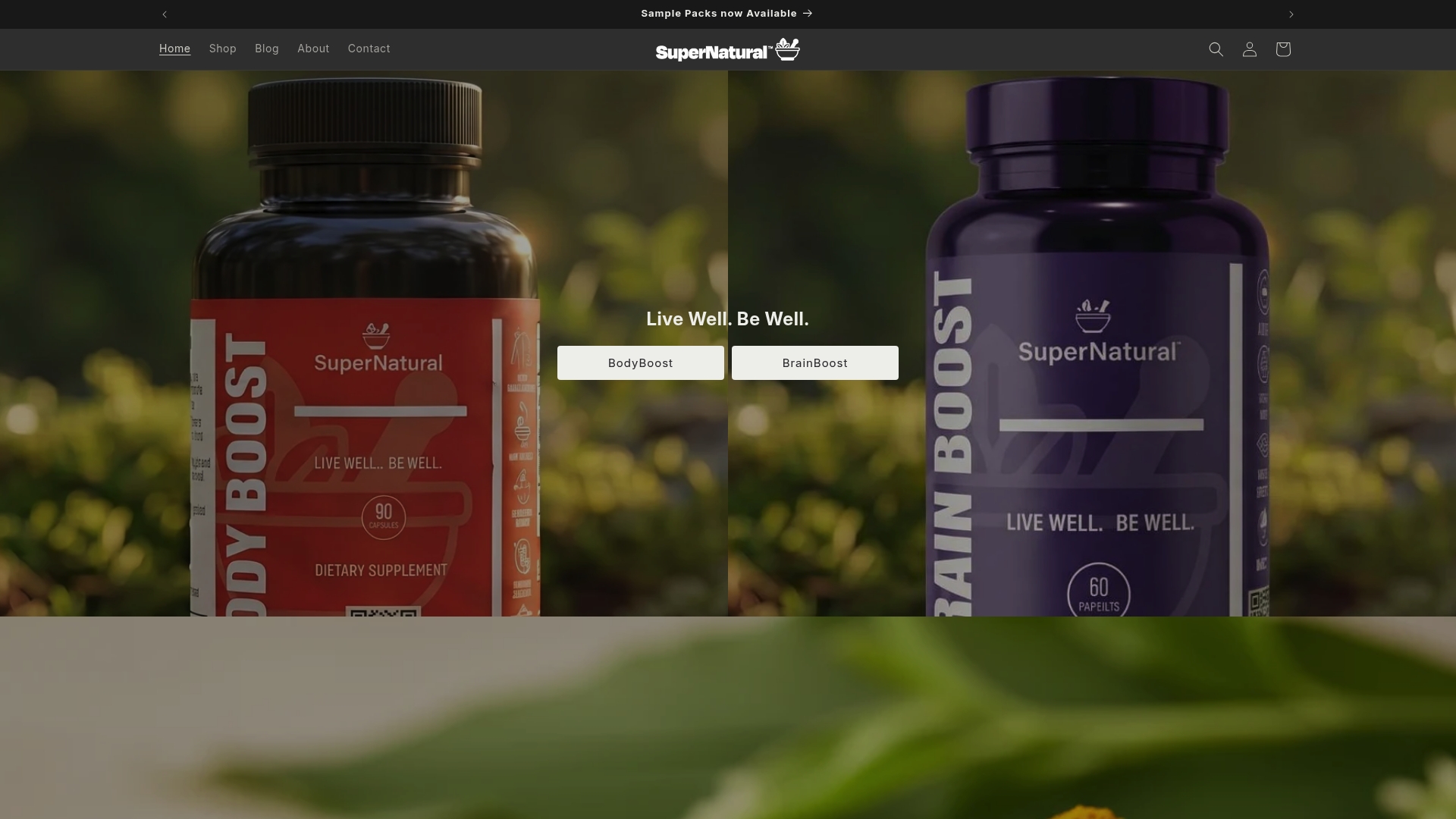
SuperNatural Supplements developed BrainBoost specifically for advanced cognitive support, using the patented BioSoluble Curcumin process that delivers significantly higher bioavailability than standard curcumin supplements. Think of standard curcumin like sniffing a strong cup of coffee. BioSoluble Curcumin is actually drinking it. The difference in what your body absorbs is substantial. For those who want to understand the full range of cognitive support options available, SuperNatural Supplements provides clear, research-grounded information to help you make an informed choice. Always check with your doctor before adding any supplement to your routine.
FAQ
What are the most effective ways to support focus daily?
The most effective daily focus techniques combine 7–9 hours of sleep, single-tasking, 10 minutes of mindfulness, and proactive distraction control such as removing your phone from the workspace. Consistency across these habits produces measurable concentration gains within two weeks.
How long does it take to improve concentration daily?
Measurable focus improvements from daily mindfulness practice appear within two weeks. Sleep and distraction control habits produce noticeable effects even faster, often within days of consistent application.
Does caffeine help with daily focus?
Caffeine supports focus when timed correctly. Delaying intake by 90–120 minutes after waking aligns it with your body’s natural cortisol rhythm and extends the alert window more effectively than drinking it immediately upon waking.
What habits for better focus are easiest to start?
Removing your phone from your workspace and setting a consistent wake time are the two lowest-effort, highest-impact habits for better focus. Both require no extra time and produce immediate cognitive benefits.
Can supplements support daily concentration?
Nutritional supplements can complement lifestyle habits when diet leaves gaps. Curcumin-based supplements with high bioavailability, such as those using SuperNatural Supplements’ BioSoluble Curcumin process, support a healthy inflammatory response in the brain. Always consult a physician before starting any supplement.
This article is provided for educational and informational purposes only and does not constitute providing medical advice or professional services. Always consult with a qualified and licensed physician or other medical care provider. Statements have not been evaluated by the Food & Drug Administration. This product is not intended to diagnose, treat, cure, or prevent any disease.