

Absorption science is the study of how molecules penetrate biological membranes and physical materials, a process that determines how much of any nutrient or supplement your body actually uses. This field, formally known as absorption and transport science, sits at the intersection of biochemistry, pharmacology, and nutrition research. Understanding its core principles, from passive diffusion to advanced spectroscopic measurement, is what separates effective supplement formulation from guesswork. For students, researchers, and health enthusiasts alike, mastering these absorption mechanisms is the foundation for evaluating any health product’s real-world value.
What are the key mechanisms of absorption science?
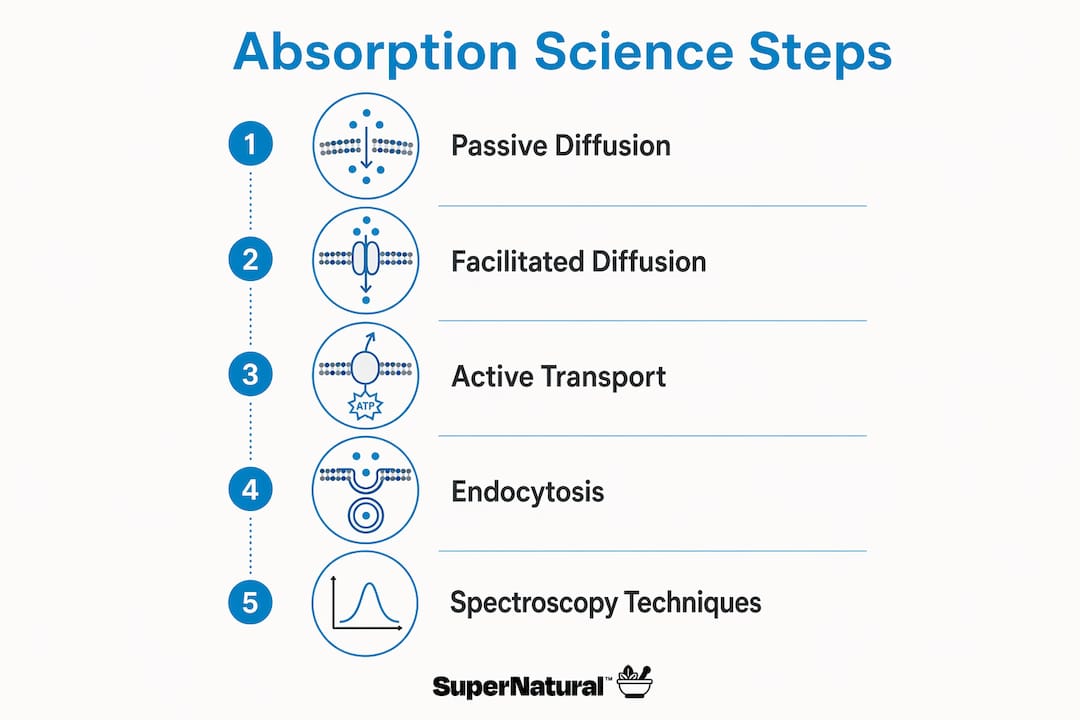
Absorption science describes four primary mechanisms that govern how substances cross biological membranes. Each mechanism operates under different conditions and applies to different types of molecules. Knowing which pathway a nutrient uses tells you exactly how to optimize its delivery.
-
Passive diffusion moves molecules from high concentration to low concentration without energy input. Small, fat-soluble compounds like curcumin and vitamins D and K cross cell membranes this way. The rate depends entirely on the concentration gradient and the molecule’s lipid solubility.
-
Facilitated diffusion also requires no energy, but it uses protein carriers embedded in the membrane. Glucose and many amino acids enter intestinal cells through this pathway. Without the right carrier proteins, even abundant nutrients fail to cross the membrane efficiently.
-
Active transport uses cellular energy (ATP) to move molecules against their concentration gradient. Vitamin C, calcium, and iron all rely on active transport in the small intestine. This mechanism is saturable, meaning absorption plateaus when carrier proteins are fully occupied.
-
Endocytosis engulfs large molecules or particles by folding the cell membrane around them. This pathway matters most for nanoparticle-based drug delivery and certain fat-soluble vitamin complexes. Pharmaceutical researchers use this mechanism deliberately when designing enhanced bioavailability formulations.
Pro Tip: The most common misconception is that “more is better” with supplements. Active transport pathways saturate. Taking five times the recommended dose of a carrier-dependent nutrient does not produce five times the absorption.
How do spectroscopy techniques measure absorption?
Analytical spectroscopy is the primary tool for characterizing absorption at the molecular level. These techniques measure how substances interact with electromagnetic radiation, revealing concentration, structure, and purity. UV-Vis and infrared spectroscopy remain the gold standards in pharmaceutical research for characterizing active pharmaceutical ingredients and polymorphs.
Each method targets a different type of molecular interaction. UV-Vis spectroscopy measures electronic transitions, making it ideal for quantifying compounds in solution. Infrared (IR) spectroscopy measures vibrational transitions, which reveals molecular structure and identifies functional groups. Together, they cover the most common analytical needs in supplement and drug development.
| Technique | What it measures | Primary application |
|---|---|---|
| UV-Vis spectroscopy | Electronic transitions | Compound quantification in solution |
| Infrared (IR) spectroscopy | Vibrational transitions | Molecular structure identification |
| Atomic Absorption Spectroscopy (AAS) | Trace metal concentration | Quality control in supplements |
| X-ray Absorption Spectroscopy (XAS) | Local atomic structure | Complex material and oxidation state analysis |
| Transient absorption spectroscopy | Short-lived excited states | Photocatalysis and photophysical mechanisms |
Atomic Absorption Spectroscopy (AAS) is cost-effective for trace metal analysis, while ICP-MS (inductively coupled plasma mass spectrometry) offers greater sensitivity for detecting minute impurities. The choice between them depends on required sensitivity and purpose, whether that is routine quality control or detecting trace toxic elements in a supplement batch.
X-ray absorption spectroscopy provides elemental selectivity and local atomic structure information up to approximately 5 Å, valuable for complex material analysis not accessible by diffraction. XAS divides spectra into XANES and EXAFS regions, revealing oxidation states and neighbor coordination. This level of detail matters when researchers need to confirm the exact chemical form of a mineral in a supplement formulation.
One persistent challenge in pharmaceutical spectroscopy is matrix effects, where biological or formulation components interfere with the signal. Advanced computational baselining techniques like Asymmetric Least Squares correct for these interferences and produce reliable results from complex biological samples.
Pro Tip: When evaluating a supplement brand’s quality claims, ask whether they use third-party spectroscopic testing. UV-Vis or AAS verification of active ingredient concentration is a concrete sign of scientific rigor, not just marketing language.
What factors influence absorption efficiency in nutrition?
Physical and chemical conditions directly control how well a substance absorbs into the body or into a solution. Temperature is one of the most significant variables. Physical absorption efficiency peaks at lower temperatures for many compounds, confirmed by FT-IR and IGM/RDG analysis, because molecular interactions like hydrogen bonding and van der Waals forces strengthen in cooler conditions.
Pressure also plays a role, particularly in gas-phase absorption. Higher pressure increases gas solubility, while elevated temperature reduces absorption capacity. These principles apply directly to industrial absorption systems and inform how pharmaceutical manufacturers control processing environments.
For nutritional supplements, the key influencing factors are:
- Molecular size and weight: Smaller molecules cross membranes more easily. Large polyphenol complexes often require formulation technology to reduce particle size before they absorb efficiently.
- Solubility: A compound must dissolve in the gut environment before it can be absorbed. Fat-soluble nutrients need dietary fat present; water-soluble nutrients need adequate hydration.
- pH and gut environment: The stomach’s acidic environment degrades some compounds before they reach the small intestine, where most absorption occurs.
- Formulation excipients: Ingredients like piperine, lecithin, and cyclodextrins alter solubility and membrane permeability, directly affecting how much active compound reaches the bloodstream.
- Food matrix interactions: Taking a supplement with food can either increase or decrease absorption depending on the specific nutrient and meal composition.
Solvent and material compatibility also matters in industrial absorption systems, where chemical weathering of components is a common failure point. This same principle applies to supplement packaging and delivery systems, where incompatible materials can degrade active ingredients before they ever reach the consumer.
How does absorption science improve supplement bioavailability?
Bioavailability is the fraction of an ingested substance that reaches systemic circulation in an active form. Absorption science directly determines this number. A supplement with poor absorption science behind its formulation may contain the right ingredients on paper but deliver little to the body. Understanding why absorption changes efficacy is the single most important concept for evaluating supplement quality.
Several formulation technologies address low natural bioavailability:
Nanocarriers and lipid nanoparticles reduce particle size to the nanometer scale, dramatically increasing surface area and membrane permeability. Curcumin, for example, has notoriously low natural bioavailability because it is poorly soluble in water and degrades quickly in the gut. Nanocarrier systems protect it from degradation and deliver it directly to intestinal cells.
Phytosome technology binds plant compounds to phospholipids, making them structurally compatible with cell membranes. This approach improves absorption for a range of botanical extracts. The phospholipid complex essentially acts as a molecular escort, guiding the active compound through the membrane barrier.
Solubility enhancers like cyclodextrins form inclusion complexes with poorly soluble molecules, holding them in solution long enough for absorption to occur. This technique is widely used in pharmaceutical drug delivery and is increasingly applied in advanced supplement formulations.
SuperNatural Supplements developed BioSoluble Curcumin, a patented process that significantly enhances the bioavailability of curcumin compared to standard curcumin. This approach applies the core principles of absorption science directly to formulation, addressing the exact barriers that make standard curcumin so difficult for the body to use. The result is a supplement where the active compound actually reaches the tissues it is designed to support.
Pro Tip: When reading a supplement label, look for terms like “phytosome,” “liposomal,” or “nanoparticle-enhanced.” These indicate that the manufacturer applied absorption science to the formulation. A high milligram count means nothing if the compound cannot cross the intestinal wall.
Key Takeaways
Absorption science determines how much of any nutrient or supplement the body actually uses, making formulation technology and measurement methods the deciding factors in real-world efficacy.
| Point | Details |
|---|---|
| Four core mechanisms | Passive diffusion, facilitated diffusion, active transport, and endocytosis each govern different nutrient types. |
| Spectroscopy as the standard | UV-Vis, IR, AAS, and XAS provide the analytical foundation for verifying supplement quality and compound identity. |
| Physical factors matter | Temperature, solubility, molecular size, and pH all directly control how efficiently a substance absorbs. |
| Formulation technology closes the gap | Nanocarriers, phytosome technology, and solubility enhancers address low natural bioavailability in botanical compounds. |
| BioSoluble Curcumin as applied science | SuperNatural Supplements’ patented process directly applies absorption principles to deliver curcumin more effectively. |
Why absorption science deserves more attention than it gets
Most conversations about supplements focus on ingredients. We focus on what actually happens to those ingredients after you swallow them. That shift in perspective changes everything.
We have seen researchers spend years perfecting a botanical extract, then pair it with a delivery system that renders it nearly useless in the body. The active compound is real. The clinical evidence for that compound is real. But the absorption science is absent, and the product fails to deliver. This is not a rare edge case. It is the norm in a market where label claims face far less scrutiny than formulation science.
The advances in spectroscopy over the past decade have made this problem more visible. Transient absorption spectroscopy, once limited to academic photocatalysis research, now offers mechanistic insights into how compounds behave in complex biological environments. Researchers who use these tools intentionally, rather than as routine checkboxes, gain a fundamentally different understanding of what their formulations actually do.
For students entering this field, the most valuable skill is not memorizing absorption mechanisms. It is learning to ask the right questions about measurement. How was bioavailability tested? Under what conditions? With what analytical method? Those questions separate rigorous science from marketing copy.
The integration of AI and computational modeling into absorption research is accelerating this process. Predictive models now estimate membrane permeability from molecular structure before a single lab experiment runs. That capability will reshape how supplements are designed over the next decade. We are at the beginning of that shift, and the researchers who understand both the biology and the measurement science will lead it.
— SuperNatural
How SuperNatural Supplements puts absorption science to work
SuperNatural Supplements built its product line around one central question: what does it take for an active compound to actually reach the tissues it is meant to support?
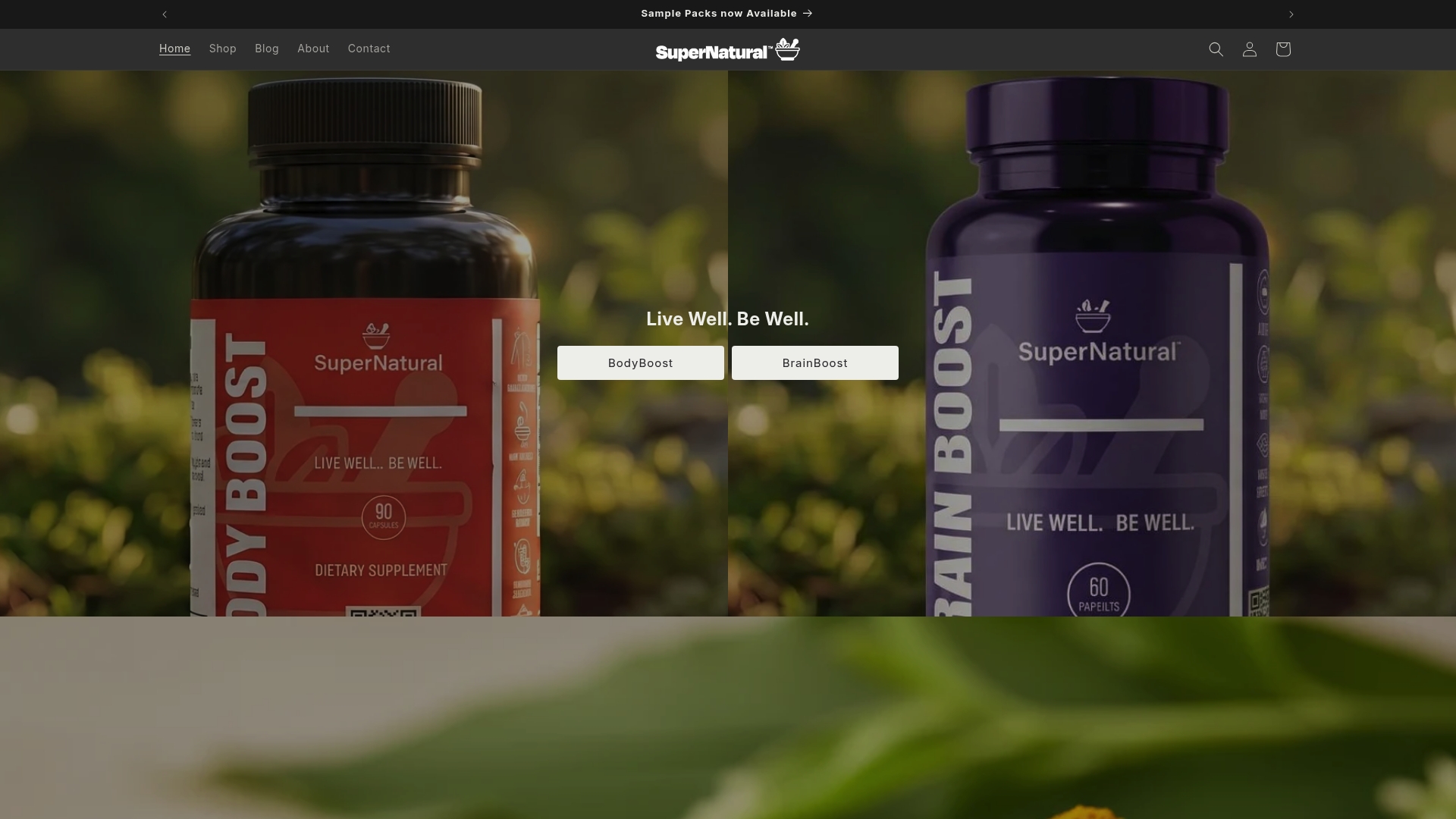
The answer is BioSoluble Curcumin, a patented formulation process that addresses the specific absorption barriers that make standard curcumin so difficult for the body to use. BodyControl applies this science to support detoxification and a healthy inflammatory response. BodyBoost is formulated for superior immune support, and BrainBoost targets advanced cognitive function. Each product reflects the same commitment to absorption-first formulation. Visit the SuperNatural Supplements website to review the science behind each product and find the formulation that fits your health goals.
FAQ
What is absorption science in simple terms?
Absorption science studies how molecules cross biological membranes and physical barriers to enter the body or a system. It determines how much of a nutrient or compound becomes available for the body to use.
What are the four main absorption mechanisms in the body?
The four mechanisms are passive diffusion, facilitated diffusion, active transport, and endocytosis. Each applies to different types of molecules and operates under different energy and concentration conditions.
How does spectroscopy relate to absorption science?
Spectroscopy measures how substances interact with light or radiation, providing data on concentration, structure, and purity. UV-Vis and infrared spectroscopy are the standard tools for characterizing active ingredients in pharmaceutical and supplement research.
Why does curcumin have low bioavailability?
Standard curcumin is poorly water-soluble and degrades quickly in the gastrointestinal environment, limiting how much reaches the bloodstream. Formulation technologies like SuperNatural Supplements’ BioSoluble Curcumin address these barriers directly to improve absorption.
How can you tell if a supplement uses good absorption science?
Look for formulation terms like “liposomal,” “phytosome,” or “nanoparticle-enhanced” on the label, and check whether the brand uses third-party spectroscopic testing to verify active ingredient concentration. These are concrete indicators of better supplement results grounded in real science.
This article is provided for educational and informational purposes only and does not constitute providing medical advice or professional services. Always consult with a qualified and licensed physician or other medical care provider. Statements have not been evaluated by the Food & Drug Administration. This product is not intended to diagnose, treat, cure, or prevent any disease.
Recommended
- Enhanced Bioavailability Explained: What the Science Really Means – SuperNatural
- Why Enhanced Absorption Changes What Your Supplements Can Do – SuperNatural
- Explaining Supplement Bioavailability for Brain and Body Health – SuperNatural
- How to Enhance Bioavailability for Better Supplement Results – SuperNatural