

The process for ADHD nutrition is a structured, routine-based approach that combines balanced, nutrient-rich meals with strategic timing around medication schedules to support focus, mood, and overall well-being in children. Clinically, this approach is often called ADHD dietary management, and it draws heavily from Mediterranean diet principles, protein-forward meal planning, and targeted micronutrient support. Children with ADHD face specific nutritional challenges, including common nutrient gaps in omega-3 fatty acids, iron, zinc, magnesium, and B-vitamins. This guide gives you a practical, step-by-step framework you can actually use at home.
What are the key nutritional principles for ADHD?
The Mediterranean-style diet is the most consistently recommended eating pattern for children with ADHD. It improves focus, reduces anxiety, stabilizes energy, and supports healthy cravings. The pattern centers on vegetables, fruits, whole grains, legumes, nuts, seeds, and fatty fish like salmon and sardines.
Protein is the backbone of every ADHD-friendly meal. Consistent protein intake at breakfast and throughout the day steadies blood sugar and supports neurotransmitter production, including dopamine and norepinephrine, which are directly involved in attention and impulse control. Think eggs, Greek yogurt, chicken, lentils, and nut butters as daily staples.

Fiber and healthy fats work alongside protein to slow glucose absorption and reduce the blood sugar spikes that worsen inattention and irritability. Foods like avocado, olive oil, flaxseed, and oats belong on your weekly shopping list. The gut-brain connection is real: fiber and polyphenol-rich whole foods reduce neuroinflammation and support the signaling pathways that affect mood and cognition.
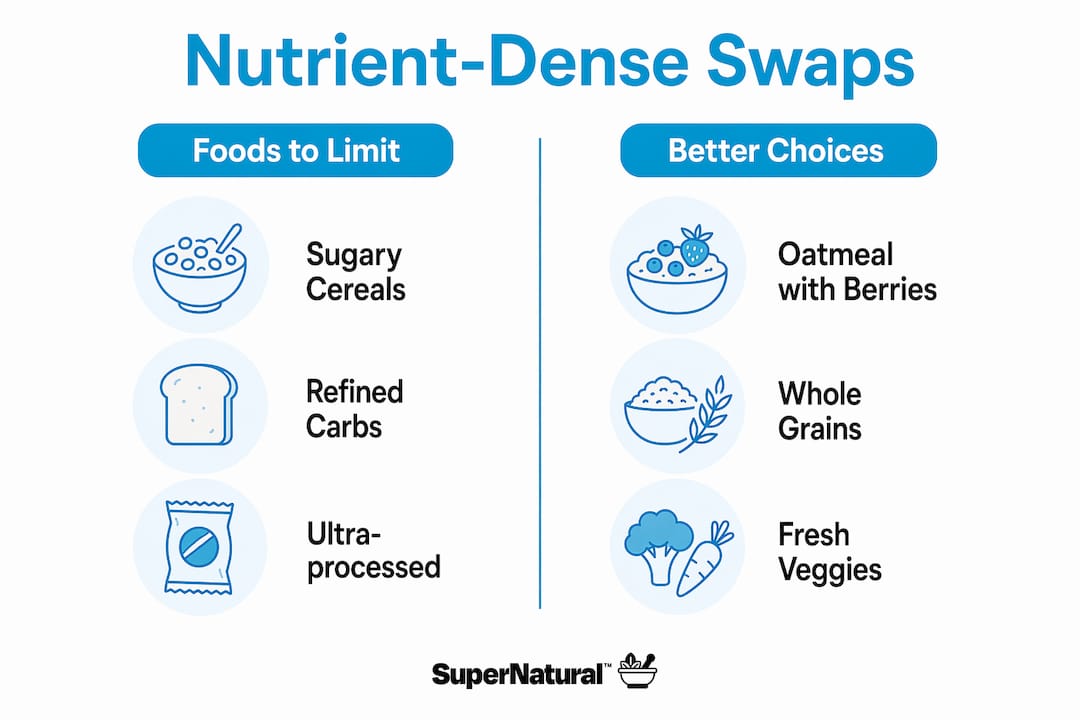
Ultra-processed foods are the clearest dietary threat for children with ADHD. A 2026 Pediatric Research study found that increased UPF consumption in children with ADHD is linked to glucose destabilization, inflammation, and poorer neurobehavioral outcomes. That means chips, packaged snacks, sugary cereals, and fast food actively work against the focus and behavior you are trying to support.
Foods to prioritize and foods to limit
Prioritize these foods:
- Fatty fish (salmon, mackerel, sardines) for omega-3 fatty acids
- Eggs, chicken, turkey, and legumes for protein
- Leafy greens, berries, and colorful vegetables for polyphenols and vitamins
- Whole grains like oats, quinoa, and brown rice for steady energy
- Full-fat dairy (yogurt, cheese, whole milk) for calcium, protein, and energy density
- Nuts and seeds for zinc, magnesium, and healthy fats
Limit or replace these foods:
- Sugary cereals, candy, and sweetened drinks
- Packaged snack foods with refined flour and added sugar
- Fast food and fried items high in inflammatory fats
- Fruit juice (replace with whole fruit for fiber)
Pro Tip: Swap a sugary breakfast cereal for plain oatmeal topped with berries and a spoonful of almond butter. You get fiber, protein, and antioxidants in one bowl, and it takes under five minutes.
How does medication affect appetite and meal timing?
Stimulant medications like methylphenidate and amphetamine salts are the most commonly prescribed treatments for ADHD. They are also well-known appetite suppressants. NHS guidance recommends giving food before medication and planning meals and snacks with reminders throughout the day. Without this structure, children on stimulants often skip meals entirely, not because they are being difficult, but because they genuinely do not feel hungry.
The practical solution is a scheduled routine of three meals and three snacks daily. Think of it less like waiting for hunger signals and more like a medication schedule: the eating happens at set times regardless of appetite. This approach protects your child’s nutritional intake on the days when their appetite is most suppressed.
Here is a meal timing routine that works well for most families:
- Before medication (7:00–7:30 a.m.): Serve a protein-rich breakfast before the first dose. Eggs with whole-grain toast, or Greek yogurt with fruit and granola, are good options. This is the most important meal of the day for a child on stimulants.
- Mid-morning snack (10:00–10:30 a.m.): A small snack of cheese and whole-grain crackers or a handful of nuts keeps energy stable as the medication peaks.
- Lunch (12:00–12:30 p.m.): A balanced plate with protein, vegetables, and a whole grain. Appetite may be lower here, so keep portions realistic and focus on nutrient density.
- Afternoon snack (3:00–3:30 p.m.): This is often when appetite begins to return as medication wears off. A smoothie with full-fat yogurt, banana, and nut butter works well.
- Dinner (6:00–6:30 p.m.): Appetite is usually strongest at this point. Serve a full Mediterranean-style meal with protein, vegetables, and healthy fats.
- Evening snack (8:00–8:30 p.m.): A calorie-dense option like whole milk, cheese, or a small bowl of oatmeal helps compensate for any calories missed during the day.
Pro Tip: Set phone alarms or use a visual meal chart on the refrigerator. External meal schedule prompts are not just helpful for children with ADHD. They are often the difference between a child eating consistently and skipping two meals a day.
What steps can parents take to build a lasting ADHD nutrition routine?
Building a sustainable ADHD dietary management plan takes more than knowing the right foods. It requires structure, flexibility, and realistic expectations. The steps below are designed to be achievable for real families with real schedules.
- Audit your current pantry. Remove or reduce ultra-processed snacks and sugary drinks. Replace them with whole-food alternatives. You do not need to do this overnight. Start with one category per week.
- Plan meals around protein. Every meal and snack should include a protein source. This is the single most impactful dietary change most families can make.
- Set a weekly meal prep session. Batch-cook proteins like grilled chicken or hard-boiled eggs on Sunday. Pre-wash and cut vegetables. Having ready-to-eat food removes the friction that leads to grabbing processed options.
- Involve your child in food choices. Let them pick between two healthy options at the grocery store or help with simple meal prep tasks. Children who participate in food decisions are more likely to eat what is served.
- Work with sensory preferences. Many children with ADHD have strong texture or flavor sensitivities. A registered dietitian who specializes in pediatric ADHD can help you identify acceptable food substitutions that still meet nutritional targets.
- Use supplements strategically. If your child’s diet is consistently low in omega-3s, iron, or zinc, talk to your pediatrician about targeted supplementation. You can also explore ADHD supplement strategies to understand what the research supports.
Quick reference: nutrient-dense swaps
| Instead of This | Try This | Key Benefit |
|---|---|---|
| Sugary breakfast cereal | Oatmeal with berries and almond butter | Fiber, protein, antioxidants |
| Fruit juice | Whole fruit or infused water | Fiber, less sugar spike |
| Packaged chips | Cheese and whole-grain crackers | Protein, calcium, complex carbs |
| White bread sandwich | Whole-grain wrap with turkey and avocado | Protein, healthy fats, fiber |
| Sweetened yogurt | Plain Greek yogurt with honey | Protein, probiotics, less added sugar |
What are the most common challenges and how do you solve them?
The biggest obstacle in ADHD dietary management is rarely food knowledge. The challenge is consistent timing and logistics due to appetite suppression and the memory difficulties that come with ADHD itself. Knowing what to eat and actually eating it at the right time are two very different things.
Here are the most common challenges parents face, and what actually helps:
- Picky eating and sensory sensitivities. Many children with ADHD reject foods based on texture, smell, or appearance. Work with a pediatric dietitian to find acceptable alternatives within each food group. Gradual exposure, not pressure, builds food acceptance over time.
- Skipped meals on high-medication days. On days when appetite suppression is strongest, focus on calorie density rather than volume. Energy-dense options like whole milk, full-fat yogurt, cheese, nut butters, and smoothies deliver significant nutrition in small amounts. Think of it as getting a strong cup of coffee rather than just sniffing the beans: you want the full effect in a small serving.
- Nutrient gaps going undetected. A 2026 case-control study found that children with ADHD consume less protein and fewer essential micronutrients like B-vitamins, zinc, and calcium compared to children without ADHD. Ask your pediatrician about testing ferritin (iron stores), vitamin D, and zinc levels before starting any supplementation. Testing first prevents guessing.
- Caregiver burnout. Sustaining a structured nutrition plan is demanding. Set achievable weekly goals rather than trying to overhaul everything at once. Progress matters more than perfection. Connecting with other caregivers through ADHD support groups can also reduce isolation and provide practical ideas.
- Flexibility on difficult days. Individualized approaches that account for sensory preferences and daily variability produce better long-term results than rigid plans. Build in planned flexibility so that one hard day does not derail the whole week.
Key takeaways
A structured ADHD nutrition process built around protein, Mediterranean diet staples, and scheduled meal timing is the most effective dietary approach for supporting focus and well-being in children with ADHD.
| Point | Details |
|---|---|
| Mediterranean diet is the foundation | Prioritize vegetables, fruits, whole grains, fatty fish, and legumes at every meal. |
| Protein anchors every meal | Include a protein source at breakfast, lunch, dinner, and all three snacks to stabilize energy and neurotransmitter production. |
| Meal timing beats hunger cues | Schedule three meals and three snacks daily using alarms and charts, especially on medication days when appetite is suppressed. |
| Replace, do not just remove | Swap ultra-processed foods for energy-dense whole foods like full-fat dairy, nut butters, and smoothies to prevent under-eating. |
| Test before supplementing | Ask your pediatrician to check ferritin, vitamin D, and zinc levels before adding supplements to your child’s routine. |
What we have learned about ADHD nutrition in real families
At SuperNatural Supplements, we have worked closely with parents navigating ADHD nutrition, and the pattern we see most often is this: families know what to feed their kids, but they struggle with the when and the how. A child who forgets to eat because their medication has suppressed their appetite is not being stubborn. They genuinely need external structure to eat consistently, just like they need reminders for homework or chores.
The families who see the most improvement are not the ones with the most perfect diets. They are the ones with the most consistent routines. A visual meal chart on the refrigerator, a phone alarm at snack time, and a pre-packed lunch bag the night before do more for nutritional outcomes than any single superfood. We have seen children’s focus and mood shift noticeably within a few weeks of consistent meal timing, even before any major dietary overhaul.
We also want to be honest about expectations. Nutrition supports ADHD management. It does not replace medication or behavioral therapy when those are clinically indicated. Think of it as one strong pillar in a larger structure. When that pillar is solid, everything else tends to work a little better. And when you support brain health through daily habits, the cumulative effect on focus, mood, and family dynamics can be genuinely meaningful.
Start small. Pick one meal to restructure this week. Build from there.
— SuperNatural
How SuperNatural supplements can support your child’s ADHD nutrition plan
Dietary changes are the foundation, and targeted supplementation can fill the gaps that diet alone sometimes cannot close.
SuperNatural Supplements developed BrainBoost specifically for advanced cognitive support, using our patented BioSoluble Curcumin process. Standard curcumin has notoriously poor absorption. BioSoluble Curcumin delivers significantly higher bioavailability, meaning your child’s body actually uses what they take. Curcumin supports a healthy inflammatory response in the brain, which matters because neuroinflammation is one of the pathways that affects attention and behavior in ADHD. You can also explore our BioSoluble Curcumin technology to understand exactly how the absorption process works. Always consult your child’s pediatrician before adding any supplement to their routine.
FAQ
What is the best diet for a child with ADHD?
The Mediterranean diet is the most evidence-supported eating pattern for children with ADHD. It emphasizes vegetables, fruits, whole grains, legumes, fatty fish, nuts, and seeds while limiting ultra-processed foods and added sugars.
How does ADHD medication affect my child’s eating?
Stimulant medications suppress appetite and can cause children to forget to eat. NHS guidance recommends offering food before the first dose and scheduling three meals and three snacks daily with alarms or visual charts to maintain consistent nutrition.
Should i give my child supplements for ADHD?
Supplementation decisions should be based on lab testing rather than guessing. Ask your pediatrician to check ferritin, vitamin D, zinc, and omega-3 levels before starting any supplement. Targeted supplementation based on confirmed deficits is more effective than a general approach.
What foods should i avoid for a child with ADHD?
Avoid ultra-processed foods, sugary drinks, refined carbohydrates, and foods with artificial additives. A 2026 Pediatric Research study linked high ultra-processed food intake in children with ADHD to glucose instability, inflammation, and worse behavioral outcomes.
How do i handle picky eating in a child with ADHD?
Work with a pediatric registered dietitian to identify acceptable alternatives within each food group based on your child’s sensory preferences. Gradual, low-pressure exposure to new foods builds acceptance over time without creating mealtime conflict.
This article is provided for educational and informational purposes only and does not constitute providing medical advice or professional services. Always consult with a qualified and licensed physician or other medical care provider. Statements have not been evaluated by the Food & Drug Administration. This product is not intended to diagnose, treat, cure, or prevent any disease.