

Curcumin is a natural polyphenol compound derived from turmeric (Curcuma longa) with documented anti-inflammatory, antioxidant, and neuroprotective properties that may support brain health and certain neurobehavioral symptoms relevant to ADHD. While direct clinical trials on ADHD populations remain limited, growing research in related conditions points to meaningful mechanisms worth understanding. The benefits of curcumin for ADHD are best framed as adjunctive and indirect: curcumin works on biological pathways like neuroinflammation, oxidative stress, and neurotransmitter balance that overlap significantly with ADHD biology. For parents and caregivers exploring natural remedies for ADHD, this guide covers what the science actually shows, how curcumin works in the brain, and how to use it responsibly alongside established treatments.
1. What the research says about curcumin and ADHD
No strong direct clinical evidence currently shows curcumin improves core ADHD symptoms in children or adults. The most rigorous curcumin trial in a neurobehavioral population was conducted in autism, not ADHD. That distinction matters, but it does not make the findings irrelevant.
An 8-week randomized controlled trial (RCT) involving 60 children with autism spectrum disorder found that 3000 mg daily curcumin reduced key inflammation markers dramatically: hs-CRP dropped 83.8%, ESR fell 42.3%, and fecal calprotectin decreased 73.7%. Sensory regulation scores improved by 49% with no adverse effects reported. This matters because neuroinflammation is increasingly recognized as a factor in ADHD symptom severity, not just autism.

A separate 18-month UCLA study found a 28% improvement in memory in adults with mild age-related memory loss who took a bioavailable curcumin supplement daily, with PET scans confirming reduced amyloid and tau signaling. Mood also improved modestly. These findings suggest curcumin reaches the brain and affects cognition when absorption is adequate.
A systematic review and meta-analysis of Zingiberaceae-derived interventions (the plant family that includes turmeric) found a statistically significant memory improvement with a standardized mean difference of 0.57, but no significant pooled effects for attention or inhibitory control. Those two domains are central to ADHD. This tells you curcumin may support memory and mood without directly addressing the attention deficits that define ADHD.
Pro Tip: When reviewing curcumin studies, check whether the population studied has ADHD, autism, or age-related cognitive decline. Each group has different biology, and results do not transfer automatically.
2. How curcumin works in the brain and body
Curcumin’s potential role in ADHD care is grounded in several overlapping biological mechanisms. Understanding these pathways helps you set realistic expectations and choose the right formulation.
- Anti-inflammatory signaling: Curcumin suppresses NF-kB, a protein complex that drives inflammatory gene expression. Neuroinflammation is linked to attention dysregulation, mood instability, and executive function deficits in ADHD.
- Antioxidant activity: Curcumin reduces oxidative stress by activating Nrf2 pathways, which protect neurons from damage. Children with ADHD show elevated oxidative stress markers compared to neurotypical peers.
- Neurotransmitter modulation: Curcumin influences dopamine and serotonin levels by inhibiting enzymes that break them down. Dopamine dysregulation is the central neurochemical feature of ADHD.
- Neuroplasticity support: Curcumin increases brain-derived neurotrophic factor (BDNF), a protein that supports the growth and maintenance of neurons. Low BDNF is associated with attention and learning difficulties.
- Gut-brain axis regulation: Curcumin modulates gut microbiota composition and reduces intestinal inflammation. The gut-brain connection is increasingly relevant to ADHD, with emerging research linking gut dysbiosis to behavioral symptoms.
“Curcumin’s primary translational benefit appears through anti-inflammatory and antioxidant signaling, which could indirectly affect neurobehavioral symptoms linked to neuroinflammation.” — CURATEA Trial Research Team
The critical caveat is pharmacokinetics. Curcumin has limited systemic bioavailability due to rapid metabolism and clearance in the gut and liver. Standard turmeric powder delivers very little curcumin to the bloodstream, and even less to the brain. This is why formulation choice is not a minor detail. It is the deciding factor in whether any of these mechanisms actually activate in your child’s body.
3. Practical considerations for parents and caregivers
Using curcumin as part of an ADHD support plan requires attention to formulation, dosing, safety, and coordination with your healthcare team. Here is what to prioritize:
- Choose a bioavailable formulation. Standard turmeric powder is not equivalent to a curcumin supplement. Look for products using patented delivery technologies (such as phytosome, liposomal, or BioSoluble formats) that significantly improve absorption. Two products labeled “curcumin” can deliver very different systemic levels depending on their formulation.
- Track symptoms consistently. Use a simple daily log or a validated tool like the SNAP-IV or Conners rating scale to record focus, mood, sleep, and behavior before starting and throughout the trial. Curcumin’s effects, if present, are subtle and gradual. Without tracking, you will not know if anything is changing.
- Allow adequate trial time. The autism RCT ran for 8 weeks. The UCLA memory study ran for 18 months. Expect a minimum of 8 to 12 weeks before drawing conclusions.
- Consult your healthcare provider before starting. The UK Food Standards Agency notes that tetrahydrocurcuminoids are safe for adults at up to 140 mg/day, but children are excluded from that assessment. Rare cases of idiosyncratic hepatotoxicity (liver inflammation) have been reported with high-dose or long-term use.
- Monitor liver function for prolonged use. If your child uses curcumin at higher doses or for extended periods, ask your doctor about periodic liver enzyme checks. This is a precaution, not a prediction of harm.
- Treat curcumin as adjunctive, not primary. ADHD care guidelines are clear: medication and behavioral therapy are first-line treatments. Curcumin may address secondary issues like inflammation and mood, but it does not replace evidence-based care.
Pro Tip: Keep the same curcumin product throughout your trial period. Switching brands mid-trial changes the bioavailability variable and makes it impossible to interpret results accurately.
For a deeper look at how absorption affects outcomes, the curcumin absorption guide at SuperNatural Supplements breaks down the science clearly.
4. How curcumin compares to other ADHD dietary supplements
Curcumin is one of several natural supplements parents consider for ADHD symptom support. Each has a different evidence base, mechanism, and safety profile. Here is how they compare:
| Supplement | Primary mechanism | Evidence for ADHD | Key limitation | Safety note |
|---|---|---|---|---|
| Curcumin | Anti-inflammatory, antioxidant, dopamine/serotonin modulation | Indirect (autism, memory trials) | Low bioavailability; no direct ADHD RCTs | Rare hepatotoxicity at high doses |
| Omega-3 fatty acids | Neuronal membrane integrity, anti-inflammatory | Moderate direct evidence; meta-analyses show modest symptom reduction | Effect size small; quality varies by product | Generally safe; fishy aftertaste common |
| Magnesium | Neurotransmitter regulation, nervous system calming | Some evidence for hyperactivity reduction in deficient children | Benefit mainly in those with low magnesium | Diarrhea at high doses |
| Zinc | Dopamine synthesis cofactor | Limited; may enhance stimulant medication response | Inconsistent results; toxicity risk if overdosed | Narrow therapeutic window |
| Melatonin | Sleep regulation | Strong evidence for sleep onset in ADHD | Addresses sleep only, not core attention symptoms | Generally safe short-term |
Curcumin’s anti-inflammatory mechanism is distinct from all others on this list. Omega-3 fatty acids share some anti-inflammatory properties, which is why combining curcumin with omega-3s is a strategy worth discussing with your doctor. The two supplements work on overlapping but complementary pathways, and neither competes with the other. For a broader look at evidence-based supplement strategies, Dietium’s performance supplement guide provides useful context on how these compounds interact.
Zinc and magnesium are worth considering if blood tests reveal deficiencies, which are more common in children with ADHD than in the general population. Melatonin is the most evidence-backed option for the sleep disruption that frequently accompanies ADHD, and it can be used alongside curcumin without known interactions.
Key takeaways
Curcumin supports brain health through anti-inflammatory and neurotransmitter pathways that overlap with ADHD biology, but it works best as an adjunct to proven treatments, not as a standalone solution.
| Point | Details |
|---|---|
| Evidence is indirect but relevant | No ADHD-specific RCTs exist, but autism and memory trials show real neurobiological effects. |
| Bioavailability determines results | Standard turmeric powder delivers minimal curcumin to the brain; choose a patented, high-absorption formulation. |
| Safety requires professional guidance | Rare liver toxicity risk means children should be monitored by a healthcare provider during supplementation. |
| Curcumin is adjunctive care | Medication and behavioral therapy remain first-line ADHD treatments; curcumin addresses secondary factors like inflammation. |
| Track symptoms systematically | Use validated scales like SNAP-IV over 8 to 12 weeks to detect subtle changes in focus, mood, and behavior. |
Our perspective on curcumin and ADHD care
At SuperNatural Supplements, we have spent years studying curcumin’s biology and working with families navigating ADHD. Here is our honest take: curcumin is not a cure, and anyone telling you otherwise is overpromising. What curcumin genuinely offers is a biologically credible way to address the inflammatory and oxidative underpinnings that many children with ADHD carry alongside their core symptoms.
The families we hear from most often are not looking for a replacement for their child’s medication or therapy. They are looking for something that addresses the whole picture: the mood swings, the gut issues, the sleep disruption, the general sense that inflammation is making everything harder. That is where curcumin fits, and that is where we have seen it make a quiet but real difference.
The formulation question is the one we feel most strongly about. Buying a cheap turmeric capsule and expecting brain effects is like wanting a strong cup of coffee and just sniffing the beans. The compound has to get into the bloodstream and cross the blood-brain barrier to do anything. That is why we built BioSoluble Curcumin around a patented absorption process rather than simply sourcing raw curcuminoids.
We also encourage caregivers to be patient and systematic. Curcumin does not work in days. Track carefully, stay consistent with your formulation, and communicate openly with your child’s doctor. The role of curcumin in ADHD care is still being defined by science, and we think that is actually a reason for optimism, not hesitation.
— SuperNatural
Explore BioSoluble Curcumin from SuperNatural Supplements
If you are ready to try curcumin as part of your ADHD support plan, formulation quality is the variable that matters most. SuperNatural Supplements developed BioSoluble® Curcumin™ using a patented process that dramatically improves absorption compared to standard curcumin products. This means more curcumin reaches the bloodstream and, critically, the brain, where it can act on the inflammatory and neurotransmitter pathways described in this article.
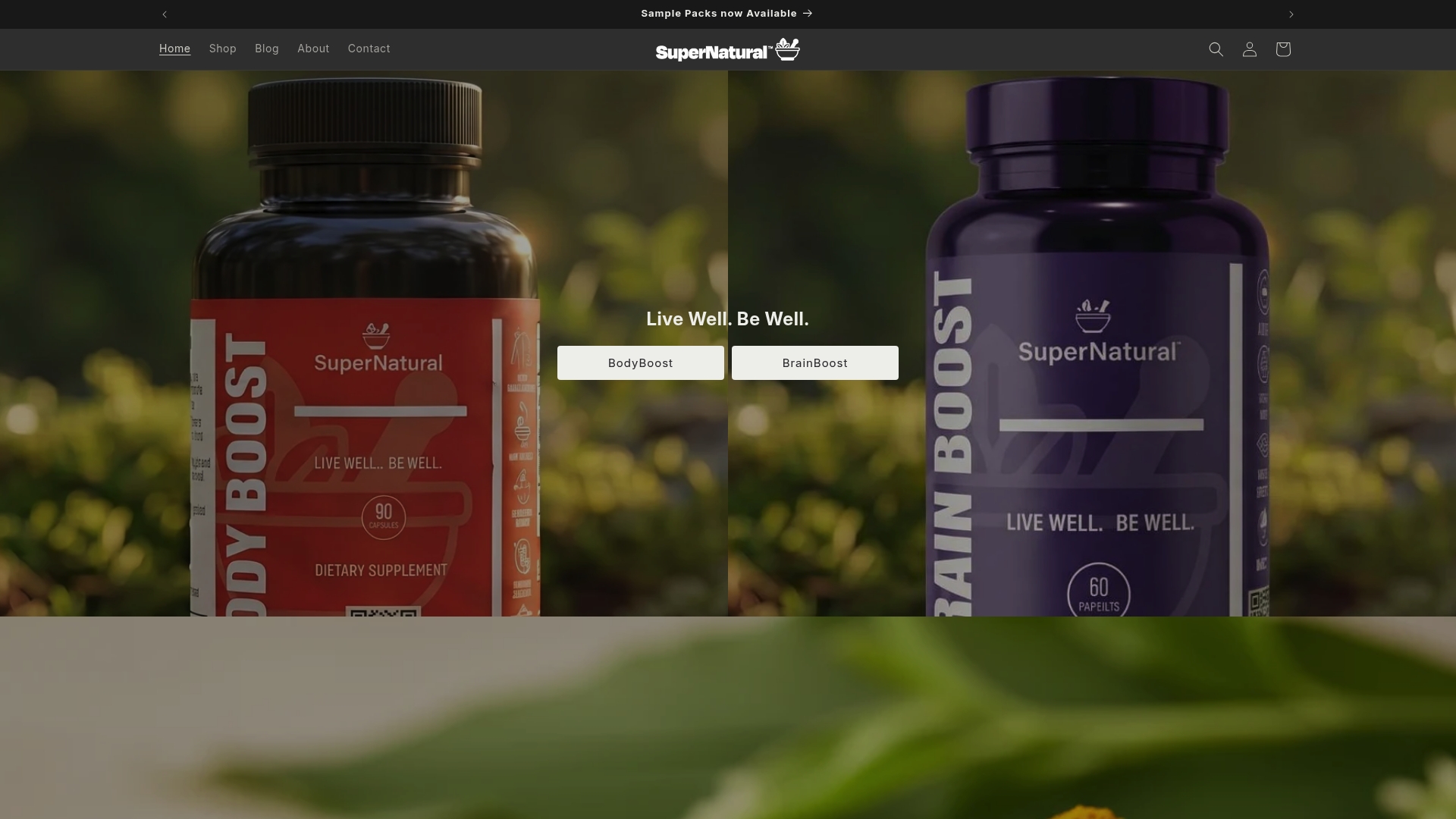
For parents focused on cognitive support specifically, BrainBoost is SuperNatural Supplements’ advanced cognitive formula designed to complement curcumin’s anti-inflammatory benefits with targeted brain support ingredients. Both products are formulated with quality and safety standards that make them appropriate for long-term adjunctive use alongside your child’s existing ADHD care plan. Check with your doctor before starting, and explore the full range at SuperNatural Supplements.
FAQ
Does curcumin directly treat ADHD symptoms?
Curcumin does not have direct clinical evidence for improving core ADHD symptoms like inattention or hyperactivity. Its benefits are indirect, working through anti-inflammatory and neurotransmitter pathways that overlap with ADHD biology.
What curcumin dose is safe for children with ADHD?
No established pediatric dose exists for ADHD specifically. The UK Food Standards Agency has assessed adult safety at up to 140 mg/day of tetrahydrocurcuminoids, but children are excluded from that assessment, so consult your child’s doctor before starting.
How long does curcumin take to show effects?
Based on the autism RCT and UCLA memory study, meaningful changes in inflammation markers and cognitive performance emerged over 8 weeks to 18 months. Expect a minimum trial of 8 to 12 weeks before evaluating results.
Is standard turmeric powder the same as a curcumin supplement?
No. Standard turmeric powder contains only about 3% curcumin by weight and has very poor absorption. A patented curcumin formulation delivers significantly more curcumin to the bloodstream and brain.
Can curcumin be combined with ADHD medication?
Curcumin may interact with certain medications, including blood thinners and some psychiatric drugs. Always consult your child’s prescribing physician before adding any supplement to an existing medication regimen.
This article is provided for educational and informational purposes only and does not constitute providing medical advice or professional services. Always consult with a qualified and licensed physician or other medical care provider. Statements have not been evaluated by the Food & Drug Administration. This product is not intended to diagnose, treat, cure, or prevent any disease.