

Enhanced bioavailability is the industry terminology for improving the extent and rate at which a nutrient or drug becomes available at its site of physiological activity. In pharmacology and nutrition science, the formal term is simply “bioavailability,” defined as the fraction of an ingested compound that reaches systemic circulation in an active form. The “enhanced” qualifier signals that a deliberate formulation or dietary strategy has raised that fraction above what the compound achieves on its own. For health-conscious individuals and researchers alike, understanding this concept is the difference between choosing a supplement that works and paying for one that mostly passes through you. SuperNatural Supplements built its entire product philosophy around this principle, using a patented BioSoluble Curcumin process to address one of the most stubborn absorption problems in natural health.
What are the common mechanisms and factors affecting bioavailability?
Bioavailability is not a single switch. It is the product of several biological steps, each of which can limit how much of a compound your body actually uses.
The first barrier is the gastrointestinal tract. A compound must dissolve in gut fluid before it can cross the intestinal wall. Solubility and membrane permeability are the two gatekeepers here. A compound with poor solubility never reaches a high enough concentration to drive absorption. A compound with poor permeability dissolves fine but cannot cross the gut lining into the bloodstream.
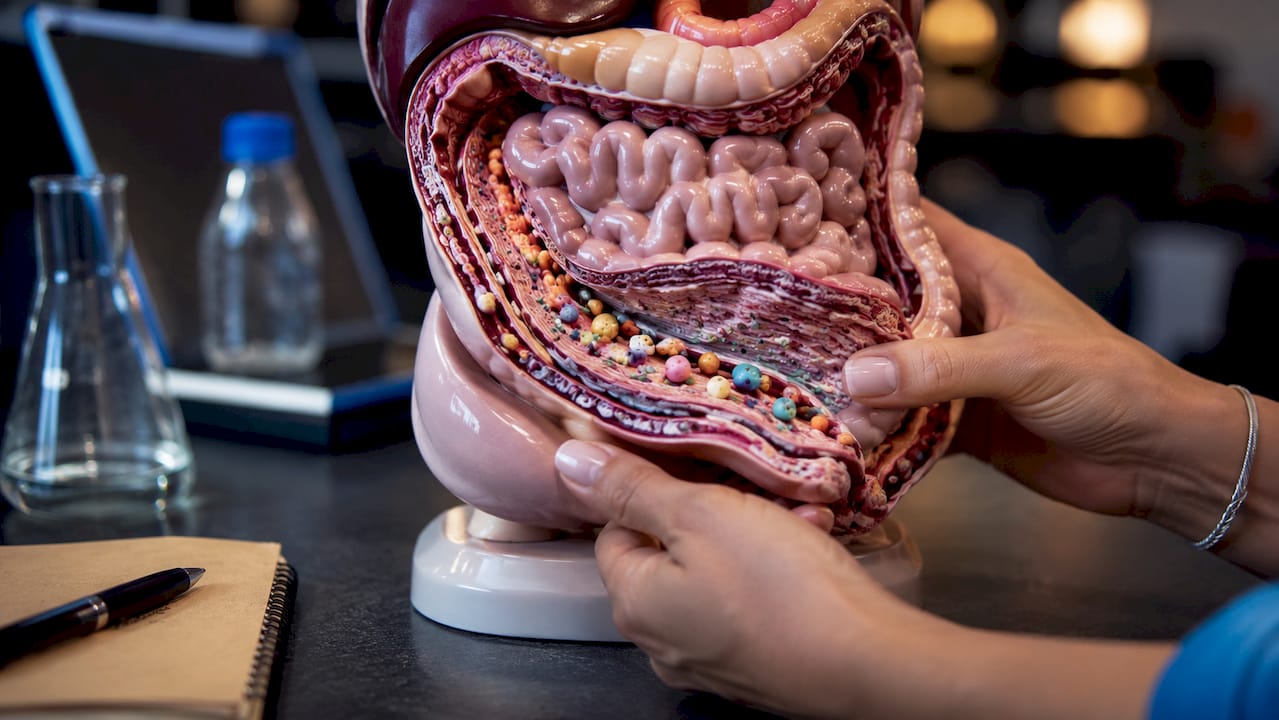
The second barrier is pre-systemic metabolism, often called the “first-pass effect.” After absorption through the gut, compounds travel to the liver before reaching general circulation. The liver can break down a large portion of the dose before it ever reaches target tissues. This is why oral doses of many compounds must be far higher than intravenous doses to achieve the same effect.
Several additional factors shape the final absorption rate:
- Food matrix: Nutrients interact with each other and with the surrounding food. Fat-soluble vitamins (A, D, E, and K) require dietary fat to be absorbed at all. Eating a vitamin D supplement without fat in the meal can render much of the dose useless.
- Anti-nutritional factors: Phytates in grains and legumes bind minerals like iron and zinc, blocking their absorption before they reach the gut wall.
- Nutrient competition: High doses of one mineral can crowd out another. Excess calcium, for example, competes with magnesium at absorption sites.
- Gut transit time: Faster transit leaves less time for absorption. Slower transit can allow more contact time but also more bacterial degradation.
Pro Tip: Take fat-soluble supplements (vitamins A, D, E, K, and curcumin) with a meal that contains healthy fats. Even a tablespoon of olive oil or a handful of nuts can meaningfully raise the amount your body absorbs.
The full meal matrix matters more than any single nutrient in isolation. Traditional food systems understood this intuitively, pairing iron-rich lentils with tomatoes and combining turmeric with fat-rich coconut milk long before the science caught up.
Which industry technologies and strategies enhance bioavailability effectively?
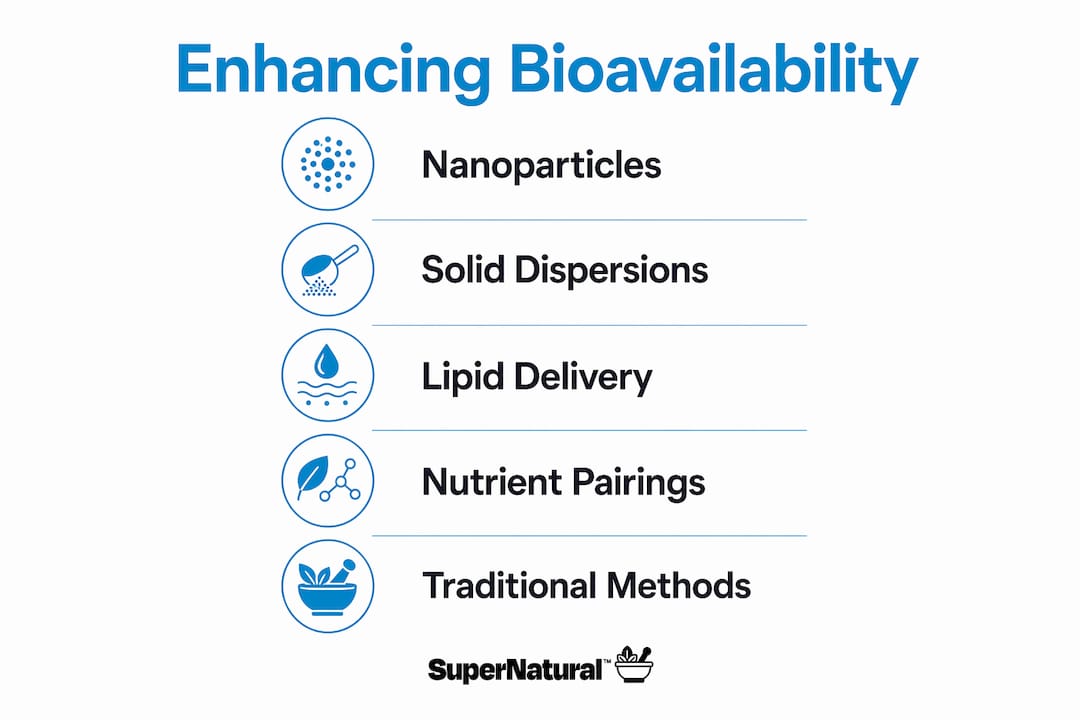
The field of bioavailability improvement has produced several distinct technology categories. Each solves a different absorption problem, and choosing the wrong one for a given compound can cause instability or outright formulation failure.
Nanotechnology and particle-size reduction
Reducing a compound to nanoparticle scale dramatically increases its surface area, which speeds dissolution. Nanotechnology delivery systems improve bioaccessibility by about 70% compared to traditional formulations. That is a meaningful gain, not a marginal one. Polymer-based and lipid-based nanoparticles also protect compounds from degradation in the gut environment, delivering more intact material to the absorption site.
Amorphous solid dispersions
Amorphous Solid Dispersions (ASDs) convert a crystalline compound into a disordered, high-energy amorphous state. That disordered state dissolves faster and reaches higher apparent solubility in gut fluid. The trade-off is physical stability. Amorphous forms can revert to the crystalline structure over time, especially under heat or humidity, which reduces the solubility advantage. Polymer stabilizers are typically added to slow this reversion, but shelf-life management remains a real challenge.
Lipid-based delivery systems
Lipid-based formulations work differently. They encapsulate a compound in a fat-based carrier that mimics dietary fat. The body processes this carrier through the lymphatic system, bypassing liver first-pass metabolism and delivering more active compound directly into systemic circulation. This approach is particularly effective for lipophilic (fat-loving) compounds like curcumin.
Nutrient pairings
Some of the most dramatic bioavailability gains come from simple co-administration of synergistic compounds. Pairing curcumin with piperine (the active compound in black pepper) can increase absorption up to 2,000% compared to curcumin alone. Pairing vitamin C with plant-based iron raises iron absorption from 2% to 65%. These are not minor improvements. They represent the difference between a supplement that works and one that does not.
| Enhancement method | Primary mechanism | Key trade-off |
|---|---|---|
| Nanoparticles | Increased surface area and dissolution rate | Manufacturing complexity and cost |
| Amorphous solid dispersions | Higher apparent solubility | Recrystallization risk over time |
| Lipid-based systems | Lymphatic transport, bypasses first-pass metabolism | Requires lipophilic compounds |
| Nutrient pairings | Synergistic absorption enhancement | Requires co-administration timing |
| BioSoluble® Curcumin™ | Patented water-soluble curcumin delivery | Specific to curcuminoid compounds |
Pro Tip: When evaluating bioenhanced supplements, look for named delivery technologies on the label, not just “enhanced absorption” marketing claims. A named process signals that the formulation has been engineered and tested.
How to apply enhanced bioavailability knowledge in everyday nutrition?
Understanding the science is only useful if you can act on it. Maximizing nutrient absorption does not require a laboratory. It requires informed choices at the meal and supplement level.
Use traditional food processing methods
Fermentation, soaking, and cooking are not just culinary traditions. They are bioavailability improvement tools. Soaking legumes overnight reduces phytate content, freeing bound minerals for absorption. Fermenting grains (as in sourdough) breaks down phytic acid through microbial activity. These methods have been used across cultures for centuries precisely because they make food more nourishing, even if the mechanism was not understood at the time.
Build meals that support absorption
Meal composition is one of the most underused tools in nutrition. Consider these practical strategies:
- Pair iron-rich plant foods (lentils, spinach, tofu) with vitamin C sources (bell peppers, citrus, tomatoes) at the same meal.
- Include a source of healthy fat whenever you take fat-soluble vitamins or curcumin supplements.
- Avoid taking high-dose calcium and magnesium supplements at the same time, since they compete for the same absorption pathway.
- Consume zinc-rich foods separately from high-phytate foods when zinc status is a concern.
Choose supplements engineered for absorption
Not all supplements are created equal. A supplement with a high milligram count on the label means little if the compound cannot cross the gut wall. The right question is not “how much is in the capsule?” but “how much reaches my bloodstream?”
SuperNatural Supplements developed BioSoluble® Curcumin™ specifically to address the notoriously poor absorption of standard curcumin. Standard curcumin is both poorly soluble and rapidly metabolized, which limits its effectiveness. The BioSoluble® process converts curcumin into a water-soluble form, dramatically increasing the amount that reaches circulation. For readers interested in the full picture of curcumin absorption, the mechanism behind this improvement is worth understanding before choosing any curcumin product.
What are the key challenges in bioavailability enhancement science?
Bioavailability enhancement is not a solved problem. Several scientific and practical challenges limit what any single strategy can achieve.
-
BCS classification determines strategy. The Biopharmaceutics Classification System (BCS) sorts compounds by solubility and permeability into four classes. BCS Class II compounds (low solubility, high permeability) benefit most from solubility enhancers like ASDs or nanoparticles. Class IV compounds (low solubility, low permeability) need both solubility and permeability aids, which makes formulation far more complex. Applying a solubility enhancer to a Class I compound (already highly soluble) wastes resources and may create unnecessary instability.
-
Amorphous forms are inherently unstable. The same high-energy state that makes ASDs dissolve faster also makes them thermodynamically unstable. Without adequate polymer stabilization and controlled storage conditions, amorphous forms revert to crystalline structures, erasing the solubility advantage. This is a real-world shelf-life problem, not just a theoretical one.
-
No universal solution exists. The right enhancement strategy depends entirely on the compound’s chemical properties. A lipid-based system that works brilliantly for curcumin may be completely ineffective for a water-soluble B vitamin. Researchers and formulators must match the technology to the molecule, not the other way around.
-
Individual variation is real. Gut microbiome composition, stomach acid levels, genetic differences in metabolizing enzymes, and even stress levels all affect how much of any compound a given person absorbs. Population-level bioavailability data gives useful averages, but individual responses can vary widely.
-
Pre-systemic metabolism compounds the challenge. Even after a compound survives the gut and crosses the intestinal wall, the liver may break down a significant fraction before it reaches target tissues. Strategies that bypass this step (like lymphatic transport via lipid carriers) offer a meaningful advantage for compounds with high first-pass extraction.
Key Takeaways
Enhanced bioavailability is the most important factor separating a supplement that delivers results from one that simply passes through the body unused.
| Point | Details |
|---|---|
| Definition matters | Bioavailability measures the fraction of a compound that reaches active circulation, not just what is ingested. |
| Meal composition is a tool | Pairing fat-soluble nutrients with dietary fat and iron with vitamin C produces measurable absorption gains. |
| Technology must match the molecule | BCS classification guides which enhancement method (nanoparticle, ASD, lipid carrier) fits a given compound. |
| Stability is a real trade-off | Amorphous solid dispersions dissolve faster but can revert to crystalline forms, reducing effectiveness over time. |
| Engineered supplements outperform standard forms | Products like BioSoluble® Curcumin™ use patented delivery processes to raise absorption well above standard curcumin. |
What we have learned from years of working with bioavailability
Most people focus on the milligram count on a supplement label. We focused on what happens after you swallow it. That shift in perspective changed everything about how we approach formulation.
The uncomfortable truth is that a large portion of the supplement industry sells compounds in forms the body struggles to absorb. Standard curcumin is the clearest example. It is one of the most studied natural compounds in the world, with a compelling body of research behind it. Yet its natural bioavailability is so poor that most standard curcumin products deliver only a fraction of what the research doses achieved. The research used enhanced forms. The products often do not.
What we also see researchers overlook is the interaction between formulation science and real-world diet. A lipid-based curcumin supplement taken on an empty stomach still underperforms compared to the same supplement taken with a fat-containing meal. The science of supplement innovation does not replace smart eating. It works best alongside it.
The most balanced approach combines a well-engineered delivery system with traditional nutritional wisdom: eat whole foods, use fermentation and soaking, pair nutrients thoughtfully, and then select supplements that have solved the absorption problem at the formulation level. That combination is where the real results live. We have seen it consistently, and the science backs it up.
— SuperNatural
SuperNatural Supplements and the science of better absorption
SuperNatural Supplements built its product line around one core question: what good is a supplement if your body cannot use it?
The answer is BioSoluble® Curcumin™, a patented process that converts curcumin into a water-soluble form for significantly greater absorption than standard curcumin. This same commitment to enhanced absorption runs through every product in the line. BodyControl supports detoxification and a healthy inflammatory response. BodyBoost targets immune function. BrainBoost is formulated for cognitive support. Each product is designed with the same principle: the dose that matters is the dose your body actually absorbs, not the dose on the label. If you want to understand how natural supplements can work with your biology rather than against it, the BioSoluble® Curcumin™ page is the right place to start.
FAQ
What does “enhanced bioavailability” mean in simple terms?
Enhanced bioavailability means a nutrient or compound has been formulated or paired with other substances so that more of it reaches your bloodstream and target tissues. The goal is to close the gap between what you ingest and what your body actually uses.
How does piperine enhance curcumin absorption?
Piperine inhibits certain liver and gut enzymes that break down curcumin before it reaches circulation. Combining curcumin with piperine can raise absorption up to 2,000% compared to curcumin taken alone.
What is the Biopharmaceutics Classification System (BCS)?
The BCS classifies compounds into four categories based on their solubility and permeability. Knowing a compound’s BCS class helps researchers select the right enhancement strategy and avoid applying a technology that does not fit the molecule’s properties.
Can diet alone improve nutrient absorption without supplements?
Yes, significantly. Pairing vitamin C with plant-based iron can raise iron absorption from 2% to 65%. Traditional food processing methods like fermentation and soaking also reduce anti-nutritional factors that block mineral absorption.
Why does taking fat-soluble vitamins with food matter?
Fat-soluble vitamins (A, D, E, and K) require dietary fat to be absorbed through the gut wall. Taking them without fat in the meal can leave most of the dose unabsorbed, regardless of the supplement’s quality.
This article is provided for educational and informational purposes only and does not constitute providing medical advice or professional services. Always consult with a qualified and licensed physician or other medical care provider. Statements have not been evaluated by the Food & Drug Administration. This product is not intended to diagnose, treat, cure, or prevent any disease.