

Adaptogenic herbs are natural plant substances that help the body resist and recover from physical, chemical, and emotional stress. The term “adaptogen” was coined by Soviet pharmacologist Nikolai Lazarev in 1947, and modern research has since validated what traditional medicine systems like Ayurveda and Traditional Chinese Medicine practiced for centuries. Well-known examples of adaptogenic herbs include Ashwagandha, Rhodiola rosea, Panax ginseng, and Holy basil, each with distinct mechanisms and benefits. Clinical interest in these plants has grown sharply, with 2026 studies confirming effects on cortisol regulation, cognitive function, and sleep quality.
1. Ashwagandha (Withania somnifera)
Ashwagandha is the most clinically studied adaptogen for stress and sleep. Its active compounds, called withanolides, modulate the nervous system to produce a calming effect at standard doses. A 60-day randomized trial showed measurable reductions in Perceived Stress Scale scores and improved Pittsburgh Sleep Quality Index results. That makes Ashwagandha the go-to choice for people dealing with chronic stress and poor sleep.
One nuance worth knowing: Ashwagandha can become stimulating at higher doses. Think of it like a thermostat. At the right setting, it calms the system. Turn it up too high, and it overshoots.

2. Rhodiola rosea
Rhodiola rosea is a stimulating adaptogen, not a calming one. Clinical pharmacology studies show it produces notable stimulation within 30 minutes that lasts several hours, without the energy crash typical of caffeine or conventional stimulants. That profile makes it well suited for mental endurance, focus under pressure, and physical performance. Athletes and professionals who need sustained output without jitteriness often respond well to Rhodiola.
3. Panax ginseng (Asian and American varieties)
Panax ginseng works at a molecular level to normalize stress hormones. Its active compounds, called ginsenosides, inhibit FKBP51, a protein that reduces glucocorticoid receptor sensitivity. When FKBP51 is blocked, the body regulates cortisol more efficiently. This action reduces depressive-like behaviors and supports vitality under sustained stress. Asian ginseng tends to be more stimulating, while American ginseng (Panax quinquefolius) leans calmer and is better suited for people who run warm or anxious.
4. Holy basil (Ocimum tenuiflorum / Tulsi)
Holy basil, known in Ayurveda as Tulsi, works through a specific receptor pathway. Extracts standardized to ursolic acid antagonize the CRF1 receptor, which directly inhibits cortisol release under stress. That mechanism is unusually targeted for an herbal compound. Holy basil also supports immune function and has broad antioxidant activity, making it one of the more versatile plants on this list.
5. Bacopa monnieri
Bacopa monnieri is the cognitive specialist among popular adaptogenic herbs. Its active compounds, called bacosides, enhance acetylcholine synthesis and inhibit acetylcholinesterase, the enzyme that breaks acetylcholine down. More acetylcholine in the brain means better memory encoding and sharper concentration. Bacopa works slowly. Most people need 8–12 weeks of consistent use before noticing clear cognitive improvements.
Pro Tip: Take Bacopa with a meal that contains fat. Bacosides are fat-soluble, and absorption increases significantly when paired with dietary fat.
6. Eleuthero (Eleutherococcus senticosus)
Eleuthero, often called Siberian ginseng, is the mildest and most broadly applicable adaptogen on this list. It does not belong to the true ginseng family, but its effects on fatigue and immune resilience are well documented. Eleuthero suits people new to adaptogens or those who are sensitive to stronger herbs like Rhodiola or Panax ginseng. It works well as a daily maintenance herb rather than an acute stress remedy.
7. Schisandra chinensis
Schisandra is a five-flavor berry used in Traditional Chinese Medicine for liver support, mental clarity, and endurance. Its lignans, particularly schisandrin B, protect mitochondria from oxidative damage. That mitochondrial protection translates to better energy production under stress. Schisandra also supports liver detoxification pathways, which makes it a useful addition for people whose stress load includes environmental or chemical exposures.
8. Cordyceps (Cordyceps sinensis / militaris)
Cordyceps is a fungal adaptogen with a strong reputation for respiratory and endurance support. It increases adenosine triphosphate (ATP) production in cells, which directly improves oxygen utilization during physical exertion. Endurance athletes use it to improve VO2 max and reduce fatigue at altitude. Cordyceps also has immune-modulating properties, making it relevant beyond athletic performance.
9. Shilajit
Shilajit is a mineral-rich resin found in Himalayan rock formations, and it sits at the edge of the adaptogen category. Its primary active compound, fulvic acid, enhances mitochondrial function and supports testosterone levels in men under stress. Shilajit is not a plant, but it meets the core adaptogen criteria: it increases non-specific resistance to stress without causing harm. Emerging clinical evidence supports its use for fatigue and male reproductive health.
10. Rhaponticum carthamoides
Rhaponticum is less well known in the West but has a strong research history in Eastern European sports medicine. Its active compound, 20-hydroxyecdysone, supports protein synthesis and physical recovery. Soviet-era research used it extensively for athletic conditioning. It represents a category of adaptogens with primarily anabolic and physical recovery applications, distinct from the cognitive or stress-focused herbs above.
How do adaptogens work in the body?
Adaptogens work by modulating the hypothalamic-pituitary-adrenal (HPA) axis, the body’s central stress response system. They also act on multiple signaling pathways simultaneously, a property called pleiotropic activity. Research confirms that adaptogens regulate pathways including NF-κB and PI3K/Akt, and they induce protective proteins like Hsp70, which shield cells from stress damage. This multi-pathway action is what separates adaptogens from single-target drugs.
“Adaptogens have pleiotropic activity that modulates multiple stress pathways, avoiding the dependence risks associated with conventional stimulants. Unlike caffeine or prescription anxiolytics, they recalibrate the stress response rather than override it.”
That distinction matters practically. Adaptogens do not force a single outcome. They help the body find its own equilibrium, which is why the same herb can reduce anxiety in one person and improve energy in another. The integrative medicine perspective on adaptogens emphasizes this bidirectional, normalizing quality as their defining clinical feature.
| Herb | Primary mechanism | Main effect |
|---|---|---|
| Ashwagandha | HPA axis modulation via withanolides | Calming, sleep support |
| Rhodiola rosea | Monoamine regulation, Hsp70 induction | Stimulating, mental endurance |
| Panax ginseng | FKBP51 inhibition, cortisol normalization | Vitality, stress resilience |
| Holy basil | CRF1 receptor antagonism | Cortisol reduction, immune support |
| Bacopa monnieri | Acetylcholinesterase inhibition | Memory, concentration |
Choosing and using adaptogenic herbs safely
Matching the right adaptogen to your specific pattern is more important than picking the most popular one. Herbalist Samantha Tencza emphasizes matching adaptogens to individual constitutional types to get real results. A person who is already wired and anxious does not need Rhodiola. A person who is exhausted and flat may not respond well to Ashwagandha alone.
Here is a practical framework for getting started:
- Identify your primary symptom pattern. Stress with poor sleep points to Ashwagandha. Mental fatigue with good sleep points to Rhodiola or Panax ginseng. Cognitive decline or memory issues point to Bacopa monnieri.
- Commit to a minimum trial period. Ashwagandha requires at least 60 days for measurable efficacy based on clinical trial data. Bacopa needs 8–12 weeks. Do not judge results in two weeks.
- Start with a single herb. Multi-herb blends offer broader mood benefits, but single herbs make it easier to identify what is working and what is not.
- Consider combination formulas for mood disorders. Clinical studies show that blends including Rhodiola, Holy basil, and Ashwagandha produce more sustained mood improvements than single herbs alone.
- Cycle your use. Most practitioners recommend 6–8 weeks on, followed by a 1–2 week break. This prevents tolerance and keeps the HPA axis responsive.
- Consult a healthcare provider before use in children, pregnancy, or with prescription medications. Panax ginseng and Ashwagandha both interact with thyroid medications and immunosuppressants.
Pro Tip: Take stimulating adaptogens like Rhodiola in the morning. Take calming ones like Ashwagandha at night. Timing matters as much as dose.
Comparing popular adaptogens for stress, focus, and energy
Different adaptogens suit different goals. The table below compares key criteria to help you match an herb to your needs.
| Herb | Stimulation level | Best for | Onset time |
|---|---|---|---|
| Ashwagandha | Low (calming) | Stress, sleep, anxiety | 4–8 weeks |
| Rhodiola rosea | High | Mental endurance, focus | 30 minutes |
| Panax ginseng | Moderate to high | Vitality, immune function | 2–4 weeks |
| Holy basil | Low | Cortisol control, immunity | 2–4 weeks |
| Bacopa monnieri | None | Memory, cognitive clarity | 8–12 weeks |
| Eleuthero | Low | General resilience, fatigue | 4–6 weeks |
| Cordyceps | Moderate | Endurance, respiratory health | 2–4 weeks |
Formulation quality affects results as much as herb selection. Standardized extracts with verified active compound levels outperform generic powders. For herbal options targeting concentration, the evidence consistently favors standardized single-herb extracts for cognitive goals and multi-herb blends for mood and stress resilience. Check with a doctor before combining multiple adaptogens, especially if you take prescription medications.
Key Takeaways
Adaptogens work best when matched to your specific stress pattern, used consistently for the clinically validated minimum period, and sourced as standardized extracts.
| Point | Details |
|---|---|
| Match herb to symptom | Ashwagandha suits sleep and anxiety; Rhodiola suits mental fatigue and focus. |
| Commit to trial periods | Ashwagandha requires 60 days; Bacopa requires 8–12 weeks for measurable results. |
| Pleiotropic mechanisms | Adaptogens regulate multiple pathways (HPA axis, NF-κB, PI3K/Akt) simultaneously. |
| Blends vs. single herbs | Single herbs clarify what works; blends offer broader mood benefits for complex cases. |
| Timing and cycling | Take stimulating adaptogens in the morning; cycle use every 6–8 weeks to maintain efficacy. |
What we have learned from years of working with adaptogens
The biggest mistake people make with adaptogens is treating them like fast-acting supplements. They are not. Adaptogens recalibrate systems that took months or years to get dysregulated. Expecting results in a week is like planting a tree and digging it up after three days to check the roots.
We have also seen the hype cycle do real damage. When an herb goes viral, people buy the cheapest version they can find, take it inconsistently, and conclude it does not work. The herb did not fail. The approach did. Standardized extracts with verified withanolide or rosavins content are not a marketing detail. They are the difference between a clinical dose and an expensive placebo.
The science has genuinely improved. The 2026 research on HPA axis modulation and pleiotropic signaling gives us a clearer picture of why these plants work than we had even five years ago. That credibility matters. It means we can recommend adaptogens with confidence, not just tradition. The role of supplements in wellness has always been to support the body, not replace lifestyle. Adaptogens fit that model better than almost anything else in the natural health space.
Pair your adaptogen with sleep, movement, and real food. The herb amplifies what you are already doing. It cannot substitute for it.
— SuperNatural
SuperNatural Supplements and your wellness goals
SuperNatural Supplements takes the same evidence-first approach to formulation that the best adaptogen research demands.
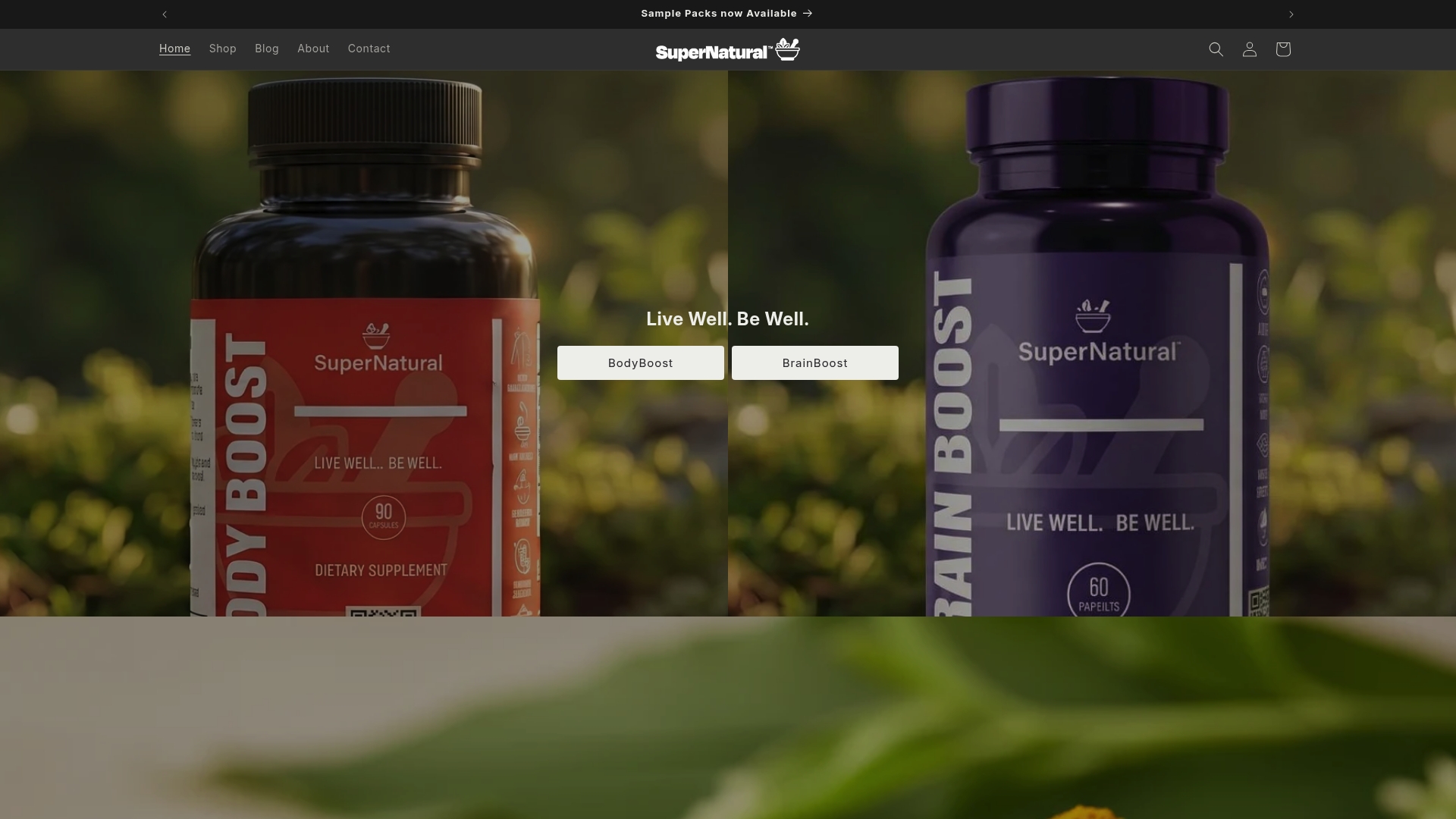
Our BrainBoost cognitive support formula is designed for people who want sharper focus and mental clarity backed by clinically researched ingredients. For those managing inflammation alongside stress, our patented BioSoluble Curcumin process delivers significantly better bioavailability than standard curcumin, so you actually absorb what you take. BodyBoost supports immune resilience, which adaptogens like Holy basil and Cordyceps also target. If you are ready to build a supplement routine grounded in real science, SuperNatural Supplements gives you a starting point you can trust.
FAQ
What are adaptogenic herbs?
Adaptogenic herbs are plants that help the body resist physical, chemical, and emotional stress by modulating the HPA axis and multiple cellular signaling pathways. They produce a normalizing effect rather than a stimulating or sedating one.
How long does it take for adaptogens to work?
Onset varies by herb. Rhodiola rosea produces stimulating effects within 30 minutes, while Ashwagandha requires at least 60 days of consistent use for measurable stress and sleep improvements.
What are the best adaptogens for anxiety?
Ashwagandha and Holy basil are the strongest options for anxiety. Ashwagandha reduces cortisol through HPA axis modulation, and Holy basil directly antagonizes the CRF1 receptor to inhibit cortisol release.
Can you take multiple adaptogens together?
Yes, and clinical studies show multi-herb blends including Rhodiola, Holy basil, and Ashwagandha produce broader mood benefits than single herbs. Start with one herb to identify your response before combining.
Are adaptogenic herbs safe for daily use?
Most adaptogens are safe for daily use in healthy adults when taken as standardized extracts at recommended doses. Always consult a qualified healthcare provider before use if you are pregnant, nursing, or taking prescription medications.
This article is provided for educational and informational purposes only and does not constitute providing medical advice or professional services. Always consult with a qualified and licensed physician or other medical care provider. Statements have not been evaluated by the Food & Drug Administration. This product is not intended to diagnose, treat, cure, or prevent any disease.