

You could be taking the right supplements at the right dose and still absorbing only a fraction of what the label promises. That gap between what you swallow and what actually reaches your cells is called bioavailability, and understanding how to enhance bioavailability is one of the most overlooked factors in any serious wellness routine. Poor solubility, first-pass metabolism, and the wrong timing can all cut absorption dramatically. This guide walks you through why those barriers exist and exactly what you can do, practically and scientifically, to make every supplement count.
Table of Contents
- Key takeaways
- How to enhance bioavailability: the barriers you need to understand
- Practical strategies to improve nutrient absorption at home
- Advanced formulation technologies improving supplement absorption
- Choosing and using bioavailable supplements wisely
- My honest take on bioavailability and supplement choices
- Experience the difference with SuperNatural Supplements
- FAQ
Key takeaways
| Point | Details |
|---|---|
| Formulation beats dose | Higher amounts do not guarantee more absorption; how a supplement is made determines how much your body uses. |
| Fat with fat-soluble vitamins | Taking vitamins A, D, E, and K alongside dietary fat is one of the simplest ways to improve nutrient absorption immediately. |
| Particle size matters | Smaller particles dissolve faster, which is why micronized and nanosized ingredients consistently outperform standard powders. |
| Advanced delivery systems work | Nanocarriers and lipid-based systems protect sensitive compounds and shift absorption into more efficient pathways. |
| Curcumin needs help | Standard curcumin absorbs at roughly 1%, making formulation technology the only realistic path to meaningful results. |
How to enhance bioavailability: the barriers you need to understand
Before you can fix an absorption problem, you need to know where the bottleneck actually is. Scientists classify absorption limits into two broad categories: dissolution-limited and permeability-limited. Identifying which barrier applies to a given compound is the first step in selecting the right enhancement strategy, because the solutions are completely different.
Dissolution-limited compounds simply do not dissolve well enough in the watery environment of your gut. Think of it like dropping a large sugar cube into a glass versus finely granulated sugar. The granules dissolve almost instantly while the cube takes much longer. Nutrients with poor water solubility fall into this category, and they need either smaller particle sizes or a different carrier to reach your bloodstream in meaningful amounts.
Permeability-limited compounds dissolve just fine but cannot cross the intestinal wall efficiently. Large molecules, charged peptides, and certain polyphenols face this challenge. Here, the physical barrier of the gut lining is the problem, not the dissolution speed. Addressing it requires different strategies, including specialized delivery vehicles or permeation-enhancing excipients.
A few other barriers are worth understanding:
- First-pass metabolism: After absorption, nutrients travel through the liver before entering general circulation. The liver can break down a significant portion of certain compounds, reducing what actually reaches your target tissues.
- Enzymatic degradation: Digestive enzymes in the stomach and small intestine can break down sensitive molecules (particularly peptides and proteins) before they ever get a chance to absorb.
- Solubility mismatch: Fat-soluble vitamins like A, D, E, and K require dietary fat and bile to form micelles, the tiny fat droplets that ferry these nutrients through the gut wall. Without fat present, absorption drops sharply.
Pro Tip: If you take a fat-soluble vitamin supplement and feel like it is not working, ask yourself what you ate alongside it. A completely fat-free meal will blunt absorption considerably.
Practical strategies to improve nutrient absorption at home
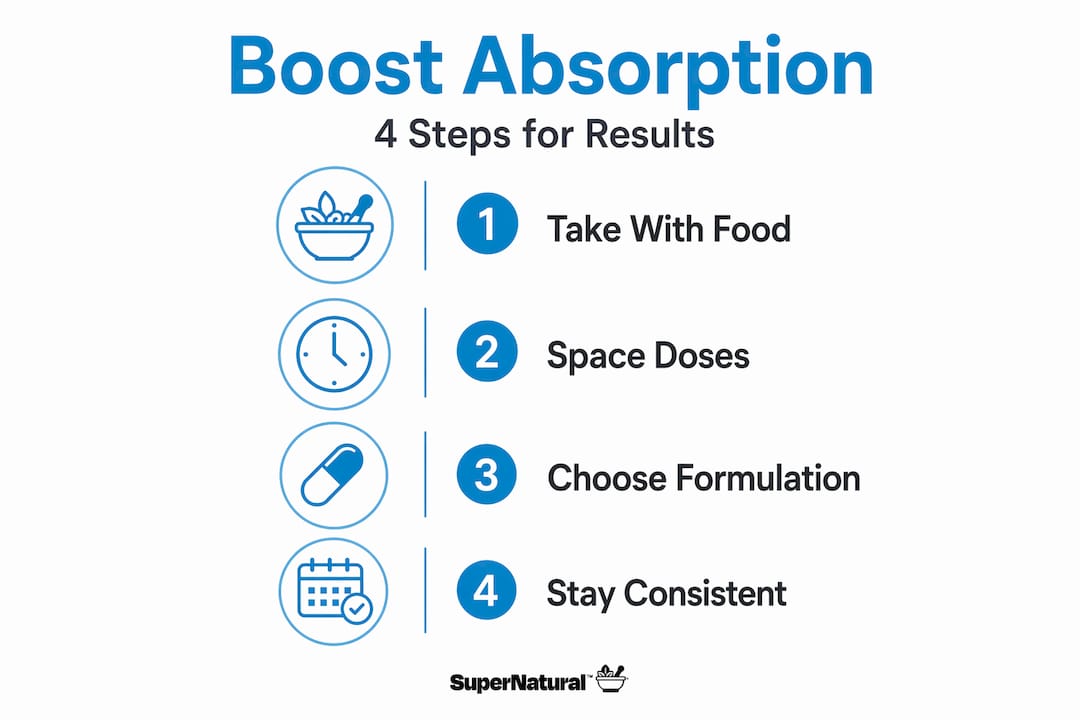
The good news is that several increase bioavailability techniques require no special equipment and cost nothing extra. Small adjustments to timing, pairing, and meal context can produce real differences in how much your body actually uses.
- Pair fat-soluble vitamins with a meal containing healthy fats. Avocado, olive oil, nuts, or eggs all provide the fat needed to trigger bile release and micelle formation. This single habit can meaningfully shift how much vitamin D or K2 you absorb from a supplement.
- Avoid calcium and iron at the same time. These two minerals compete for the same intestinal transporters. Taking them simultaneously can cut absorption of both by a significant margin. Space them at least two hours apart.
- Take curcumin supplements with food. Standard curcumin absorbs at roughly 1%, making both food context and formulation technology critical for getting any real benefit.
- Watch for absorption inhibitors. Tannins in tea and coffee can bind to iron and reduce its uptake. Certain medications, including some antacids, can interfere with magnesium and calcium absorption. Timing your supplements away from these substances makes a measurable difference.
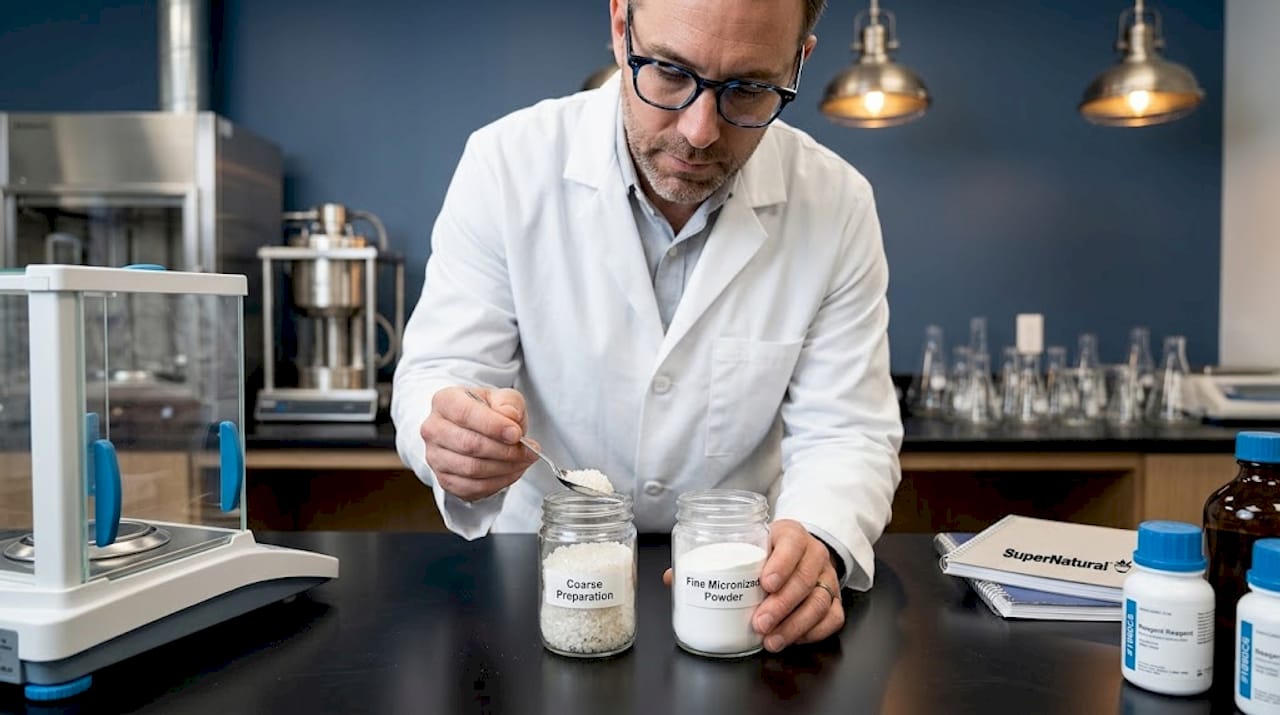
- Consider micronized supplement forms. Micronized powders, where particles are reduced to 1 to 10 micrometers, dissolve far faster in gut fluid than conventional powders. Many reputable manufacturers use this process for nutrients with poor water solubility.
- Stay hydrated. Water is the solvent your gut relies on to dissolve water-soluble nutrients. Chronic mild dehydration slows dissolution and can blunt absorption of B vitamins and vitamin C.
One thing to resist is the instinct to simply double your dose when a supplement seems ineffective. Saturable transporters and metabolism limit absorption beyond certain thresholds, meaning more of the same poorly absorbed form often just means more excreted rather than more absorbed. Formulation and context govern bioavailability far more than raw dosage does.
Pro Tip: Building a daily supplement schedule around your meals rather than treating supplements as a standalone habit is one of the simplest and most underused ways to improve overall absorption.
Advanced formulation technologies improving supplement absorption
What happens inside a supplement manufacturing facility has just as much impact on your results as what you do at home. These bioavailability enhancement strategies represent where the science has moved significantly over the past decade.
Particle size reduction
Jet milling reduces particles to 1 to 5 micrometers without the heat contamination risk of mechanical grinding. Smaller particles mean dramatically increased surface area, which accelerates dissolution in gut fluid. This is particularly important for BCS Class II compounds (poorly soluble, highly permeable) where solubility is the rate-limiting factor.
Nanocarrier and lipid-based delivery systems
Nanocarriers including liposomes, lipid nanoparticles, and polymeric nanoparticles take the protect-and-transport principle to another level. Mucoadhesive coatings, PEGylation, and pH-sensitive systems allow these carriers to engage mucosal uptake mechanisms in the gut wall, extend how long a nutrient stays in circulation, and even target specific tissues. Think of them as armored delivery vehicles that get a sensitive compound past security checkpoints it would never clear on its own.
Peptide formulation advances
Oral peptides have very low bioavailability due to their size, charge, and vulnerability to digestive enzymes. Single-excipient approaches rarely move the needle much. Multi-excipient rational formulations that combine protease inhibitors with permeation enhancers and protective coatings deliver synergistic improvements that no individual component achieves alone.
Here is a side-by-side look at these technologies:
| Technology | Primary mechanism | Best suited for |
|---|---|---|
| Micronization | Increases surface area, speeds dissolution | Poorly water-soluble nutrients (BCS Class II) |
| Lipid nanoparticles | Encapsulates and protects, enhances mucosal uptake | Fat-soluble vitamins, sensitive polyphenols |
| Liposomal delivery | Mimics cell membrane structure for direct absorption | Vitamin C, curcumin, glutathione |
| Phytosome complexes | Binds plant compounds to phospholipids | Curcumin, milk thistle, green tea extract |
| Multi-excipient formulation | Combines protease inhibitors with permeation enhancers | Oral peptides, fragile bioactives |
Choosing and using bioavailable supplements wisely
Knowing the science is one thing. Applying it at the point of purchase is where most people lose the thread. Here is what to look for when selecting supplements that genuinely prioritize methods to boost bioavailability.
- Look for named delivery technologies on the label. Terms like liposomal, phytosome, BioSoluble, nanosized, or micronized indicate the manufacturer has invested in formulation science beyond simply grinding raw material into a capsule.
- Check for piperine disclosures. Piperine (black pepper extract) is widely used to increase curcumin absorption and it does work, but there are legitimate safety considerations around its interaction with certain medications and its broad enzyme-inhibiting effects. If a product uses piperine, check with your doctor, especially if you take prescription medications.
- Distinguish fat-soluble from water-soluble vitamins. Fat-soluble vitamins (A, D, E, K) need to be taken with food containing fat. Water-soluble vitamins (B complex, C) are generally more forgiving with timing but still benefit from meal context for stability.
- Scrutinize bioavailability claims carefully. A claim like “10x more bioavailable” should be backed by human clinical data, not just cell studies. Ask whether the comparison was made against raw, unformulated material (a low bar) or against other enhanced forms.
- Follow the recommended dose. Exceeding absorption thresholds does not translate to greater benefits and in some cases increases the risk of adverse effects. More is not better when your transporters are already saturated.
- Consult a healthcare provider before combining multiple high-bioavailability supplements, particularly if you are managing a health condition or taking medications. A bioavailable supplements guide can help you frame the right questions to ask.
My honest take on bioavailability and supplement choices
I have seen this pattern more times than I can count. Someone buys a reputable supplement, takes it faithfully for two months, and feels nothing. Their first instinct is that the ingredient does not work. The real issue is almost always absorption, not the ingredient itself.
The single biggest misconception I encounter is that higher dose equals better results. It feels logical. It is almost always wrong. Your gut is not a passive pipe. It has transporters, enzymes, and metabolic checkpoints that actively regulate what gets through. Once those systems are saturated, extra milligrams just pass through.
What I have learned from years of working with formulation science is that the why high bioavailability conversation is really a conversation about respect for biology. You cannot brute-force your way past a permeability barrier with more powder. You need the right vehicle, the right timing, and the right context.
The benefits of improved bioavailability are not theoretical. They show up as measurable differences in blood levels, in how a person feels, and in whether a supplement actually does what the research says it should. Curcumin is the clearest example I know. At roughly 1% oral bioavailability in standard form, you would need to take an almost absurd amount of raw turmeric extract to match what a well-formulated product delivers at a fraction of the dose.
My advice: stop evaluating supplements by milligrams and start evaluating them by formulation technology. The two numbers are not the same thing.
— SuperNatural
Experience the difference with SuperNatural Supplements
At SuperNatural Supplements, we put years of research into solving exactly the absorption problem this article describes. Our patented BioSoluble® Curcumin™ process was developed specifically to overcome the 1% bioavailability ceiling that makes standard curcumin supplements so unreliable. The result is dramatically higher systemic exposure from a dose that is practical to take daily.
Our BodyBoost formula draws on the same formulation philosophy to support superior immune defense, while BrainBoost is designed for advanced cognitive support with absorption-optimized ingredients. Whether your priority is inflammation, immunity, or mental clarity, every SuperNatural product is built around one principle: getting the active compounds where your body actually needs them. Explore the full range and see what a difference formulation science makes.
FAQ
What does bioavailability mean for supplements?
Bioavailability refers to the proportion of a nutrient or compound that actually enters your bloodstream and becomes available for use by your body. A supplement can contain a high dose on the label and still deliver very little if its bioavailability is poor.
Why does standard curcumin have such low bioavailability?
Standard curcumin has an oral bioavailability of approximately 1% due to poor water solubility, rapid metabolism, and fast elimination. Enhanced formulations using lipid carriers, phytosome complexes, or patented processes like BioSoluble technology are needed to achieve meaningful absorption.
Does taking more of a supplement fix poor absorption?
No. Saturable transporters and metabolic limits mean that exceeding certain doses delivers diminishing returns. Formulation quality and meal timing consistently have a greater impact on how much your body absorbs than simply increasing the dose.
What are the most practical ways to improve nutrient absorption?
Taking fat-soluble vitamins with a meal containing healthy fats, spacing competing minerals like calcium and iron at least two hours apart, and choosing supplements with named delivery technologies like liposomal or micronized forms are among the most effective approaches.
Are nanocarriers safe in supplements?
Nanocarrier-based delivery systems are used in both pharmaceutical and nutritional products and have a growing body of safety data behind them. As with any supplement, look for products with transparent ingredient disclosures and consult a healthcare provider if you have specific health concerns.
This article is provided for educational and informational purposes only and does not constitute providing medical advice or professional services. Always consult with a qualified and licensed physician or other medical care provider. Statements have not been evaluated by the Food & Drug Administration. This product is not intended to diagnose, treat, cure, or prevent any disease.