

Cognitive function is defined as the brain’s ability to process information, form memories, sustain attention, and solve problems effectively. The encouraging news is that roughly 40% of dementia risk is modifiable through consistent lifestyle choices. That single fact changes everything about how you should approach brain health. Knowing how to improve cognitive function is not about finding a magic pill. It is about building daily habits across six well-studied pillars: exercise, sleep, nutrition, stress management, mental engagement, and social connection. Each one matters, and together they produce results that no single intervention can match.
How does regular physical exercise improve cognitive function?
Exercise is the single most well-documented lifestyle factor for brain health. Regular physical activity improves cerebral blood flow, supports neuroplasticity, and reduces the risk of cognitive decline and dementia. Think of it like upgrading the plumbing in your brain. More blood flow means more oxygen and nutrients reaching neurons that need them most.
The mechanism behind this involves brain-derived neurotrophic factor, or BDNF. Exercise triggers the release of BDNF, a protein that promotes the growth and survival of neurons. Higher BDNF levels are directly linked to better memory, faster learning, and stronger attention. You do not need to run marathons to get this benefit.

Consistency matters far more than intensity. Moderate daily movement outperforms occasional extreme workouts for long-term brain health. Public health guidelines recommend 150 minutes per week of moderate aerobic activity, such as brisk walking, cycling, or swimming. Spreading that across five days gives you 30 minutes per session, which is very manageable.
Strength training also contributes. Resistance exercise two to three times per week supports executive function and processing speed. Combining aerobic and strength work gives your brain the broadest benefit.
Key exercise habits to build:
- Walk briskly for 30 minutes, five days per week
- Add two strength training sessions per week
- Choose activities you genuinely enjoy, since adherence is everything
- Take the stairs, park farther away, and move during phone calls
- Track your weekly minutes to stay accountable
Pro Tip: Pick one physical activity you actually look forward to. Enjoyment drives consistency, and consistency drives results. A 30-minute dance class you love beats a 60-minute gym session you dread.
What is the role of diet and nutrition in improving cognitive health?
Diet shapes your brain chemistry every single day. Mediterranean, DASH, and MIND diets are all strongly associated with slower cognitive decline. Each one emphasizes plants, fiber, healthy fats, and minimal processed food. The common thread is reducing chronic inflammation, which directly damages neurons over time.
Antioxidants found in berries, leafy greens, and colorful vegetables neutralize free radicals that accelerate brain aging. Omega-3 fatty acids, particularly DHA found in fatty fish like salmon and sardines, support the structural integrity of neuron membranes. Polyphenols in foods like blueberries, dark chocolate, and olive oil protect against oxidative stress and support memory. You can find a deeper breakdown of these nutrients in this brain health diet guide from SuperNatural Supplements.
High-sugar and ultra-processed diets do the opposite. They impair neuroplasticity, spike inflammation, and disrupt the gut-brain axis, which affects mood and cognition. Cutting back on refined carbohydrates and processed snacks is one of the fastest ways to notice a difference in mental clarity.
| Diet | Core Focus | Brain Benefit |
|---|---|---|
| Mediterranean | Olive oil, fish, vegetables, legumes | Reduces inflammation, supports memory |
| DASH | Low sodium, fruits, whole grains | Protects blood vessels feeding the brain |
| MIND | Berries, leafy greens, nuts, fish | Specifically targets cognitive decline prevention |
Pro Tip: Add one handful of blueberries and one serving of leafy greens to your daily meals. These two foods alone deliver a meaningful dose of antioxidants and polyphenols that support long-term brain health.
How important is quality sleep for cognitive improvement and mental clarity?
Sleep is not passive recovery. It is when your brain does its most critical maintenance work. Seven to eight hours of quality sleep is the recommended range for adults to support memory consolidation and cognitive performance. People who consistently hit this range perform measurably better on cognitive tests than those who sleep less.
During deep sleep, the brain converts short-term memories into long-term storage and clears metabolic waste through the glymphatic system. That waste includes amyloid-beta proteins linked to Alzheimer’s disease. Disrupted or insufficient sleep allows these toxins to accumulate. Over time, that accumulation raises dementia risk significantly.
Sleep also regulates emotional processing. Poor sleep raises cortisol, impairs decision-making, and makes it harder to stick to every other brain-healthy habit you are trying to build. It is the foundation that everything else rests on.
Practical sleep hygiene habits that work:
- Go to bed and wake up at the same time every day, including weekends
- Keep your bedroom cool, dark, and quiet
- Avoid screens for at least 60 minutes before bed
- Limit caffeine after 2:00 PM
- Avoid alcohol within three hours of sleep, since it fragments sleep architecture
Which mental exercises best sharpen focus and build brain resilience?
Mental stimulation actively builds cognitive reserve, the brain’s buffer against decline. Frequent engagement in mentally stimulating activities reduces the risk of mild cognitive impairment by 50% in adults in their 70s and 80s. That is a striking number. It means the habits you build now have compounding returns decades later.
The most effective mental exercises share one quality: they require active effort. Passive activities like watching television do not build the same neural connections. Reading complex material, learning a new language, playing a musical instrument, and working through logic puzzles all force the brain to form new pathways. That process is neuroplasticity in action.
Targeted mental challenges should be manageable and progressive. Starting with small, achievable goals, like memorizing three new names or facts each day, builds the habit without triggering burnout. Overwhelming yourself with a 90-day intensive program on day one is a reliable way to quit by day three.
Effective cognitive engagement activities include:
- Reading books, long-form articles, or learning-based podcasts daily
- Learning a new language using structured methods like spaced repetition
- Playing chess, bridge, or strategy-based games
- Taking up a musical instrument, even as a beginner
- Practicing a new skill like cooking a cuisine you have never tried
Pro Tip: Set one small, specific mental challenge each morning. “I will learn five new words in Spanish today” works better than “I will improve my memory.” Specificity creates follow-through.
How do stress management and social connection protect your brain?
Chronic stress is one of the most underestimated threats to brain health. Elevated cortisol from chronic stress damages the hippocampus, the brain region most responsible for forming and retrieving memories. This damage is not just temporary. Prolonged high cortisol shrinks hippocampal volume over time, directly impairing memory and increasing cognitive decline risk.
Mindfulness meditation and slow, controlled breathing activate the parasympathetic nervous system, which lowers cortisol and reduces inflammation. Even ten minutes of daily meditation produces measurable changes in attention and emotional regulation within weeks. You do not need a retreat or an app subscription. Sitting quietly, focusing on your breath, and returning your attention when it wanders is the entire practice.
Social interaction engages multiple cognitive processes simultaneously, including attention, language, memory, and emotional processing. Socially active adults show slower cognitive decline in observational research. Loneliness, by contrast, accelerates decline at a rate comparable to physical inactivity. Social connection is not a luxury. It is a brain health necessity.
Practical strategies to manage stress and stay connected:
- Schedule regular time with friends or family, treating it like a medical appointment
- Join a community group, class, or volunteer organization
- Practice ten minutes of mindfulness or breathing exercises each morning
- Limit news and social media consumption, which amplify stress without social benefit
- Call or video chat with someone you care about at least three times per week
Key Takeaways
Consistency across lifestyle factors matters more than perfection in any single area. Combining exercise, sleep, nutrition, mental engagement, stress management, and social connection produces the strongest and most lasting improvements in cognitive function.
| Point | Details |
|---|---|
| Exercise daily | Aim for 150 minutes of moderate aerobic activity per week to support BDNF and blood flow. |
| Prioritize sleep | Seven to eight hours nightly consolidates memory and clears brain toxins. |
| Eat a brain-healthy diet | Follow Mediterranean, DASH, or MIND dietary patterns to reduce inflammation. |
| Challenge your brain | Frequent mental stimulation cuts mild cognitive impairment risk by up to 50%. |
| Manage stress and connect | Reducing cortisol and staying socially active protects hippocampal health. |
What I have learned about building brain habits that actually stick
The biggest mistake people make is treating brain health like a project with a finish line. They go hard for two weeks, then stop. Real cognitive improvement comes from habitual daily activity that you can sustain for years, not occasional intense efforts.
We have seen this pattern repeatedly. Someone reads about the MIND diet and overhauled their entire kitchen in one weekend. Someone else started a 60-minute daily meditation practice from zero. Both burned out within a month. The people who actually improve their cognitive health long-term are the ones who added one habit at a time and made it boring on purpose.
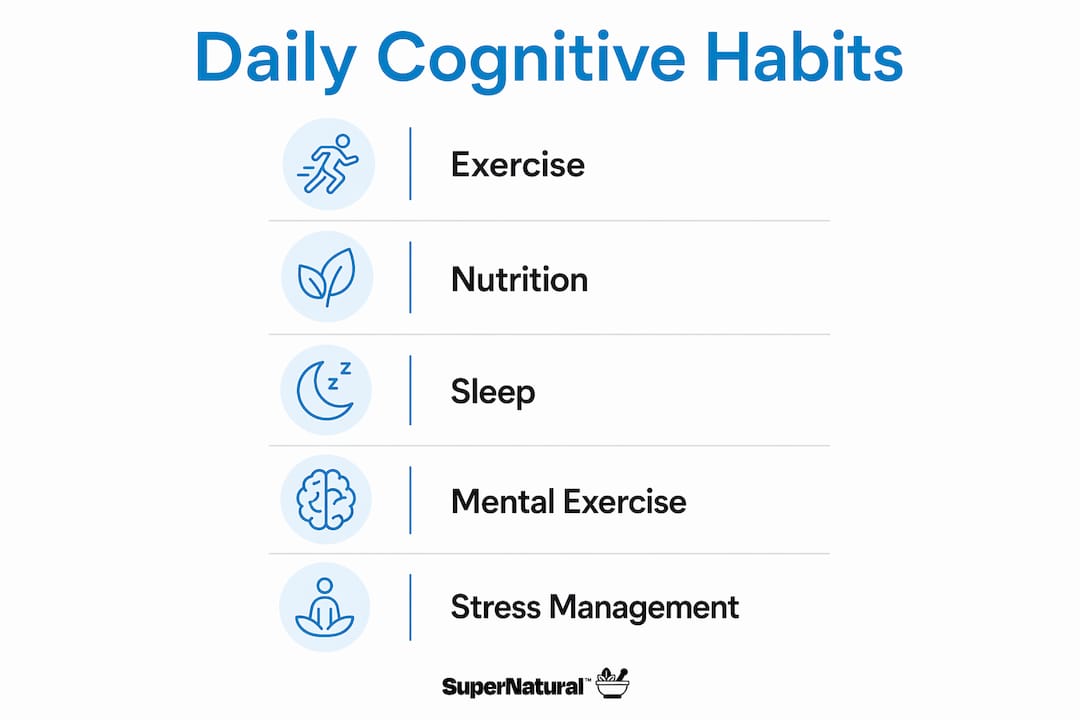
The brain is also more adaptable than most people realize. Neuroplasticity does not stop at 40 or 60 or 80. The five pillars of brain health, which are physical fitness, quality sleep, brain-healthy nutrition, stress reduction, and targeted cognitive training, all support neuroplasticity at any age. Starting late is still starting. The brain responds.
Track small wins. Write down what you did each week. Notice when your focus improves or when you recall names more easily. Those small signals are real data. They tell you the habits are working, and that feedback keeps you going when motivation dips.
— SuperNatural
Supporting your brain with SuperNatural Supplements
Lifestyle habits form the foundation of cognitive health, and the right supplementation can work alongside them. SuperNatural Supplements developed BioSoluble® Curcumin™ using a patented process that delivers significantly better bioavailability than standard curcumin. Curcumin is a polyphenol with well-studied anti-inflammatory properties that support brain health at the cellular level. BrainBoost, SuperNatural’s advanced cognitive support formula, is built on this foundation.

When you pair a brain-healthy diet and consistent exercise with a supplement designed for absorption, you give your body the best possible conditions for mental clarity and long-term cognitive resilience. Visit SuperNatural Supplements to learn how BrainBoost and BioSoluble® Curcumin™ fit into a complete brain health routine.
FAQ
What lifestyle changes improve cognitive function the most?
Exercise, quality sleep, and a brain-healthy diet produce the strongest combined effect on cognitive function. Roughly 40% of dementia risk is modifiable through these consistent lifestyle changes.
How many hours of sleep does the brain need for optimal function?
Adults need seven to eight hours of quality sleep per night to support memory consolidation, brain repair, and cognitive performance.
Can mental exercises really reduce the risk of cognitive decline?
Yes. Frequent mental stimulation reduces the risk of mild cognitive impairment by up to 50% in older adults. Activities like reading, learning a language, and playing strategy games all build cognitive reserve.
Does stress actually damage the brain?
Chronic stress raises cortisol, which damages the hippocampus and impairs memory over time. Managing stress through mindfulness and social connection directly protects brain structure and function.
How does social connection support brain health?
Social interaction stimulates attention, memory, and language processing simultaneously, strengthening neural networks and slowing age-related cognitive decline.
This article is provided for educational and informational purposes only and does not constitute providing medical advice or professional services. Always consult with a qualified and licensed physician or other medical care provider. Statements have not been evaluated by the Food & Drug Administration. This product is not intended to diagnose, treat, cure, or prevent any disease.