

To optimize your detox routine right now, do three things: reduce your incoming toxic burden (processed foods, environmental pollutants), open your elimination pathways with proper hydration (adequate daily water intake by body weight) and daily bowel movements, and support both Phase I and Phase II liver detoxification with targeted nutrition and cautious supplementation. Experts like Dr. Julian Douwes and the Biohacker Alliance consistently frame this as a long-term, continuous process — not a weekend cleanse. SuperNatural Supplements’ product families (BioSoluble® Curcumin™, BodyControl, BodyBoost, BrainBoost) are designed to fit precisely into this staged, evidence-aligned approach.
Quick-start checklist:
- Hydrate first. Calculate your daily water target based on your body weight to ensure proper hydration.
- Eat cruciferous vegetables, alliums, and fiber daily to activate Phase II liver enzymes and keep transit moving.
- Add targeted supplements only after your elimination pathways (bowel regularity, hydration) are already working.
Pro Tip: Upregulating Phase I detoxification without adequate Phase II support creates a buildup of reactive intermediates — which can make you feel worse, not better. Always pair Phase I activators with Phase II cofactors like NAC, glycine, and NRF2 activators.
Table of Contents
- Why long-term, balanced support outperforms short cleanses
- What does a practical daily detox checklist look like?
- Which supplements actually support the detoxification process?
- How do lifestyle habits amplify your detox results?
- How do you start a detox plan safely?
- How do you track whether your detox routine is working?
- What mistakes make a detox routine ineffective or harmful?
- Key Takeaways
- SuperNatural’s perspective on long-term detox support
- SuperNatural Supplements’ detox-support product options
- Useful sources and further reading
- Medical and regulatory disclaimer
Why long-term, balanced support outperforms short cleanses
The single most important principle in any detoxification routine guide is this: balance Phase I and Phase II liver activity while simultaneously reducing what goes in. Everything else is secondary.
Here is why that balance matters. Phase I enzymes (cytochrome P450s) convert fat-soluble toxins into reactive intermediates. Phase II enzymes — through glutathione conjugation, glucuronidation, sulfation, methylation, and glycine conjugation — neutralize those intermediates and prepare them for excretion. Phase I without Phase II is like opening a pressure valve without a release pipe: reactive compounds accumulate and cause oxidative stress.
Dr. Julian Douwes emphasizes that lowering ongoing exposures to processed foods and environmental pollutants is often more impactful than any supplement stack. The Biohacker Alliance reinforces this: detox is continuous, and cruciferous vegetables, alliums, and fiber consumed over months — not days — represent the most evidence-based dietary foundation available.
Hydration anchor: 30–35 mL per kg body weight daily supports lymphatic fluidity and renal transport. For most adults, that translates to approximately 1.5–1.8 L of water per day under normal conditions.
Pro Tip: Sulforaphane-rich cruciferous vegetables (broccoli, kale, Brussels sprouts) are among the most studied NRF2 activators available. Two to three servings daily consistently outperform unproven aggressive cleanses for Phase II enzyme induction.
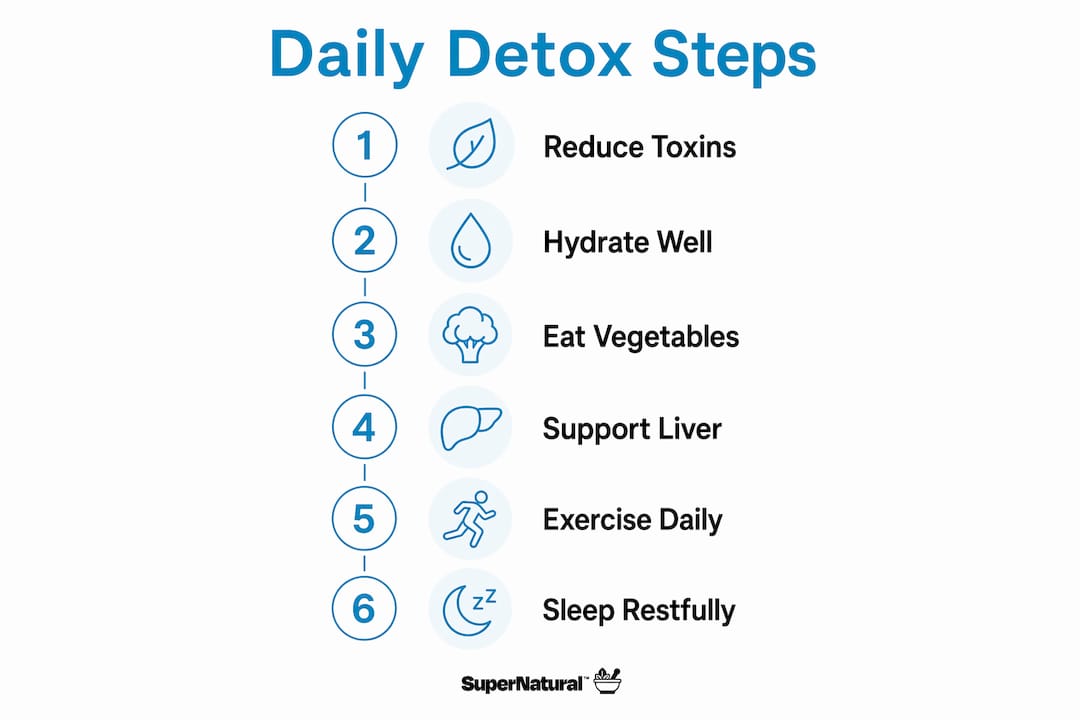
What does a practical daily detox checklist look like?
Start each day with a protocol that primes elimination, supplies Phase II substrates, and spaces binders and supplements correctly:
Hydration math example: A 70 kg adult needs 2.1–2.45 L of water per day (70 × 30–35 mL), adjusted for individual needs. Use filtered water when possible — reverse osmosis filtration removes over 95% of PFAS, lead, arsenic, and chlorine, which meaningfully reduces incoming burden.
Sample daily meal framework:
- Breakfast: Eggs with sautéed kale or broccoli (glycine + cysteine precursors + sulforaphane), plus chia or flaxseed for fiber.
- Lunch: Wild-caught fish or legumes over a mixed greens salad with garlic and onion (alliums for sulfur compounds), plus a piece of fruit with skin for pectin.
- Dinner: Pastured chicken or lentils with roasted Brussels sprouts or cauliflower, olive oil, and herbs like turmeric and rosemary.
- Snack: Berries, nuts, or seeds. Aim for a sufficient amount of fiber daily from these combined sources.
Daily elimination supports:
- Morning movement (20–30 minutes of walking or rebounding) to stimulate lymphatic flow.
- Dry brushing before showering to support dermal circulation.
- Sauna sessions multiple times per week for moderate durations, with electrolyte-aware rehydration afterward.
- Adequate sleep to support glymphatic brain clearance.
- Binder timing rule: Take binders (bentonite clay, modified citrus pectin, chlorella) with appropriate spacing from medications and other supplements.
Which supplements actually support the detoxification process?
Supplements are adjuncts. They work when elimination pathways and diet are already in place — they do not substitute for reducing exposures. Think of them as filling gaps, not doing the heavy lifting.
| Supplement | Typical Clinical Range | Primary Role | Key Caution |
|---|---|---|---|
| NAC (N-Acetyl Cysteine) | typical clinical dosing as advised by healthcare provider | Glutathione precursor | Consult provider if on blood thinners |
| Glycine | typical clinical dosing as advised by healthcare provider | Phase II conjugation substrate | Generally well-tolerated |
| Sulforaphane (broccoli sprout extract) | dosing varies by extract potency | NRF2 / Phase II activation | Dose varies by extract potency |
| Alpha-lipoic acid (ALA) | dosed carefully under supervision | Antioxidant recycling | Avoid high doses without supervision |
| Calcium-D-glucarate | dosage varies; limited human trial data | Inhibits beta-glucuronidase | Limited human trial data |
| Liposomal glutathione | dosing per clinical guidance | Direct antioxidant support | See glutathione dosing protocols for advanced guidance |
Where SuperNatural Supplements fits:
- BioSoluble® Curcumin™ uses a patented process that significantly enhances curcumin bioavailability compared to standard curcumin powder. Standard curcumin is notoriously poorly absorbed — like wanting a strong cup of coffee but only sniffing the beans. BioSoluble® Curcumin™ solves that absorption gap. Learn more about why bioavailable curcumin matters for detox support.
- BodyControl is formulated to promote detoxification and a healthy inflammatory response, making it a natural fit during the liver-support phase.
- BodyBoost supports immune resilience — relevant because detox processes place temporary oxidative stress on the immune system.
- BrainBoost addresses cognitive support, which matters when monitoring brain fog as a detox symptom.
Safety note: The NCCIH states there is no firm scientific conclusion that fasting-based detoxes remove specific toxins, and recommends clinician consultation before any restrictive regimen to avoid electrolyte imbalance or dehydration. Always consult a licensed healthcare provider before combining supplements with prescription medications.
Key supplement safety rules:
- Never start chelation agents without confirmed heavy metal testing and clinician oversight.
- Antioxidant supplements from food sources are preferable to megadose isolated supplements.
- Review supplement roles and evidence limits before building your stack.
How do lifestyle habits amplify your detox results?
Lifestyle supports are high-leverage, low-risk multipliers. No supplement replaces them.

The lymphatic system has no pump of its own — it depends entirely on muscle movement, diaphragmatic breathing, and body position. Rebounding on a mini-trampoline, walking, and deep belly breathing (4 seconds in, 6–8 seconds out) all squeeze lymph vessels and keep fluid moving. Even breaking up long sitting periods helps.
Sauna and induced sweating can excrete measurable amounts of heavy metals, BPA, and phthalates through the skin, though volumes remain small compared to liver and kidney output. The benefit is cumulative: 20–30 minutes, 3–4 times per week, adds up meaningfully over months. Pair every sauna session with electrolyte-replenishing fluids to prevent sodium and potassium shifts.
Sleep is the most underrated detox tool available. The brain’s glymphatic system — which clears neurotoxic waste — is most active during deep sleep, and even mild sleep restriction impairs its function. Seven or more hours on a consistent schedule is non-optional for anyone serious about long-term detox optimization. Practical lifestyle habits for movement and sleep can be stacked gradually without overhauling your entire routine at once.
Pro Tip: Before a sauna session, drink 500 mL of water with a pinch of sea salt or an electrolyte tablet. Replenish again immediately after. Skipping this step is the most common reason people feel dizzy or fatigued post-sauna.
How do you start a detox plan safely?
Start gently with a 1–2 week PreTox, then move into a staged 4–6 week liver-support phase. Speed depends on your baseline health and toxic burden — rushing this is where most people go wrong.
Simple timeline:
- PreTox (weeks 1–2): Remove alcohol, added sugar, processed foods, and chemical additives. Reduce caffeine gradually. Add colorful, fiber-rich plants and quality protein. Normalize hydration and bowel movements.
- Liver support phase (weeks 3–8): Introduce Phase II-supporting foods (crucifers, alliums, glycine-rich proteins) and targeted supplements. Begin binders if indicated, spaced correctly from medications.
- Binder phase (as needed): Use binders like modified citrus pectin or chlorella to capture mobilized compounds, always at least one hour from other supplements or medications.
Suggested baseline labs before intensifying:
| Lab Test | Why It Matters |
|---|---|
| Comprehensive Metabolic Panel (CMP) | Baseline kidney and liver function |
| Liver Function Tests (LFTs) | Detect pre-existing liver stress |
| Complete Blood Count (CBC) | Rule out anemia or immune issues |
| Thyroid panel (TSH, free T3/T4) | Thyroid affects detox enzyme activity |
| Urinary metals (physician-directed) | Confirm heavy metal burden before chelation |
Who needs clinician supervision before starting:
- Pregnant or breastfeeding individuals.
- Anyone with kidney disease, liver disease, or cardiovascular conditions.
- Anyone on prescription medications (especially blood thinners, immunosuppressants, or thyroid drugs).
- Anyone with known or suspected heavy metal exposure.
Follow a complete step-by-step detox workflow to map each phase clearly before you begin.
How do you track whether your detox routine is working?
Track three leading indicators: bowel movement frequency and quality, energy and sleep trends, and symptom direction (improving or worsening). Add periodic labs when your protocol intensifies.
Practical monitoring markers:
- Daily stool log: Aim for one to two complete, comfortable bowel movements per day. Constipation enables bacterial beta-glucuronidase activity, which deconjugates compounds your liver already processed and sends them back into circulation.
- Urine color: Pale straw yellow indicates adequate hydration; dark amber signals you need more fluids.
- 1–4 week symptom log: Note energy, sleep quality, skin changes, and cognitive clarity weekly.
- Repeat labs: Recheck LFTs and CMP after 6–8 weeks if you intensified the protocol.
When to slow down or stop: Worsening fatigue, cognitive changes, persistent GI upset, or abnormal lab results all require clinician review before continuing. These are not “detox reactions” to push through — they are signals to reassess.
Pro Tip: Take weekly photos of any skin changes (rashes, breakouts, improved clarity) alongside a brief written note on energy and sleep. This creates a concrete record that is far more useful than memory alone when you are deciding whether to adjust your protocol.
What mistakes make a detox routine ineffective or harmful?
The single most damaging mistake is upregulating Phase I detoxification without adequate Phase II support. Reactive intermediates accumulate, oxidative stress rises, and symptoms worsen — the opposite of the intended effect.
Six red flags and mistakes to avoid:
- Skipping fiber: Without 25–30 g daily, transit slows and enterohepatic recirculation reabsorbs compounds your liver already cleared. Fix it with legumes, flaxseed, and vegetables.
- Insufficient hydration: Even mild dehydration impairs kidney filtration and lymphatic flow. Use the per-kg calculation, not a generic “eight glasses” rule.
- Starting chelation without testing: Chelation agents mobilize metals indiscriminately and can redistribute them to sensitive tissues without confirmed burden and clinician oversight.
- Taking binders too close to medications: Binders capture everything in the gut — including your prescriptions. One hour minimum separation is non-negotiable.
- Over-relying on short-term cleanses: A three-day juice fast does not replicate months of cruciferous vegetable intake and Phase II enzyme induction.
- Ignoring sleep: Cutting sleep to “fit in” detox protocols is self-defeating. Glymphatic clearance and cellular repair both require consistent, quality sleep.
Constipation deserves special attention. Magnesium citrate (200–400 mg at night), increased fiber, and adequate hydration resolve most cases within days. Address it before intensifying any other part of your protocol.
Key Takeaways
A well-optimized detox routine reduces incoming toxic burden, maintains daily elimination through hydration and fiber, and supports Phase II liver enzymes with targeted nutrition and evidence-aligned supplements.
| Point | Details |
|---|---|
| Reduce incoming burden first | Cutting processed foods and environmental exposures often delivers more impact than any supplement. |
| Hydrate per kg, not by habit | Target 30–35 mL per kg body weight daily; typical adults need approximately 1.5–1.8 L/day. |
| Support Phase II, not just Phase I | Pair any Phase I activator with NAC, glycine, and NRF2-activating foods to prevent reactive intermediate buildup. |
| Monitor bowel movements daily | One to two complete movements per day prevents enterohepatic recirculation of cleared compounds. |
| SuperNatural Supplements as adjuncts | BioSoluble® Curcumin™, BodyControl, BodyBoost, and BrainBoost are designed to complement a staged, elimination-first detox protocol. |
SuperNatural’s perspective on long-term detox support
The wellness industry has a habit of selling urgency. Three-day cleanses, aggressive fasting protocols, and megadose supplement stacks all promise rapid transformation — and most of them skip the foundational work that actually moves the needle. What the research consistently shows, and what we have built our formulations around, is that detoxification is a continuous biochemical process that rewards patience and precision over intensity.
The Phase I/II balance issue is genuinely underappreciated. Most commercial detox products focus entirely on “liver support” without distinguishing between the two phases — which means they may be accelerating Phase I activity without ensuring Phase II has the cofactors it needs. That is a real biochemical risk, not a theoretical one. The safer strategy is to build Phase II capacity first: adequate protein, cruciferous vegetables, alliums, and targeted precursors like NAC and glycine. Supplements then fill specific gaps rather than driving the whole process.
BioSoluble® Curcumin™ exists because standard curcumin’s absorption problem is well-documented. A supplement that never reaches systemic circulation cannot do its job. Our patented process addresses that directly. BodyControl, BodyBoost, and BrainBoost each target a distinct dimension of the detox-adjacent physiology — inflammatory balance, immune resilience, and cognitive clarity — because these systems do not operate in isolation during a detox protocol.
Review the SuperNatural product pages or consult a licensed clinician for personalized dosing guidance before beginning any intensive protocol.
SuperNatural Supplements’ detox-support product options
When your diet is dialed in, your elimination pathways are open, and you are ready to add targeted supplementation, SuperNatural Supplements offers formulas built specifically for this stage.
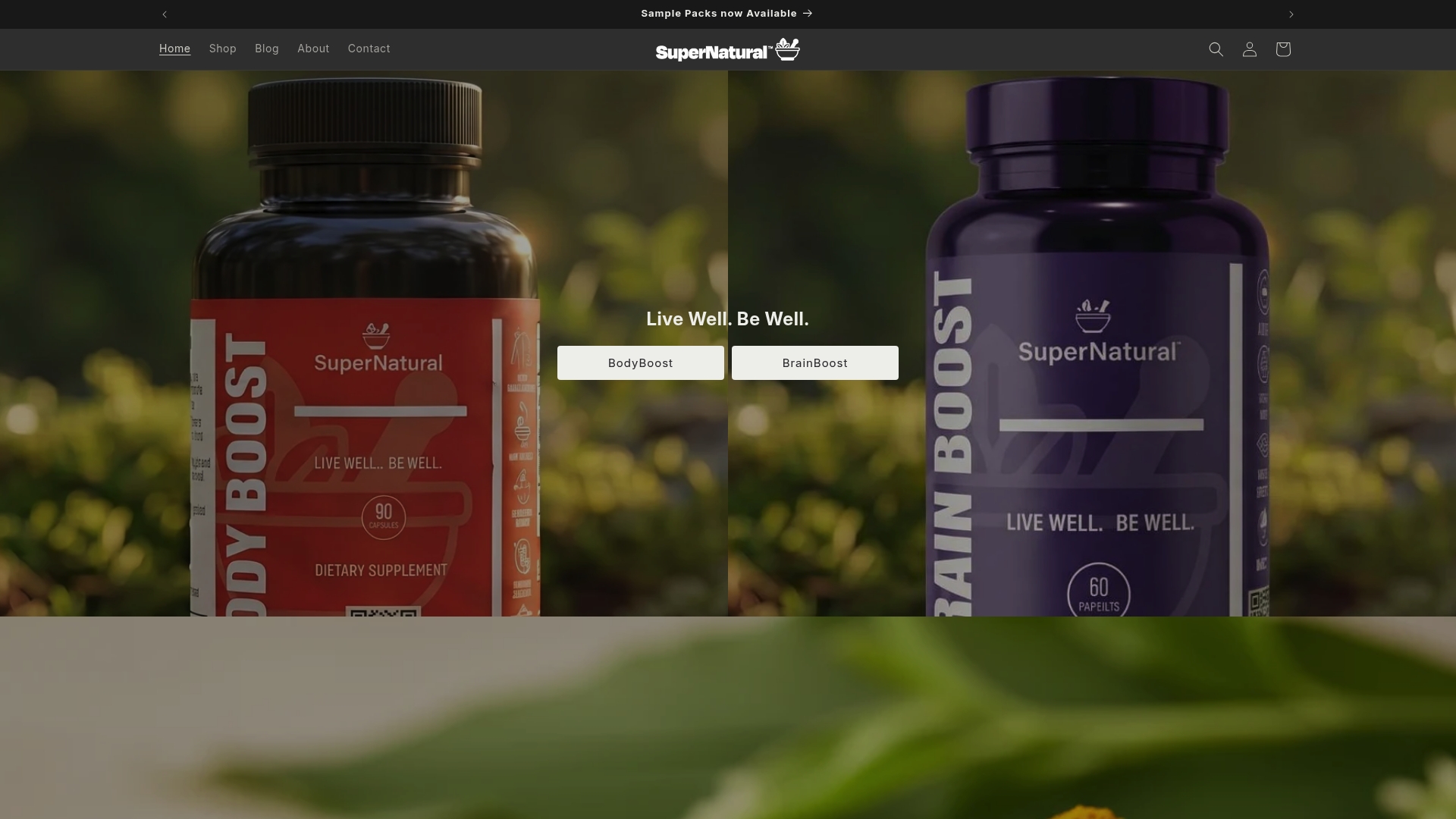
BioSoluble® Curcumin™ uses a patented process that delivers significantly enhanced bioavailability compared to standard curcumin — making it the practical choice when you want curcumin’s anti-inflammatory and NRF2-supporting properties to actually reach your cells.
BodyBoost supports immune resilience during the oxidative demands of an active detox phase.
BrainBoost addresses cognitive clarity, which is worth supporting when brain fog appears as a detox symptom.
BodyControl rounds out the lineup with a formula targeting healthy inflammatory response and detoxification support.
Browse the full detox adjunct collection for complementary hydration tools and habit-tracking resources. Always consult a licensed healthcare provider before combining these products with prescription medications or restrictive dietary protocols.
Useful sources and further reading
The following authoritative sources informed this article. Each is worth reading directly for deeper context.
- Detoxes and Cleanses: What You Need to Know — NCCIH
- Gentle Detoxification Protocol — Dr. Julian Douwes, M.D.
- Detox & Cleansing: The Complete Guide — Biohacker Alliance
- 7-Step Nutritional Detox Plan — Dietitian Lesley
- Full Body Detox: Misconceptions and 6 Ways to Rejuvenate — Healthline
- What Is Natural Detox? Evidence-Based Guide — SuperNatural Supplements
- The Role of Detoxification in Wellness — SuperNatural Supplements
- The Role of Supplements in Detox: What Science Says — SuperNatural Supplements
Consult a licensed healthcare provider before beginning any intensive detox or supplement protocol, particularly if you are managing a chronic condition or taking prescription medications.
Medical and regulatory disclaimer
This article is provided for educational and informational purposes only and does not constitute providing medical advice or professional services. Always consult with a qualified and licensed physician or other medical care provider. Statements have not been evaluated by the Food & Drug Administration. This product is not intended to diagnose, treat, cure, or prevent any disease.