

Even the most health-conscious people can feel blindsided by persistent colds, sluggish recovery, or nagging inflammation despite eating well and exercising regularly. The truth is, immune resilience isn’t just about doing a few things right. It’s about layering the right nutrients, habits, and targeted supplementation in a way that actually works together. This guide walks you through the science and practical steps to build genuinely stronger immunity in 2026, from foundational nutrients to advanced bioavailable formulas that fill the gaps your diet alone can’t always cover.
Table of Contents
- What your immune system needs: Key nutrients and building blocks
- Step-by-step: Core habits and anti-inflammatory diet
- Advanced supplement strategies: Targeted formulas and personalized plans
- Common mistakes and troubleshooting: Safety, dosing, and what to watch for
- How to monitor progress: Testing, biomarkers, and signs of improvement
- Our perspective: Why true immune support means synergy, not shortcuts
- Next-level support with advanced supplements
- Frequently asked questions
Key Takeaways
| Point | Details |
|---|---|
| Nutrients are foundational | Vitamin C, zinc, selenium, and magnesium play key roles in immune defense and need to be maintained through diet and, when needed, supplements. |
| Lifestyle matters most | Core habits like eating an anti-inflammatory diet, moving regularly, and reducing stress powerfully support immune health. |
| Personalize for results | Advanced, biomarker-guided supplement plans deliver the best results and minimize risks, unlike generic mega-dosing. |
| Check your progress | Track symptoms and key biomarkers such as CRP and WBC to know if your strategy is working. |
| Safety first always | Avoid the common mistake of excess supplementation by focusing on food first and seeking guidance for advanced stacks. |
What your immune system needs: Key nutrients and building blocks
Your immune system is only as strong as the raw materials it has to work with. Think of it like a construction crew. You can have the best workers in the world, but if the supply of essential building materials runs low, the whole project slows down.
Vitamin C is one of the most well-researched immune nutrients. It supports multiple immune functions including maintaining epithelial integrity (your body’s first physical barrier), enhancing B and T cell differentiation, promoting phagocytosis, normalizing cytokines, and even inhibiting viral activity. Getting enough from food is ideal, but stress, illness, and smoking can rapidly deplete your stores.
Zinc is equally critical. Zinc deficiency impairs lymphocyte formation, T cell activity, NK (natural killer) cell function, IL-2 production, and raises the risk of chronic infection and inflammatory disease. Even mild zinc insufficiency, which is surprisingly common in older adults and those following plant-heavy diets, can noticeably blunt immune response.
Selenium may be less talked about, but it’s just as essential. Selenium deficiency affects both your immune response and the pathogenicity of viruses, meaning viruses can actually become more aggressive in a selenium-depleted host. Brazil nuts are one of the most concentrated food sources, but soil depletion in many regions makes dietary sufficiency harder to guarantee.
Magnesium rounds out the core four. Low magnesium is linked to decreased immune cell activity, increased oxidative stress, and elevated inflammatory cytokines like IL-6. Given that magnesium is involved in over 300 enzymatic reactions, a shortfall creates ripple effects well beyond immunity alone.
| Nutrient | Key immune role | Common food sources | Deficiency risk sign |
|---|---|---|---|
| Vitamin C | Barrier integrity, T cell support | Citrus, bell peppers, kiwi | Frequent colds, slow healing |
| Zinc | Lymphocyte activation, NK cell function | Oysters, beef, pumpkin seeds | Slow wound healing, hair loss |
| Selenium | Immune response, antiviral defense | Brazil nuts, tuna, eggs | Fatigue, thyroid issues |
| Magnesium | Reduces inflammatory cytokines | Spinach, almonds, dark chocolate | Muscle cramps, poor sleep |
For a broader view of how bioavailable supplement forms can help you actually absorb these nutrients at meaningful levels, the delivery method matters just as much as the dose.
Pro Tip: Ask your doctor to run a full micronutrient panel annually, not just standard bloodwork. Hidden deficiencies in zinc, selenium, and magnesium are common even in people eating relatively well, and knowing your actual levels removes all the guesswork from your supplement plan.
Step-by-step: Core habits and anti-inflammatory diet
Knowing which nutrients you need is step one. The next step is making sure your daily lifestyle actually delivers them consistently, because supplements can fill gaps but they can’t replace a foundation that doesn’t exist yet.

An anti-inflammatory diet centered on fruits, vegetables, nuts, fatty fish, and olive oil has been shown to reduce chronic inflammation and lower disease risk through its rich supply of antioxidants and polyphenols. This isn’t about strict dieting. It’s about building eating patterns that consistently give your immune cells the right environment to function.
Here’s a practical framework to work through:
- Prioritize colorful produce daily. Aim for at least five varied servings of fruits and vegetables. Different colors signal different antioxidants, and variety is what drives the broadest immune benefit.
- Add fatty fish two to three times per week. Salmon, mackerel, and sardines deliver omega-3 fatty acids that directly reduce the production of pro-inflammatory signaling molecules.
- Replace refined oils with olive oil. Extra virgin olive oil contains oleocanthal, a natural compound with anti-inflammatory effects comparable to low-dose ibuprofen when consumed regularly.
- Limit ultra-processed foods and refined sugars. These drive oxidative stress and disrupt the gut microbiome, both of which directly impair immune regulation.
- Support your sleep. Seven to nine hours of quality sleep is when your body produces cytokines (proteins that coordinate immune response). Chronic sleep deprivation cuts cytokine output significantly.
- Move regularly but not excessively. Moderate exercise, think 30 to 45 minutes most days, enhances immune surveillance. Extreme overtraining without recovery can actually suppress immunity.
- Manage stress actively. Chronic stress elevates cortisol, which suppresses lymphocyte activity over time. Breathwork, mindfulness, and even regular social connection have measurable immune benefits.
One mechanism that deserves special attention is the gut-immune connection. Roughly 70 percent of your immune tissue resides in your gut lining. Polyphenols like quercetin suppress key pro-inflammatory cytokines including IL-6, IL-1β, and TNF-α, modulate macrophage polarization toward the anti-inflammatory M2 type, and regulate mucosal immunity through positive changes in gut microbiota composition. In other words, eating polyphenol-rich foods doesn’t just fight inflammation directly. It retrains your gut environment to produce a more measured, controlled immune response over time.
For more on how natural ingredients address inflammation at the molecular level, there’s a lot of fascinating science connecting specific plant compounds to real measurable outcomes.
Pro Tip: Rather than overhauling your lifestyle all at once, add one change per week and write down how you feel each day. This simple tracking habit helps you identify what’s actually moving the needle for your energy, mood, and immunity rather than assuming everything is working (or isn’t).
Pairing these habits with daily practices that support both brain and immune health creates a compounding effect over time that no single supplement can replicate on its own.
Advanced supplement strategies: Targeted formulas and personalized plans
Once you have a solid lifestyle foundation in place, advanced supplementation becomes a precision tool rather than a random gamble. The difference between a routine multivitamin and a personalized, biomarker-driven stack is significant.
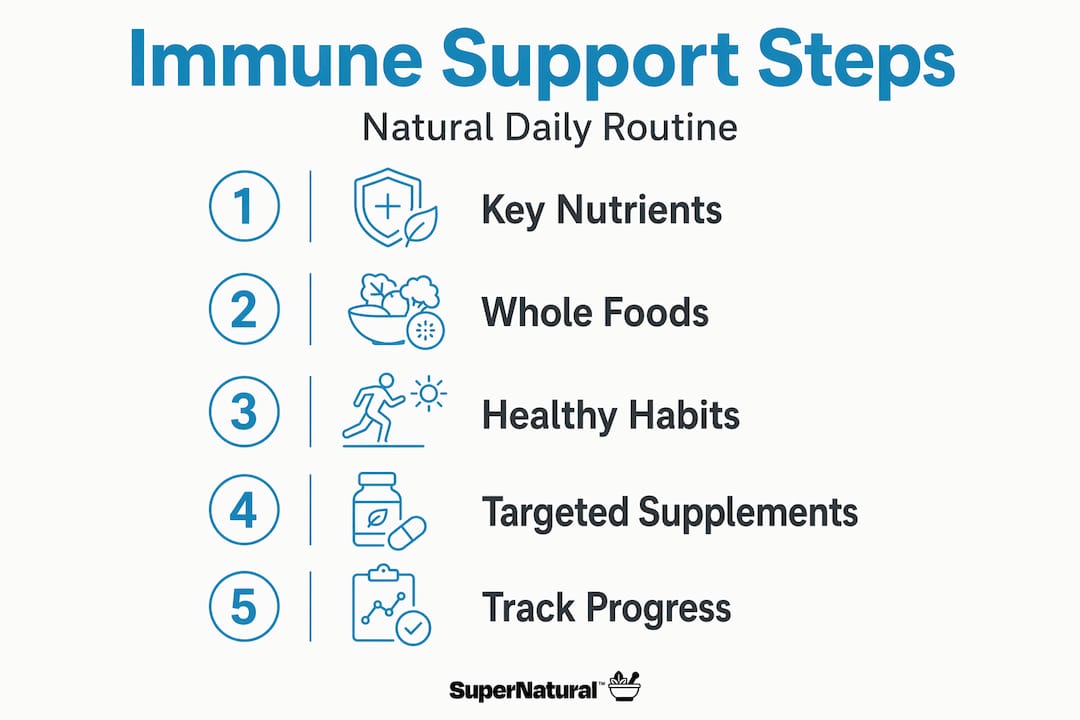
A compelling study found that personalized supplementation with vitamin D, omega-3s, B vitamins, zinc, and selenium reduced C-reactive protein (CRP, a key marker of systemic inflammation) by 33 to 46%, lowered homocysteine by 29 to 37%, reduced white blood cell count (WBC) by 22 to 28%, and dropped ferritin levels by up to 48% in men and anti-TPO antibodies by up to 22% in women over just 12 weeks. These aren’t small adjustments. These are clinically meaningful shifts in measurable disease risk markers.
| Approach | Customization | Key ingredients | Expected results |
|---|---|---|---|
| Basic multivitamin | None | General vitamins/minerals | Modest coverage, unpredictable impact |
| Targeted stack (food-based) | Low | C, zinc, D, magnesium | Improved baseline, variable absorption |
| Personalized biomarker plan | High | D, omega-3, B complex, selenium, curcumin | 33 to 48% reduction in inflammation markers |
Key ingredients worth including in an advanced immune support formula:
- Curcumin (bioavailable form): The active compound in turmeric. Standard curcumin has notoriously poor absorption, which is why the delivery format is critical. More on this below.
- Omega-3 fatty acids (EPA/DHA): Directly reduce inflammatory mediators and support cell membrane integrity.
- Vitamin D3: Functions almost like a hormone in the immune system, activating antimicrobial proteins and regulating T cell response.
- B complex vitamins: B6, B9, and B12 support lymphocyte production and homocysteine metabolism.
- Selenium and zinc: As discussed, these two minerals serve as co-factors in dozens of immune enzyme reactions.
- Polyphenols (quercetin, resveratrol, EGCG): Plant-derived compounds that suppress inflammatory signaling pathways.
Explore the evidence behind natural supplements and inflammation to understand how these compounds interact at the cellular level. And when evaluating any formula, understanding why bioavailability matters is the difference between a supplement that’s listed on the label and one that actually reaches your tissues.
Pro Tip: Run a follow-up micronutrient and inflammatory marker panel 12 weeks after starting any new supplement protocol. The numbers will tell you far more than how you feel subjectively, especially in the early stages when changes are subtle.
Common mistakes and troubleshooting: Safety, dosing, and what to watch for
Even well-intentioned supplement routines can go sideways. The most common mistakes aren’t about taking the wrong things. They’re about taking too much of the right things, or stacking products without understanding how they interact.
Here’s what to watch for:
- Mega-dosing single nutrients: More is genuinely not better. Excess zinc, selenium, and high-dose vitamin C can each impair immune function when taken beyond therapeutic windows, particularly in people who aren’t actually deficient. These nutrients have narrow ranges where they help versus harm.
- Stacking too many products without guidance: Adding five or six different formulas simultaneously makes it impossible to know what’s working or what’s causing side effects. Introduce one new supplement at a time.
- Ignoring interactions with medications: Several immune-support ingredients including high-dose vitamin E, fish oil, and curcumin can affect blood thinning. Always check with your prescribing doctor.
- Skipping the food-first principle: Supplements are exactly that. Supplemental. As the research makes clear, supplements work best when addressing genuine deficiencies alongside a solid diet, sleep, and exercise foundation. They are not magic bullets standing in for poor lifestyle choices.
“Natural doesn’t automatically mean safe at any dose. Even nutrients your body genuinely needs become problematic in excess, particularly when taken without baseline testing. Know your numbers before you stack.”
For a deeper look at the safety profile of curcumin and how to use it responsibly, the curcumin supplement safety guide covers both the benefits and the practical considerations in detail.
How to monitor progress: Testing, biomarkers, and signs of improvement
Building a strong immune strategy without tracking is like driving without a dashboard. You might be making progress, or you might be heading in the wrong direction, and you won’t know until something goes wrong.
Here’s a step-by-step monitoring approach:
- Establish your baseline before starting any new protocol. Key tests include CRP (C-reactive protein), homocysteine, WBC (white blood cell count), ferritin, vitamin D level, and a complete metabolic panel.
- Track subjective symptoms weekly in a simple journal. Note energy levels, sleep quality, how quickly you recover from minor illness, and any inflammatory symptoms like joint stiffness or skin issues.
- Retest biomarkers at 12 weeks. This is the window where personalized supplementation shows the most meaningful empirical reductions in inflammation markers compared to routine high-dose approaches in healthy individuals.
- Adjust based on data, not assumptions. If CRP hasn’t moved, review your diet, sleep, and supplement doses with a healthcare provider before simply adding more.
| Biomarker | What it tells you | Healthy target range | Retest frequency |
|---|---|---|---|
| CRP | Systemic inflammation level | Below 1.0 mg/L (optimal) | Every 3 to 6 months |
| Homocysteine | Cardiovascular and methylation risk | Below 10 µmol/L | Every 6 months |
| WBC | Immune activity and infection response | 4,500 to 11,000 cells/µL | Annually or as needed |
| Ferritin | Iron storage, inflammation marker | 20 to 200 ng/mL | Annually |
| Vitamin D | Immune regulation | 40 to 60 ng/mL | Every 6 months |
Understanding how curcumin specifically supports inflammation tracking through measurable CRP reduction gives you one concrete data point to watch as part of your broader monitoring plan.
Pro Tip: Keep a one-page symptom and supplement log. Note what you’re taking, when you started, and brief daily ratings for energy, sleep, and any symptoms. When you review your lab results, this log will help you connect the dots between what changed and why.
Our perspective: Why true immune support means synergy, not shortcuts
We’ve been watching the “immune boosting” supplement space for years, and the pattern is consistent. Every season brings a new headline ingredient, a new superfood extract, or a single-nutrient product marketed as the thing that will finally fix your immunity. It rarely works that way.
What we’ve observed, and what the research increasingly confirms, is that immunity responds to systems, not single inputs. Curcumin alone is impressive on paper, but its real impact is amplified when your gut microbiome is healthy (fed by polyphenol-rich foods), your vitamin D levels are adequate, and your sleep is consistent. The synergy of these combined approaches is what separates people who see measurable improvements from those who spend money on supplements and wonder why nothing changed.
The other thing mainstream content consistently misses is the bioavailability problem. You can take a curcumin supplement with an impressive label dose and absorb almost none of it because standard curcumin is notoriously poorly absorbed. It’s like wanting a strong cup of coffee but just sniffing the beans. Getting the ingredient into your bloodstream at therapeutic levels requires advanced delivery technology, whether that’s a phytosome complex, liposomal encapsulation, or a patented solubilization process like BioSoluble Curcumin.
The bottom line: if your immune support plan isn’t built on layered habits, biomarker awareness, and genuinely bioavailable formulas, you’re leaving a significant amount of potential on the table.
Next-level support with advanced supplements
If the research in this guide has convinced you that bioavailability and targeted formulation truly matter, you’ll want to know where to find supplements that are actually built to those standards.
At SuperNatural, we built our formulas around the exact gaps this article covers. Our patented BioSoluble Curcumin technology dramatically enhances the absorption of curcumin compared to standard forms, so the dose on the label is the dose your body can actually use. BodyBoost is designed specifically for superior immune support, combining key ingredients discussed throughout this guide in a synergistic, bioavailable stack. And if you want to explore the full range of formulas covering immunity, inflammation, and cognitive function, browse all SuperNatural supplements to find what fits your personal protocol.
Frequently asked questions
Which single nutrient makes the most impact on immune health?
No single nutrient wins outright. Vitamin C, zinc, and selenium each play distinct, non-interchangeable roles in immune cell production and defense, and they perform best when working together rather than in isolation.
Can I just take more supplements if I want better immune support?
More is not better with immune nutrients. Excess zinc, selenium, and vitamin C can each impair immune function rather than enhance it, especially in people who are not deficient. Always establish your baseline levels first.
How soon can I see results from immune-support supplements?
Meaningful results like reduced inflammatory markers may become visible within 12 weeks. Personalized supplementation protocols reduced CRP and other markers by 33 to 48% in that timeframe, though individual timelines vary based on starting levels and lifestyle factors.
What are signs my immune support routine is working?
Practical signs include fewer and shorter illnesses, improved energy, faster recovery, and less joint stiffness or inflammation. Improvements in biomarkers such as CRP, WBC, and homocysteine provide objective confirmation that your plan is delivering measurable results.
Should immune support change with age or medical conditions?
Absolutely. Nutrient needs, absorption capacity, and immune function all shift with age and health status. If you have a chronic illness, are on medications, or are over 60, consult a healthcare provider for a protocol tailored to your specific situation rather than relying on general recommendations.