

Your immune system fights off hundreds of threats every single day, yet most people only think about it when they’re already sick. If you’ve ever wondered why some people seem to shake off every cold while you’re down for a week, the answer almost always comes back to the same immune system strengthening steps. The good news is that lifestyle habits strongly influence immunity regardless of your genetic baseline, which means you have more control than you think. This guide walks you through exactly what the science says, and what actually makes a difference.
Table of Contents
- Key takeaways
- How immunity actually works
- Nutrition strategies for immune health
- Exercise for immune system function
- Sleep and stress as immune regulators
- Harmful habits and preventive care
- My perspective on immune health and realistic expectations
- Supporting your immunity with SuperNatural Supplements
- FAQ
Key takeaways
| Point | Details |
|---|---|
| Support, don’t “boost” | An overactive immune system causes harm; the goal is balance, not stimulation. |
| Your gut drives immunity | Up to 80% of immune cells live in the gut, making diet your most powerful tool. |
| Sleep and stress matter as much as diet | Chronic sleep loss and high cortisol directly suppress immune function. |
| Exercise is medicine | Just 150 minutes of moderate movement per week measurably improves immune surveillance. |
| Whole foods beat supplements | Consistent nutrient intake from real food outperforms isolated supplements every time. |
How immunity actually works
Before jumping into specific steps, it helps to understand what you’re working with. Your immune system is not a single organ. It’s a network of cells, tissues, and proteins, including white blood cells, antibodies, and lymph nodes, that coordinate to detect and neutralize threats. When it’s working well, you barely notice it. When it’s not, you feel it immediately.
Here’s where most people get it wrong: the goal is not to “boost” your immune system as if turning up the volume on a speaker. An overactive immune response can actually cause autoimmune problems, where your body attacks its own healthy tissue. Think of it less like charging a battery and more like tuning an instrument. You want it calibrated, not maxed out.
One of the most overlooked facts in immune health is the role of the gut. Up to 80% of immune cells reside in your gastrointestinal tract, which means everything you eat directly shapes your immune capacity. A diet that starves your gut microbiome of fiber and diversity is one of the fastest ways to weaken your defenses.
Key principles to keep in mind:
- The immune system requires balance. Both underactivity and overactivity increase health risks.
- Supporting immunity is a long game, built through daily habits, not one-time interventions.
- Quick fixes, whether a megadose of vitamin C or an herbal tonic, rarely move the needle in a meaningful way.
Pro Tip: If you’re evaluating a supplement that promises to “boost” your immune system, that’s a red flag. Look instead for products and habits backed by evidence of immune system support and balance.
Nutrition strategies for immune health
Food is your most direct lever for how to improve immune response, and the strategy here is less complicated than supplement labels would have you believe. The foundation is a whole-food diet where roughly two-thirds of your plate comes from vegetables, fruits, nuts, and whole grains. This ratio is not arbitrary. Plant foods deliver antioxidants, phytochemicals, and fermentable fiber that feed the gut microbiome and reduce systemic inflammation.
When it comes to specific nutrients, three stand out repeatedly in the research: vitamin C, vitamin D, and zinc. But here’s the nuance most articles skip. Consistent food-based nutrient intake outperforms isolated supplements for immune function, because whole foods deliver synergistic compounds that isolated pills cannot replicate. It’s like wanting a strong cup of coffee instead of just sniffing a coffee-scented candle. The real thing works because of everything in it together.
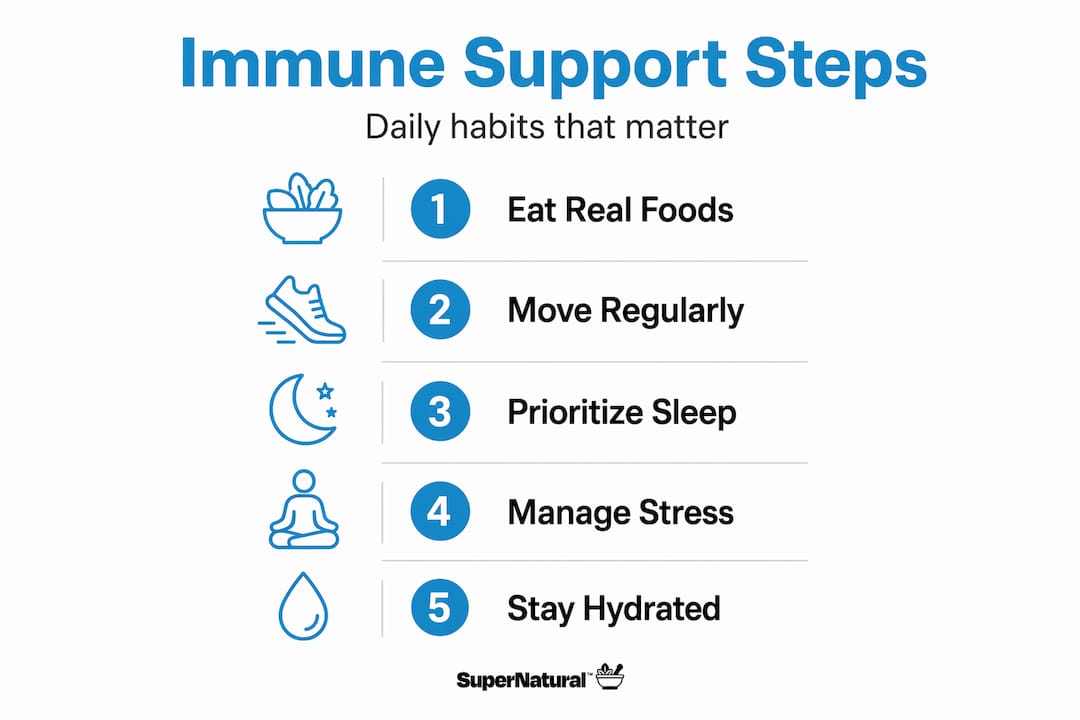
Best food sources for immune support
| Nutrient | Food sources | Why it matters |
|---|---|---|
| Vitamin C | Bell peppers, citrus, broccoli, kiwi | Supports white blood cell production |
| Vitamin D | Fatty fish, egg yolks, fortified milk | Regulates immune cell activity |
| Zinc | Pumpkin seeds, legumes, lean red meat | Supports immune cell development |
| Fiber | Oats, lentils, apples, flaxseed | Feeds gut microbiome, housing most immune cells |
| Antioxidants | Berries, leafy greens, nuts | Reduces oxidative stress on immune tissues |
What to limit is just as important as what to add. Added sugars and highly processed foods promote inflammatory pathways that make your immune system work harder for worse results. Alcohol in excess falls into this category too, for reasons we’ll cover shortly.
Pro Tip: Be careful with zinc supplements specifically. Excessive zinc supplementation blocks the absorption of copper, creating a secondary mineral deficiency. Get your zinc from food first, and if you supplement, stay within the recommended daily allowance.
Exercise for immune system function
Movement is one of the most underutilized ways to strengthen immunity. Regular physical activity improves cardiovascular fitness, enhances lymphatic circulation (which carries immune cells throughout the body), and reduces the low-grade inflammation that accumulates from sedentary living.

The current evidence-based target is clear. Adults should aim for 150 minutes of moderate aerobic exercise or 75 minutes of vigorous exercise each week. That breaks down to about 30 minutes of brisk walking five days a week, which most people can actually achieve.
Here’s a practical approach to building consistent movement into your week:
- Start with walking. A 30-minute walk at a brisk pace counts as moderate intensity. No gym required, no equipment needed.
- Add variety to avoid boredom. Biking, swimming, dancing, and hiking all qualify. The activity you’ll actually do consistently is the right one.
- Break it up if needed. Three 10-minute walks deliver similar cardiovascular benefits to one 30-minute session. This makes it far easier to hit your weekly target.
- Don’t overdo it. Intense, prolonged training without adequate recovery temporarily suppresses immune function. More is not always better.
- Make it social. Walking with a friend or joining a class adds accountability and reduces stress simultaneously, two immune benefits in one.
Pro Tip: If you sit most of the day, the biggest impact comes from simply breaking up sedentary time. Set a reminder to stand or walk for two minutes every hour. That single habit alone has measurable effects on immune-related inflammation markers.
Sleep and stress as immune regulators
You can eat a perfect diet and exercise consistently, and still have a compromised immune system if you’re chronically sleep-deprived or stressed. These two factors are not lifestyle luxuries. They are biological requirements for immune maintenance.
During sleep, your body produces and releases cytokines, signaling proteins that coordinate immune cell activity and promote repair. Seven to nine hours of restorative sleep nightly is what research consistently points to for adults. Cut that short regularly, and immune surveillance degrades. You become more susceptible to infection and slower to recover.
Chronic stress compounds the problem through cortisol. Sustained high cortisol actively suppresses immune function and increases systemic inflammation, creating a double hit to your defenses. The frustrating part is that stress and poor sleep feed each other in a cycle that many people don’t recognize as immune-relevant.
Practical steps to protect both:
- Set a consistent bedtime and wake time, even on weekends. Your immune system responds to circadian rhythm.
- Keep your bedroom cool, dark, and free from screens for at least 30 minutes before sleep.
- Practice a short daily relaxation routine. Even 10 minutes of deep breathing or meditation measurably lowers cortisol over time.
- Limit caffeine after noon, as it has a longer half-life than most people realize and disrupts sleep quality.
- Address anxiety through structured outlets: journaling, walking, talking to someone. Unmanaged stress is a slow drain on immune resources.
Pro Tip: If you wake up tired despite getting enough hours, prioritize sleep quality over duration. Alcohol, heavy meals, and screens before bed are the three most common sleep quality saboteurs, and all three are fully within your control.
Harmful habits and preventive care
Some of the most effective immune system strengthening steps involve removing obstacles rather than adding new habits. Two of the most significant obstacles are smoking and excessive alcohol consumption. Smoking and heavy alcohol use both directly impair immune and respiratory health, increasing susceptibility to infections and slowing recovery from illness.
Vaccinations are another underappreciated tool in boosting immune health. Many people assume vaccines either fully prevent infection or don’t do much. The reality is more precise. Vaccines significantly reduce the severity of illness and risk of hospitalization, even when they don’t prevent infection entirely. That distinction matters, because severe illness is where immune function becomes genuinely life-altering.
Staying current on recommended vaccines, managing chronic conditions like diabetes or hypertension, and maintaining basic hygiene habits like thorough handwashing and safe food preparation all reduce the background burden on your immune system. When your immune system isn’t constantly fighting preventable threats, it has more capacity to handle the ones you can’t avoid.
Daily hygiene and infection prevention behaviors are genuinely protective:
- Wash hands thoroughly with soap and water for at least 20 seconds, especially before eating and after public contact.
- Practice safe food preparation: refrigerate promptly, avoid cross-contamination, and cook proteins to appropriate temperatures.
- Work with your doctor to keep chronic health conditions under active management. Uncontrolled blood sugar, for instance, measurably impairs immune cell function.
Pro Tip: You can find a reliable guide to natural immune support that compares dietary strategies and supplementation from a clinical perspective, useful if you want to go deeper on the science.
My perspective on immune health and realistic expectations
I’ve seen a lot of immune health content that overpromises. The “drink this, take that, and never get sick again” approach sells products but doesn’t reflect how the immune system actually works.
What I’ve found, both in researching these topics deeply and in watching how people’s health outcomes actually change, is that the people who stay healthiest are not the ones taking the most supplements. They’re the ones who have quietly built consistent, boring habits: seven hours of sleep, daily movement, mostly whole foods, and a genuine ability to manage their stress. That combination, sustained over months and years, is what actually moves the needle.
The misconception that bothers me most is the idea that high-dose, acute supplementation can substitute for these habits. High-dose short-term supplementation is largely ineffective. Real immune support requires consistent nutrient availability over time, which whole foods deliver naturally and supplements can only partially replicate.
My honest take: supplements have a legitimate supporting role, particularly for specific nutrient gaps or for people with dietary restrictions. But they work best when the lifestyle foundation is already in place. If you’re sleeping four hours a night and eating mostly processed food, no supplement will compensate for that. Build the habits first. Then consider targeted supplementation as a complement, not a substitute. You can explore more on when supplements add value from a science-grounded perspective.
— SuperNatural
Supporting your immunity with SuperNatural Supplements
The lifestyle changes for immunity covered in this article form the foundation of genuine immune resilience. Once that foundation is in place, targeted supplementation can help address gaps that diet alone sometimes can’t fill. That’s exactly where SuperNatural Supplements was built to help.
SuperNatural’s BodyBoost immune support is formulated specifically to complement the kind of consistent, balanced lifestyle this article describes. It’s not designed to replace healthy habits. It’s designed to reinforce them, using ingredients selected for their evidence-based contributions to immune cell function and resilience. SuperNatural also uses a patented BioSoluble Curcumin process, which dramatically improves bioavailability compared to standard curcumin. Better absorption means your body actually gets what’s on the label, rather than passing most of it through unused. If you’re building a serious approach to immune health, that difference matters.
FAQ
What are the most important immune system strengthening steps?
The most effective steps are consistent sleep of 7 to 9 hours nightly, a whole-food diet rich in vegetables and fiber, regular moderate exercise, stress management, and avoiding smoking and excessive alcohol. No single step works as well as all of them together.
Can supplements replace a healthy diet for immune support?
No. Dietary intake from whole foods provides synergistic nutrients that isolated supplements cannot fully replicate. Supplements are best used to address specific gaps, not as a primary strategy.
How does exercise help the immune system?
Moderate aerobic exercise improves lymphatic circulation, reduces chronic inflammation, and enhances immune cell surveillance throughout the body. Hitting 150 minutes per week is the evidence-based target for measurable immune benefit.
Does stress really affect immune function?
Yes. Chronic stress triggers sustained cortisol release, which directly suppresses immune responses and promotes inflammation. Managing stress through consistent relaxation practices and adequate sleep is a non-negotiable part of immune maintenance.
Is “boosting” your immune system a good goal?
Not exactly. An overactive immune system can cause autoimmune damage. The real goal is to support immune balance, ensuring your defenses are responsive without being overactive.
This article is provided for educational and informational purposes only and does not constitute providing medical advice or professional services. Always consult with a qualified and licensed physician or other medical care provider. Statements have not been evaluated by the Food & Drug Administration. This product is not intended to diagnose, treat, cure, or prevent any disease.