

Innovation in wellness is defined as the application of new technologies, scientific discoveries, and human-centered design to improve how people achieve and maintain health. The role of innovation in wellness has never been more consequential. More than 184 million Americans are projected to have cardiovascular disease by 2050, with annual costs exceeding $400 billion. That single statistic explains why AI-driven platforms, wearable biosensors, and personalized supplement formulations are no longer niche tools. They are becoming the architecture of modern health.
What are the most impactful technological innovations transforming wellness today?
The impact of technology on wellness is most visible in three areas: AI-driven care platforms, continuous biosensing, and personalized health monitoring. Each one shifts care from reactive to proactive. That shift is the defining feature of wellness through innovation.

AI-driven cardiometabolic platforms
AI platforms like Sword Health’s Pulse represent a new model of care. 120 million Americans have hypertension, yet only 1 in 5 control it adequately. That gap exists because traditional care is episodic. Pulse addresses this with always-on support that combines real-time data from connected devices with personalized lifestyle coaching. The platform uses a three-way model: the person, a human health specialist, and an AI agent working together. This structure preserves clinical judgment while scaling personalized engagement far beyond what any single clinician could manage alone.
Continuous biosensing and deterioration intelligence
Platforms like Mojave Sentinel take a different approach. Rather than responding to symptoms, Sentinel maps multi-signal drift patterns over time to detect physiological deterioration before it becomes a crisis. The vision is lifelong baseline mapping with strong privacy protections built in. This kind of continuous patient deterioration intelligence requires advances in biosensor design, clinical validation, and data privacy simultaneously. When those pieces align, the result is a system that treats your body’s subtle changes as early warnings rather than noise.
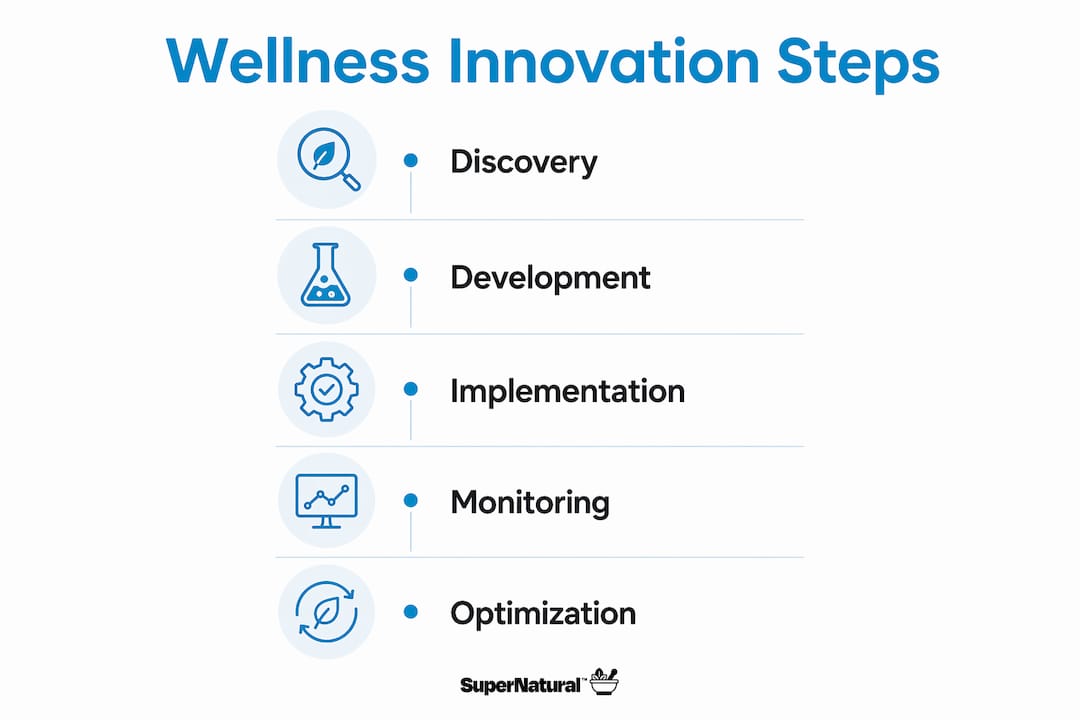
Wearable biosensors and personalized monitoring
Consumer wearables have matured from step counters into clinical-grade monitoring tools. Today’s devices track heart rate variability, blood oxygen, skin temperature, and sleep architecture in real time. The data feeds directly into personalized wellness plans, making generic health advice obsolete. For people managing metabolic health, healthy aging, or cardiometabolic risk, this level of specificity changes what is possible.
- AI platforms combine member data, human specialists, and AI agents for personalized care.
- Continuous biosensing detects deterioration earlier by tracking physiological drift over time.
- Wearables now generate clinical-grade data that personalizes wellness interventions.
- Personalized monitoring makes population-level health advice less relevant for individuals.
Pro Tip: If you use a wearable, review your trends weekly rather than obsessing over daily numbers. Patterns over time carry far more meaning than any single data point.
How does innovation reshape the psychological and social dimensions of wellness?
Technology does not only change what you measure. It changes how you feel about your health and yourself. A European longitudinal study across six countries found that health technology use increases technological social relatedness. People feel more connected to others who share their wellness goals. That sense of belonging is a genuine psychological benefit.
The same research reveals a harder truth. A strong technological identity can paradoxically increase pressure and reduce feelings of personal control. When group norms around step counts or sleep scores become rigid, people feel judged by their data rather than supported by it. Autonomy frustration and competence frustration rise. The technology meant to help starts to feel like a performance review.
“Next-generation wellness is moving toward prioritizing emotional safety, presence, and intuition over data-driven dashboards to combat ‘wellbeing burnout’ from tracking overload.” Global Wellness Summit trends, 2026
This shift matters for how you choose and use wellness tools. The most effective technologies support your sense of agency. They give you information without dictating your identity. The wellness industry is recalibrating toward softer health signals and emotional safety, moving away from fixation on performance metrics like step counts and sleep scores. That recalibration reflects what research confirms: emotional safety is not a soft benefit. It is a prerequisite for sustained behavior change.
- Social connection through shared wellness goals is a real benefit of health technology.
- Rigid group norms around metrics can trigger autonomy frustration and reduce wellbeing.
- Emotional safety must be built into wellness technology design, not added as an afterthought.
- Intuition and presence are gaining recognition as valid health signals alongside quantitative data.
What challenges arise from integrating technology into wellness practices?
Wellness technology carries genuine risks when used without awareness. mHealth technology use is linked to healthier behaviors overall, but wearable trackers correlate with reduced sleep duration. Less sleep affects emotional distress and metabolic health directly. A tool designed to improve your wellbeing can undermine it if the design creates anxiety or disrupts rest.
The solution is not to abandon technology. It is to use it with clear boundaries. Here is a practical framework for doing that:
- Set data review windows. Check your wearable data once a day at a scheduled time, not continuously. Constant checking amplifies anxiety without improving outcomes.
- Separate metrics from identity. A low sleep score on one night does not define your health. Treat data as information, not judgment.
- Combine AI insights with human input. AI wellness programs work best when they integrate a human health specialist alongside the AI agent. Do not rely on algorithms alone for significant health decisions.
- Watch for wellbeing burnout. If tracking your health makes you feel worse, that is a signal to step back and reassess your relationship with the data.
- Prioritize sleep hygiene over sleep tracking. Sleep wellness practices that reduce screen time before bed often improve sleep quality more than any tracker adjustment.
Pro Tip: Wearable trackers show benefits for mental health, including lower emotional distress, but may negatively affect sleep patterns. If your tracker lives on your wrist at night, try wearing it only during the day for two weeks and compare how you feel.
How can health-conscious individuals practically embrace innovation for improved wellness?
The most effective approach to wellness through innovation is not adopting every new tool at once. Wellness products that focus on functional density, meaning small, manageable habit changes, outperform complete lifestyle overhauls for sustained results. Think of it like building a strong foundation one brick at a time rather than trying to construct the entire house in a weekend.
Practical integration looks like this:
- Start with one technology. Choose a wearable or AI platform that addresses your most pressing health concern, whether that is cardiometabolic risk, sleep, or cognitive function.
- Pair technology with integrative lifestyle habits. Data from a wearable means more when combined with consistent movement, quality sleep, and targeted nutrition.
- Use AI platforms for personalization, not prescription. Platforms like Pulse generate insights based on your data. Use those insights to inform conversations with your doctor, not to replace them.
- Support your biology with targeted supplementation. Technology tracks what is happening. Supplements like SuperNatural Supplements’ BioSoluble® Curcumin™ address the underlying biology. The patented BioSoluble Curcumin process delivers significantly enhanced bioavailability compared to standard curcumin, making it a meaningful addition to a tech-supported wellness plan.
- Build a daily supplement plan that complements your technology use rather than duplicating it.
| Wellness Goal | Recommended Approach |
|---|---|
| Cardiometabolic health | AI-driven platform plus consistent movement and dietary tracking |
| Immune support | Targeted supplementation (e.g., BodyBoost) plus sleep optimization |
| Cognitive function | Brain health habits plus BrainBoost cognitive support |
| Inflammatory response | BioSoluble® Curcumin™ plus stress reduction practices |
| Sustainable habit change | Small, functional habit additions rather than full lifestyle overhauls |
Innovation in wellness is expanding from niche markets into a key part of modern living. The people who benefit most are those who treat it as a support system, not a replacement for self-awareness.
Key takeaways
The role of innovation in wellness delivers the greatest benefit when technology, human judgment, and targeted supplementation work together rather than in isolation.
| Point | Details |
|---|---|
| AI platforms require human oversight | The three-way model of member, specialist, and AI agent produces better outcomes than AI alone. |
| Emotional safety drives sustained change | Wellness technology must support autonomy, not create performance pressure, to be effective long-term. |
| Small habit changes outperform overhauls | Functional density, meaning manageable additions to daily life, sustains wellness better than radical change. |
| Wearables carry real trade-offs | Trackers reduce emotional distress but can disrupt sleep, requiring conscious boundaries around use. |
| Supplementation complements technology | Tools like BioSoluble® Curcumin™ address biological function that data tracking alone cannot improve. |
What we have learned from watching wellness technology evolve
We have spent years watching health-conscious people adopt every new device and platform with genuine enthusiasm, only to feel burned out six months later. The pattern is consistent. The technology was not the problem. The expectation was.
Most wellness technology is designed to generate data. Very little of it is designed to help you know what to do with that data emotionally. When your sleep score drops after a stressful week, the app tells you that you slept poorly. It rarely tells you that stress is the cause and that rest, not optimization, is the answer. That gap between data and wisdom is where most wellness programs fail.
What actually works is a layered approach. You use technology to surface patterns you would otherwise miss. You use human judgment, whether your own or a clinician’s, to interpret those patterns in context. And you use targeted tools, including well-formulated supplements, to support the biological processes that no app can directly influence. SuperNatural Supplements was built on exactly that philosophy. BioSoluble® Curcumin™ exists because bioavailability is a real problem that standard curcumin supplements do not solve. BodyControl, BodyBoost, and BrainBoost each address a specific biological need that technology can identify but cannot fix on its own.
The future of wellness technology will be more human, not less. The industry is already moving toward emotional safety and intuitive signals. That is the right direction. The people who thrive will be those who use innovation as a tool for self-knowledge, not as a substitute for it.
— SuperNatural
SuperNatural Supplements and the science behind wellness innovation
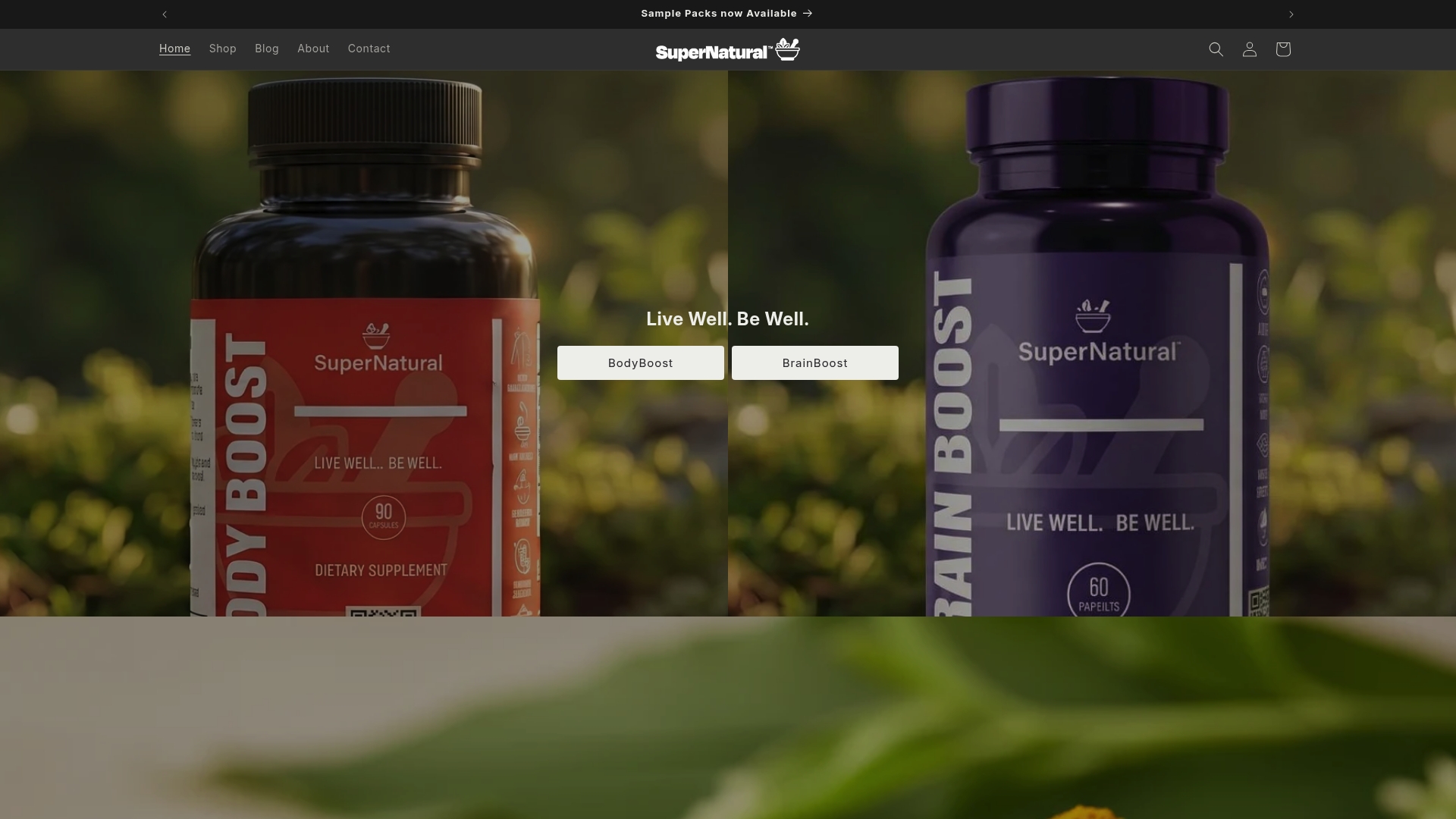
SuperNatural Supplements brings the same precision thinking to supplementation that AI platforms bring to health monitoring. The patented BioSoluble® Curcumin™ process solves a problem that most curcumin products ignore: standard curcumin has poor bioavailability, meaning your body absorbs very little of what you take. BioSoluble® Curcumin™ changes that equation significantly. BodyControl supports detoxification and a healthy inflammatory response. BodyBoost is formulated for superior immune support. BrainBoost targets advanced cognitive function. Each product is designed to complement the data your wellness technology generates, giving your body the biological support it needs to respond. Check with your doctor before adding any new supplement to your routine.
FAQ
What is the role of innovation in wellness?
Innovation in wellness is the application of new technologies, scientific methods, and human-centered design to improve how people achieve and maintain health. It includes AI-driven care platforms, wearable biosensors, personalized supplementation, and evidence-based habit design.
How does technology improve health outcomes?
AI platforms and wearable devices improve health outcomes by enabling continuous, personalized monitoring that shifts care from reactive to proactive. Research shows that mHealth technology links to healthier behaviors, though design must account for unintended effects like sleep disruption.
Can wellness technology cause harm?
Yes, wearable trackers correlate with reduced sleep duration in some users, and a strong technological identity can increase autonomy frustration and reduce feelings of personal control. Conscious boundaries around data use reduce these risks significantly.
What is “wellbeing burnout” from tracking?
Wellbeing burnout occurs when constant monitoring of health metrics creates anxiety and reduces the sense of personal agency. The Global Wellness Summit identifies this as a key reason the industry is shifting toward emotional safety and intuitive health signals.
How do supplements fit into an innovative wellness plan?
Supplements address biological processes that technology can identify but cannot directly improve. Products like SuperNatural Supplements’ BioSoluble® Curcumin™ use patented delivery methods to enhance bioavailability, making them a targeted complement to data-driven wellness strategies.
This article is provided for educational and informational purposes only and does not constitute providing medical advice or professional services. Always consult with a qualified and licensed physician or other medical care provider. Statements have not been evaluated by the Food & Drug Administration. This product is not intended to diagnose, treat, cure, or prevent any disease.