

Advanced nutrition is defined as the science and practice of using nutrients to therapeutically optimize metabolic function, gene expression, and overall health, far beyond simply preventing deficiency. Where basic nutrition asks “are you getting enough?”, advanced nutrition asks “how do nutrients interact with your biology at a molecular level?” The field draws on nutritional biochemistry, clinical nutrition standards, and emerging frameworks like precision nutrition and Food-as-Medicine. The human body requires about 45 essential nutrients out of roughly 300 classified nutrients found across 100,000 food substances. That gap between “essential” and “available” is exactly where advanced nutrition operates.
What is advanced nutrition, and how does it differ from basic nutrition?
Basic nutrition focuses on deficiency prevention. It answers whether you are consuming adequate macronutrients (proteins, fats, carbohydrates) and micronutrients (vitamins, minerals) to sustain normal body function. Advanced nutrition, by contrast, applies biochemical and molecular insights to optimize metabolism, regulate gene expression, and manage or prevent chronic disease.
Think of it like this: basic nutrition is making sure your car has gas. Advanced nutrition is tuning the engine, checking the fuel injectors, and selecting the right octane for peak performance. The goals are categorically different.
The shift from basic to advanced dietary practices involves several key distinctions:
- Therapeutic intent. Advanced nutrition uses specific nutrients at targeted doses to produce measurable physiological effects, not just to meet daily reference values.
- Personalized interventions. Rather than one-size-fits-all dietary guidelines, advanced nutrition tailors recommendations to an individual’s metabolic profile, genetics, and health history.
- Molecular targeting. Practitioners examine how cofactors influence enzyme efficiency and gene expression at the molecular level, not just caloric totals.
- Professional oversight. Effective advanced nutrition plans require clinical evaluation, not just reading a food label.
Pro Tip: If you are working with a registered dietitian or clinical nutritionist, ask specifically about nutrient cofactors. Magnesium, for example, is required for over 300 enzymatic reactions, yet deficiency is common and rarely tested in standard checkups.
How does advanced nutrition affect metabolism, gene expression, and health?
Nutrients are not passive fuel. They are biochemical signals that activate enzymes, regulate hormones, and switch genes on or off. This is the core insight of advanced nutrition: food has pharmacodynamic properties, meaning it produces dose-dependent physiological effects much like a drug would.

The table below shows how specific nutrient categories interact with key biological systems:
| Nutrient Category | Biological Target | Health Outcome |
|---|---|---|
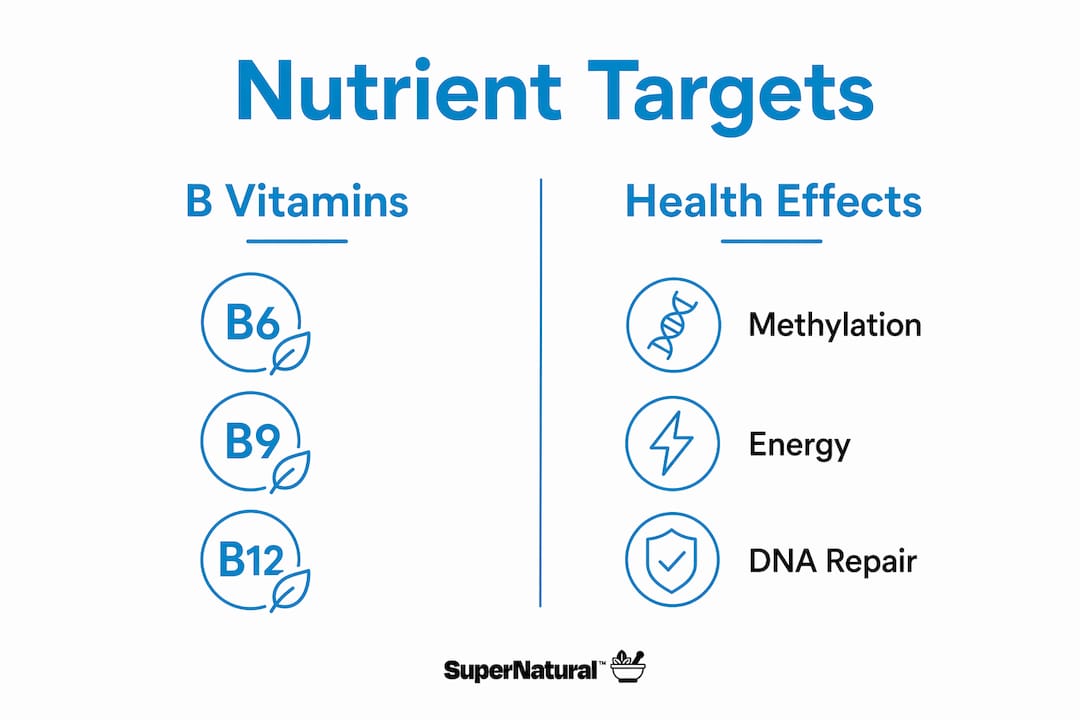
| B vitamins (B6, B9, B12) | Methylation pathways, DNA synthesis | Cardiovascular protection, cognitive function |
| Omega-3 fatty acids | Inflammatory gene expression (NF-κB pathway) | Reduced systemic inflammation |
| Polyphenols (e.g., curcumin) | Gut microbiome diversity, antioxidant enzymes | Immune regulation, metabolic balance |
| Zinc and selenium | Enzymatic cofactors, thyroid hormone synthesis | Immune function, metabolic rate |
| Dietary fiber | Gut microbiota composition | Short-chain fatty acid production, gut barrier integrity |
The interaction between nutrients and the gut microbiome is now recognized as a primary driver of health and disease, moving well beyond the simple caloric model. This means two people eating identical diets can have dramatically different health outcomes based on their microbiome composition alone.
Food processing also matters more than most people realize. Processing methods and microbiome diversity significantly affect how well nutrients are absorbed and utilized. A nutrient listed on a label is not the same as a nutrient your cells actually receive. Bioavailability, the percentage of a nutrient that enters circulation and reaches its target tissue, is the real metric that advanced nutrition practitioners track.
What is the Food-as-Medicine framework?
Food-as-Medicine (FAM) is a clinical philosophy that treats dietary choices as active medical interventions, not just lifestyle preferences. The FAM framework integrates nutrition with medical care to prevent and treat chronic diseases including cardiovascular disease and type 2 diabetes. It represents one of the most significant shifts in how clinicians think about long-term health management.
FAM is not a diet trend. It is a structured approach with three practical pillars:
- Individualized dietary prescriptions. Clinicians prescribe specific foods or nutrient combinations based on a patient’s diagnosed conditions, lab markers, and genetic risk factors.
- Healthspan extension. The goal is not just adding years to life but reducing the years spent managing preventable disease. FAM builds resiliency and minimizes the need for later pharmaceutical interventions.
- Integration with conventional medicine. FAM does not replace standard care. It works alongside it, filling the gap that medication alone cannot address.
The challenges are real. Clinical implementation of FAM faces hurdles including standardization across healthcare systems, significant variability between individuals, and the difficulty of integrating dietary protocols into existing clinical workflows. Genetics, lifestyle, and microbiome composition all interact, making a single universal protocol impossible.
Pro Tip: When evaluating any Food-as-Medicine program, ask whether it includes regular biomarker testing (such as fasting insulin, CRP, or HbA1c). Without measurable checkpoints, you cannot know whether the intervention is working for your specific biology.
How is precision nutrition shaping the future of this field?
Precision nutrition is the application of individual biochemical, genetic, and microbiome data to create personalized dietary plans. It is the most technologically advanced expression of what advanced nutrition concepts have been building toward for decades.
AI and computational models now predict individual responses to specific nutrients by analyzing clinical, biochemical, and microbiome characteristics. This means a nutrition plan can be calibrated not just to your age and weight, but to how your specific gut bacteria metabolize fiber, or how your genetic variants affect folate processing. The nutrigenomics advantages of this approach are significant, connecting DNA-level data to practical eating decisions.
Four factors drive the precision nutrition model:
- Genetic variability. Single nucleotide polymorphisms (SNPs) affect how you absorb, metabolize, and respond to specific nutrients. Two people with the same diet can have opposite outcomes based on gene variants alone.
- Microbiome composition. Your gut bacteria determine how much of a given nutrient you actually absorb and what metabolites are produced in the process.
- Lifestyle inputs. Sleep, stress, and exercise all alter nutrient requirements and metabolic responses in real time.
- Biochemical markers. Blood, urine, and stool analysis provide objective data that replaces guesswork with measurable targets.
Precision nutrition uses AI to tailor interventions based on biochemical and microbiome analyses, making individualized dietary plans more accurate and clinically relevant than any general dietary guideline can achieve.
Accessibility remains a genuine barrier. Comprehensive genomic and microbiome testing is not yet standard in primary care, and the cost can be prohibitive for many people. That said, the future of advanced nutrition is clearly moving toward precision as the default standard, not the exception. Understanding your nutrigenomics checklist is a practical first step anyone can take right now.
Key Takeaways
Advanced nutrition is the science of using nutrients as targeted biochemical tools to optimize metabolism, gene expression, and long-term health, far beyond basic deficiency prevention.
| Point | Details |
|---|---|
| Advanced nutrition definition | It applies biochemical and molecular science to optimize health, not just prevent deficiency. |
| Food-as-Medicine framework | FAM uses individualized dietary prescriptions to prevent and manage chronic diseases like diabetes and cardiovascular disease. |
| Gut microbiome role | Microbiome composition determines actual nutrient absorption, making it central to any advanced nutrition strategy. |
| Precision nutrition | AI and genomic data now enable personalized nutrient plans calibrated to individual biology. |
| Bioavailability matters | The nutrient on a label is not the nutrient your cells receive. Absorption and delivery are the real targets. |
Why most nutrition advice misses the point
We have spent years studying how nutrients actually work at the cellular level, and the honest conclusion is this: most popular nutrition advice is too generic to produce meaningful results for most people. Telling someone to “eat more vegetables” is not wrong, it is just incomplete. The real question is which vegetables, in what form, prepared how, and for which person’s specific metabolic profile.
What we have found is that the gap between knowing nutrition science and applying it effectively is almost always a bioavailability problem. You can eat a textbook-perfect diet and still fall short if your gut is not absorbing what you consume. This is why we believe so strongly in formulations that address absorption directly, not just ingredient quality. A supplement that sits in your gut unabsorbed is like wanting a strong cup of coffee and just sniffing the beans.
We also see a real risk in the explosion of unverified supplements flooding the market. Not every product that claims clinical backing has earned it. The role of supplements in wellness is real and well-documented, but only when the formulation is built around bioavailability and verified mechanisms. Our advice: always ask for the science behind the delivery method, not just the ingredient list. And consult a qualified clinician before building any advanced nutrition protocol. Generic advice, even well-intentioned advice, is not a substitute for a plan built around your biology.
— SuperNatural
How SuperNatural Supplements supports your advanced nutrition goals
Advanced nutrition principles demand more than good ingredients. They demand that those ingredients actually reach your cells.
SuperNatural Supplements was built around that exact problem. Our patented BioSoluble® Curcumin™ process delivers curcumin with significantly enhanced bioavailability compared to standard curcumin, making it a practical tool for supporting a healthy inflammatory response and metabolic balance. BodyControl supports detoxification and inflammation management. BodyBoost targets immune function with clinically supported ingredients. BrainBoost is formulated specifically for advanced cognitive support. Every product reflects the same commitment: science-driven formulations that work because of how they are absorbed, not just what they contain. If you are ready to apply advanced nutrition principles with supplements built to match, start with our product pages and see the science behind each formula.
FAQ
What is the advanced nutrition definition in simple terms?
Advanced nutrition is the science of using nutrients to optimize metabolism, gene expression, and health at a molecular level, beyond simply preventing deficiency. It applies biochemical principles to personalized dietary and supplement strategies.
How does advanced nutrition differ from standard dietary advice?
Standard dietary advice targets general deficiency prevention using broad guidelines. Advanced nutrition uses individual biochemical data, genetics, and microbiome analysis to create targeted, therapeutic nutrition plans.
Why does bioavailability matter in advanced nutrition?
Bioavailability determines how much of a nutrient actually enters your bloodstream and reaches target tissues. A nutrient with poor bioavailability produces little effect regardless of the dose consumed, which is why supplement absorption is a central concern in advanced nutrition.
What role does the gut microbiome play in advanced nutrition?
The gut microbiome directly controls how nutrients are metabolized and absorbed. Individual differences in microbiome composition explain why identical diets produce different health outcomes in different people.
Is precision nutrition the same as advanced nutrition?
Precision nutrition is a subset of advanced nutrition. It specifically uses AI, genomic data, and microbiome analysis to personalize dietary plans, representing the most technologically advanced application of advanced nutrition concepts.
This article is provided for educational and informational purposes only and does not constitute providing medical advice or professional services. Always consult with a qualified and licensed physician or other medical care provider. Statements have not been evaluated by the Food & Drug Administration. This product is not intended to diagnose, treat, cure, or prevent any disease.