

Millions of Americans reach for herbal supplements every day, often assuming that “natural” automatically means “safe.” That assumption deserves a closer look. Understanding what is herbal supplementation, how it works, and what it truly can and cannot do is one of the most practical steps you can take for your health. This guide walks you through the definition, the science behind how these products function, the most common types and forms available, and what you genuinely need to know before adding any herbal supplement to your routine.
Table of Contents
- Key Takeaways
- What herbal supplementation really means
- Benefits people seek from herbal supplements
- Types of herbal supplements and how they differ
- Safety considerations you should not overlook
- How to integrate herbal supplements responsibly
- My perspective on herbal supplementation
- Explore SuperNatural’s approach to herbal quality
- FAQ
Key Takeaways
| Point | Details |
|---|---|
| Natural does not mean risk-free | Some herbs can cause serious harm and interact dangerously with prescription medications. |
| FDA classifies herbs as food | Herbal supplements are not pre-approved for safety or efficacy the way drugs are before reaching store shelves. |
| Form affects absorption | Standardized extracts generally deliver more consistent potency than whole herb products. |
| Disclosure to your doctor matters | Many people never mention supplement use to their healthcare provider, which can delay identification of adverse effects. |
| Quality varies widely | Products with the same herb name can differ significantly in active ingredient content across manufacturers. |
What herbal supplementation really means
Herbal supplementation, formally categorized under the broader term botanical dietary supplementation, refers to the practice of using plant-derived products to support, maintain, or improve health. The U.S. Dietary Supplement Health and Education Act of 1994, commonly called DSHEA, defines a dietary supplement as a product (other than tobacco) in pill, capsule, tablet, or liquid form that contains vitamins, minerals, herbs, or other substances intended to supplement the diet. Herbs fall squarely within that definition.
This is not a modern trend. Humans have used plant-based remedies for thousands of years, from ancient Egyptian papyrus scrolls documenting medicinal plants to Traditional Chinese Medicine systems that are still practiced today. What changed in recent decades is the commercial scale. You can now find herbal products on pharmacy shelves, in grocery stores, and online, available in a wider array of forms than ever before.
Those forms matter more than most people realize. According to MedlinePlus, herbal supplements are sold as:
- Tablets and capsules
- Powders and granules
- Teas and infusions
- Liquid extracts and tinctures
- Fresh or dried whole plant material
The form you choose affects how quickly and completely your body absorbs the active compounds. A concentrated liquid extract delivers compounds faster than a dried whole herb tea, much like wanting a strong cup of coffee rather than just sniffing the beans.
One regulatory fact that surprises many consumers: the FDA classifies herbal supplements as foods, not drugs. Manufacturers do not need to prove safety or effectiveness before a product goes to market. That places the burden of careful selection squarely on you.
Pro Tip: Look for products that carry third-party verification seals such as USP, NSF International, or ConsumerLab. These organizations independently test supplements for purity and label accuracy, offering a layer of assurance that the FDA does not require.
Benefits people seek from herbal supplements
People turn to herbal supplements for a wide range of wellness goals. Over 40% of the U.S. population uses alternative therapies including herbal and dietary supplements, spanning healthy individuals who want to preserve wellness and those exploring complementary approaches alongside conventional care.
The most commonly sought herbal supplements benefits include:
- Immune support: Herbs like echinacea and elderberry are frequently used during cold and flu season to support the body’s natural defenses.
- Cognitive function: Ginkgo biloba and bacopa have been studied for their potential to support memory and mental clarity.
- Inflammation reduction: Turmeric and its active compound curcumin are among the most researched herbs for supporting a healthy inflammatory response.
- Sleep and relaxation: Valerian root and passionflower are widely used for their calming properties.
- Digestive health: Ginger and peppermint have long histories of use for nausea, bloating, and gut comfort.
There is an important distinction to understand here. Herbal supplements can legitimately carry function claims such as “supports immune health,” but they cannot claim to treat or prevent any disease under DSHEA guidelines. That language gap reflects a real evidentiary gap. Using echinacea to generally support your immune system is not the same as using a proven antiviral drug to treat an infection. Setting realistic expectations matters.
The role supplements play in wellness is best understood as supportive, not curative. Think of them as one element within a broader health strategy that includes nutrition, sleep, exercise, and regular medical care.

Types of herbal supplements and how they differ
Knowing the categories helps you make smarter choices. The table below compares the most common types of herbal products by form, typical use, and key considerations.
| Form | Examples | Best for | Key consideration |
|---|---|---|---|
| Standardized extract | Turmeric (curcumin %), ginkgo | Consistent dosing, research-backed use | Higher potency, easier to dose accurately |
| Whole herb (capsule or tablet) | Dried echinacea, valerian root | Traditional use, gentler effects | Variable potency between batches and brands |
| Tincture or liquid extract | Elderberry, ashwagandha | Fast absorption, flexible dosing | Alcohol content may not suit everyone |
| Herbal tea | Chamomile, peppermint, ginger | Mild, everyday wellness support | Lowest concentration of active compounds |
| Topical preparation | Arnica gel, calendula cream | Localized skin or muscle support | Minimal systemic absorption |
The most important distinction on this list is standardized extract versus whole herb. A standardized extract is processed to guarantee a specific percentage of the known active compound. A turmeric capsule standardized to 95% curcuminoids, for example, delivers a predictable amount with every dose. A whole herb capsule of dried turmeric may contain a fraction of that, and the amount can vary significantly from one batch to the next. Products labeled with the same herb can vary widely in effects depending on processing, sourcing, and storage.
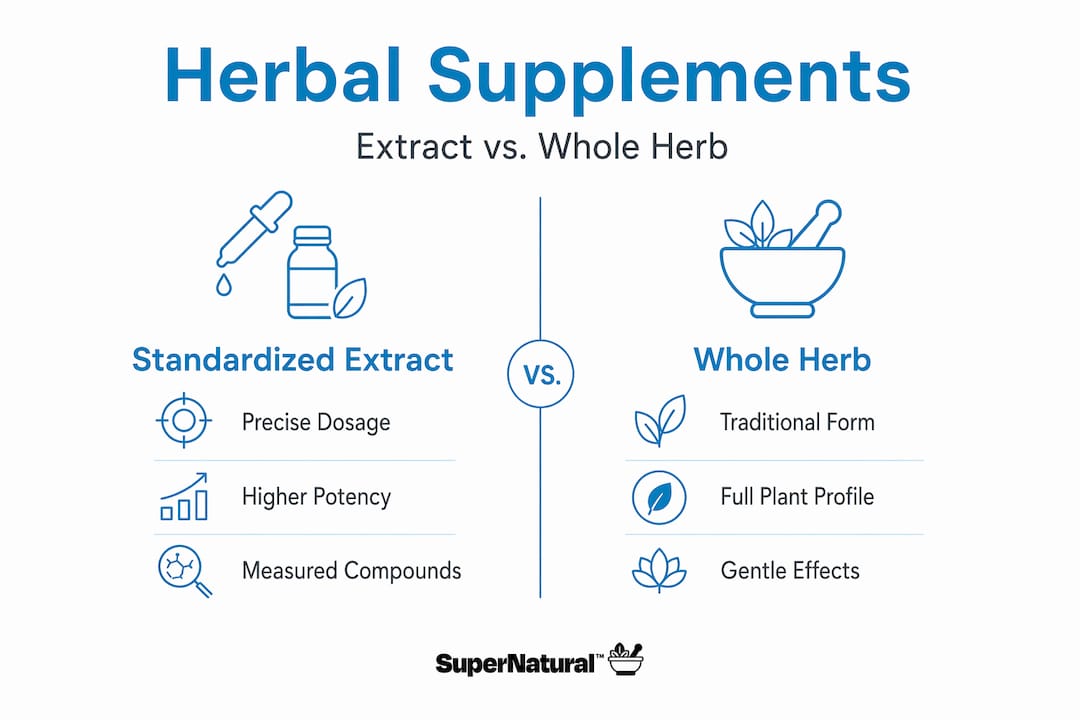
Bioavailability adds another layer of complexity. Curcumin, for instance, is notoriously poorly absorbed on its own. Many advanced formulations now use technologies like phospholipid complexes or patented processes specifically designed to improve absorption so your body can actually use what you swallow.
Pro Tip: When comparing turmeric supplements, check whether the label specifies the percentage of curcuminoids and whether an absorption-enhancing technology is included. A lower-dose standardized extract with enhanced bioavailability often outperforms a high-dose product the body cannot absorb efficiently.
Safety considerations you should not overlook
Here is the part that most herbal supplement marketing conveniently leaves out. Being plant-derived does not make a substance inherently safe for everyone. Some herbs like comfrey and ephedra can cause serious harm and may interact with other medicines. Comfrey contains pyrrolizidine alkaloids linked to liver damage. Ephedra was banned by the FDA after being associated with cardiovascular events. These are not fringe concerns.
Several specific risks deserve attention:
- Herb-drug interactions: St. John’s Wort, widely used for mood support, can significantly reduce the effectiveness of anticoagulants, birth control pills, and certain HIV medications by accelerating their breakdown in the liver.
- Variable active ingredient content: Herbal supplements may not contain the amount of active ingredient stated on the label, or may include unlisted substances.
- Contamination risks: Some products, particularly those manufactured overseas without rigorous quality controls, have been found to contain heavy metals, pesticides, or undisclosed pharmaceutical compounds.
- Undisclosed use: Many patients do not disclose herbal supplement use to their healthcare providers, which can complicate diagnosis and treatment when adverse events occur.
“The fact that herbal supplements are classified as food rather than drugs means they reach shelves without the pre-market safety review that prescription and over-the-counter drugs must pass. That regulatory gap places real responsibility on the consumer to source carefully and communicate openly with their doctor.”
Choosing reputable natural health supplements from manufacturers who invest in third-party testing is not optional, it is necessary. Read labels. Research the brand. And never assume that because something is sold next to vitamins in a pharmacy, it has been vetted the same way.
Pro Tip: Before starting any new herbal supplement, bring the product label to your next medical appointment. Your doctor or pharmacist can check for interactions with any medications you take, which is the single most effective safety step you can make.
How to integrate herbal supplements responsibly
Building a thoughtful supplement routine is less complicated than it sounds. Follow a structured approach and you reduce both risk and wasted money.
- Define your health goal clearly. Are you looking to support immune function, improve sleep quality, or reduce everyday inflammation? A specific goal leads to a specific, appropriate product rather than a generalized “health boost” purchase.
- Research the evidence behind the herb. Some herbs have substantial clinical research supporting their traditional uses. Others have limited or conflicting data. Start with well-studied options that match your goal.
- Choose standardized, third-party-tested products. Prioritize supplements that list the standardized active compound percentage on the label and carry a recognized quality verification seal.
- Start at the lower end of the recommended dose. Your body’s response is unique. Starting low allows you to gauge tolerance before committing to a full dose.
- Tell your healthcare provider. This is non-negotiable, especially if you take any prescription medications. Open communication prevents dangerous interactions and helps your provider give you complete care.
- Monitor and reassess after 4 to 8 weeks. If you notice no benefit or experience any unexpected symptoms, stop use and consult your doctor. Building a daily supplement plan that actually works means staying flexible and honest about results.
Treating herbal supplementation as a long-term, intentional practice rather than a quick fix produces the best outcomes. Consistency, quality, and communication are the three pillars that separate thoughtful use from guesswork.
My perspective on herbal supplementation
I will be direct with you: the herbal supplement space has a credibility problem, and it is largely self-inflicted. Years of watching overhyped product claims crowd out honest, evidence-based information has made me more convinced than ever that consumers deserve better.
What I have learned is that the “natural equals safe” assumption is genuinely dangerous. I have seen people discontinue prescribed medications in favor of herbal alternatives without telling their doctors. That is where real harm happens. It is not the herb itself that is always the problem. It is the uninformed substitution.
At the same time, I have seen what quality herbal supplementation can do when it is used correctly, with the right formulation, the right dose, and full transparency with a healthcare team. The difference between a poorly absorbed, inconsistently manufactured product and a thoughtfully formulated one is not minor. It is the difference between actually feeling a benefit and spending money on an inert capsule.
My honest advice: be selective, be patient, and be vocal with your doctor. Herbal supplements work best as part of a broader wellness picture, not as standalone solutions. The enthusiasm for plant-based health is well-placed. The marketing sometimes is not.
— SuperNatural
Explore SuperNatural’s approach to herbal quality
At SuperNatural Supplements, we built our product line around one principle: absorption matters. A supplement you cannot absorb is a supplement that cannot help you. Our patented BioSoluble® Curcumin™ technology delivers significantly enhanced bioavailability compared to standard curcumin, so you get the benefit the label promises. BodyControl supports detoxification and a healthy inflammatory response, while BodyBoost is formulated specifically for immune support, and BrainBoost targets advanced cognitive health. Every product is built on standardized, quality-controlled ingredients. We encourage you to consult your healthcare provider before starting any new supplement and to explore the science behind what we do.
FAQ
What is herbal supplementation exactly?
Herbal supplementation is the practice of using plant-derived products, sold as dietary supplements under DSHEA, to support or maintain health. These products come in forms like capsules, teas, and extracts, and are classified as food rather than drugs by the FDA.
Are herbal supplements safe to use?
Not all herbal supplements are safe for everyone. Some herbs can cause serious side effects or interact with medications, and products are not pre-approved for safety before reaching the market. Always consult a healthcare provider before use.
How do herbal supplements work in the body?
Herbal supplements deliver plant-based compounds that interact with biological processes such as inflammation, immune signaling, or neurotransmitter activity. Because active ingredient identification is complex, the exact mechanism can vary by herb and formulation.
What are the most common types of herbal supplements?
Common types include standardized extracts (like curcumin), whole herb capsules, tinctures, herbal teas, and topical preparations. Standardized extracts generally offer the most consistent potency and are easier to dose accurately.
Do I need to tell my doctor about herbal supplements?
Yes, always. Studies show many patients do not disclose supplement use to their providers, which can complicate care and delay identification of adverse effects, especially when prescription medications are involved.
This article is provided for educational and informational purposes only and does not constitute providing medical advice or professional services. Always consult with a qualified and licensed physician or other medical care provider. Statements have not been evaluated by the Food & Drug Administration. This product is not intended to diagnose, treat, cure, or prevent any disease.