

Supplement innovation is the process of developing new and improved dietary supplements through advances in ingredient science, delivery systems, formulation design, and quality validation. It is not simply adding a new herb to a capsule. True supplement innovation, known in the industry as nutraceutical advancement, transforms how nutrients are absorbed, how products are developed, and how their effectiveness is measured. For health-conscious consumers, understanding what is supplement innovation means knowing the difference between a product that sounds good on a label and one that actually works in your body. Companies like SuperNatural Supplements and research groups behind technologies like Sirio Europe’s LifeChews are redefining what a supplement can do.
What is supplement innovation and why does it matter?
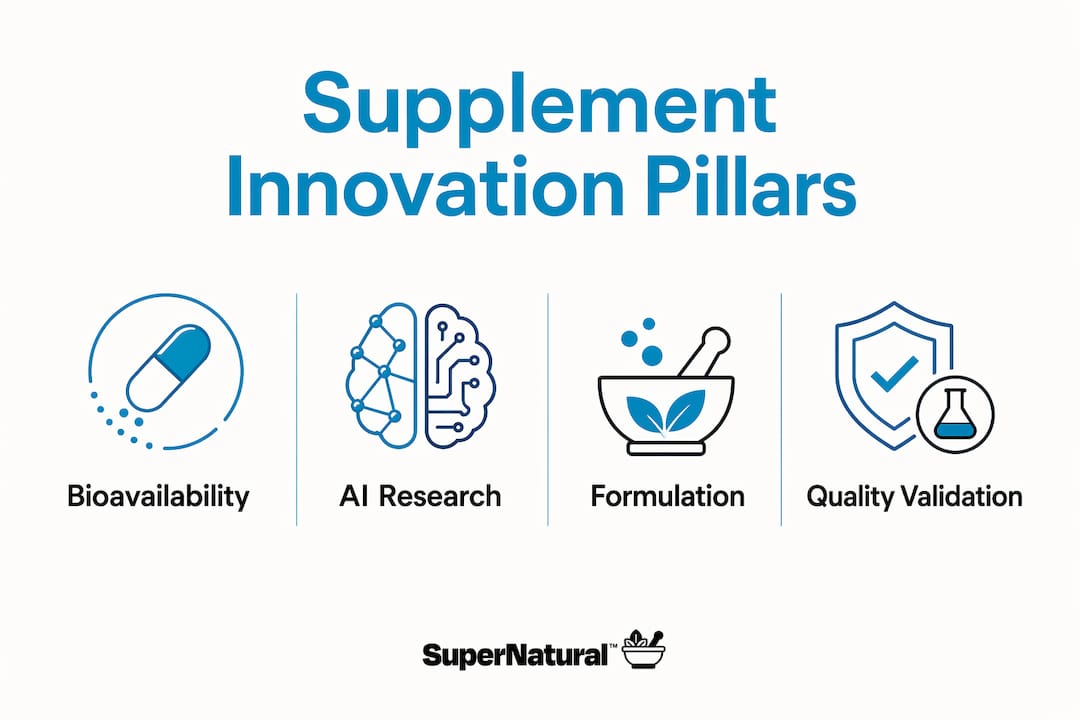
Supplement innovation covers four interconnected pillars: bioavailability enhancement, AI-driven research and development, mechanism-driven formulation, and quality validation. Each pillar addresses a different failure point in traditional supplement design. A product can contain the right ingredient at the right dose and still deliver almost no benefit if the body cannot absorb it. Think of it like wanting a strong cup of coffee instead of just sniffing the beans. The ingredient needs to reach your bloodstream, not just pass through your digestive system.
Bioavailability claims in global supplement launches increased 9% from 2020 to 2025. That figure reflects a real shift in consumer expectations. People are no longer satisfied with vague wellness promises. They want measurable absorption, clinical evidence, and formats they will actually use every day.

How do advanced delivery technologies improve absorption?
Delivery technology is where supplement innovation becomes most tangible. The format a supplement takes, whether a capsule, tablet, powder, or chewable, directly determines how much of the active ingredient reaches your bloodstream. Advanced systems like encapsulation, chelation, and phospholipid complexes each solve a specific absorption problem.
Sirio Europe’s LifeChews, a plant-based chewable jelly tablet format, demonstrated 161% higher blood plasma concentration and 198% better bioavailability compared to standard supplements. That is not a marginal improvement. It means your body is absorbing nearly three times as much of the active ingredient. For fat-soluble nutrients like omega-3s, vitamin D, and curcumin, this kind of delivery engineering is the difference between a supplement that works and one that does not.
Adherence is a non-obvious but critical factor in supplement effectiveness. A product with superior absorption technology delivers zero benefit if you stop taking it after two weeks because it tastes unpleasant or the tablets are too large. Delivery format innovations like jelly tablets and stick packs create enjoyable experiences that improve daily compliance. This is why format design is now considered a core part of the innovation process, not an afterthought.
Here is how the most common delivery formats compare:
| Format | Absorption advantage | Consumer experience | Best for |
|---|---|---|---|
| Standard capsule | Moderate | Familiar, easy to swallow | Water-soluble nutrients |
| Phospholipid complex | High | Standard pill format | Fat-soluble compounds |
| Chewable jelly tablet | Very high (up to 198%) | Enjoyable, no water needed | Lipid-based supplements |
| Chelated mineral | High | Standard pill format | Minerals like magnesium, zinc |
| Stick pack powder | Variable | Convenient, mixable | Personalized blends |
Pro Tip: When evaluating a supplement’s delivery format, look for published bioavailability data, not just marketing language. A product citing a specific percentage improvement backed by a clinical study is a meaningful signal of genuine innovation.
- Encapsulation protects sensitive ingredients from stomach acid before they reach the small intestine
- Chelation binds minerals to amino acids, making them far easier for intestinal cells to absorb
- Phospholipid delivery platforms (like phytosomes) wrap fat-soluble compounds in a structure that mirrors your cell membranes
- Chewable and liquid formats bypass some digestive barriers entirely, accelerating absorption onset
You can learn more about maximizing nutrient absorption and how these technologies apply to specific supplements on the SuperNatural Supplements blog.
How is AI changing supplement research and development?
Artificial intelligence is accelerating supplement R&D in ways that were not practical five years ago. The traditional process of identifying a novel ingredient, reviewing the scientific literature, designing experiments, and navigating regulatory requirements could take years. AI compresses that timeline significantly by processing thousands of research papers, patent filings, and regulatory databases simultaneously.
AI-powered research accelerates supplement discovery by integrating literature mining, experimental design, and cost modeling into a single development process. This means a research team can identify promising ingredient combinations, model their likely interactions, and flag potential regulatory conflicts before a single experiment is run. The practical result is fewer failed projects and faster time to market for genuinely effective products.
Here is how AI is being applied across the supplement development cycle:
- Literature mining: AI scans thousands of peer-reviewed studies to identify ingredients with demonstrated mechanisms of action, surfacing evidence that human researchers might miss or take months to compile.
- Design of experiments: AI models predict which formulation variables (dose, delivery format, excipients) are most likely to produce the desired outcome, reducing the number of physical trials needed.
- Patent landscape analysis: AI-driven patent analysis identifies intellectual property conflicts early, preventing costly legal disputes after a product is already in development.
- Regulatory navigation: AI tools cross-reference ingredient databases against FDA and international regulatory frameworks, flagging substances that require New Dietary Ingredient (NDI) notifications or other compliance steps before development begins.
Pro Tip: If you are researching a supplement brand, check whether they publish their R&D methodology or reference clinical studies. Brands using AI-assisted development combined with human scientific oversight tend to produce more rigorously validated products. For context on how AI supports personalized health decisions, the AI health recommendations resource from Feel Greats Wellness Library offers a useful consumer perspective.
AI does not replace human expertise. The most effective supplement R&D teams use AI as a research accelerator while relying on experienced formulators, toxicologists, and regulatory specialists to interpret findings and make final decisions. The combination is what produces products that are both scientifically sound and commercially viable.
What is mechanism-driven formulation in supplement science?
Mechanism-driven formulation is a design philosophy that starts with a specific biological pathway and works backward to identify the ingredients and delivery systems that address it most directly. This contrasts with the older approach of selecting popular ingredients and combining them based on general wellness associations. The difference matters because a product designed around a mechanism can be tested, validated, and improved in ways that a general wellness blend cannot.
The clearest current example of this approach is Akk ProBio, the first gut-derived Akkermansia muciniphila probiotic to complete FDA NDI notification. This product is backed by 7 clinical studies, 18 patents, and 13 peer-reviewed publications. That level of evidence does not emerge from a general probiotic blend. It comes from years of research focused on a specific bacterial strain’s role in gut barrier function and metabolic health.
Mechanism-driven thinking is also reshaping women’s health supplements. Women-led innovation pipelines are creating evidence-based products targeting unique female health needs, moving beyond repackaged male formulas. This includes supplements designed around hormonal fluctuation, bone density pathways, and cardiovascular risk factors specific to women, each supported by clinical data rather than general nutrient recommendations.
Personalized nutrition is the next evolution of this approach. Rather than a single formula for all users, personalized supplements adapt to individual biomarkers, genetics, and lifestyle factors. This increases both efficacy and compliance, because a product designed for your specific biology is one you are more likely to continue using.
Key characteristics of mechanism-driven supplement innovation include:
- A defined biological target (a specific receptor, enzyme, or cellular pathway)
- Ingredient selection based on demonstrated activity at that target
- Clinical validation measuring outcomes at the mechanism level, not just subjective wellbeing scores
- Delivery system chosen to maximize ingredient concentration at the site of action
How does quality validation build consumer trust?
The era of vague wellness claims is ending. Validated science through biomarker and clinical verification is becoming the industry standard, and consumers are increasingly able to distinguish between brands that meet this bar and those that do not.
The Four Pillars of Validation framework defines what credible supplement evidence looks like. It requires objective, measurable outcomes rather than subjective user questionnaires.
| Pillar | What it requires |
|---|---|
| Physician confirmation | Independent medical review of ingredient safety and dosing |
| Biomarker testing | Pre and post blood or tissue measurements showing physiological change |
| Real-world studies | Data from diverse populations, not just controlled lab conditions |
| Regulatory compliance | NDI notifications, GRAS status, or equivalent documentation |
“The supplement industry is moving from ‘trust us’ to ‘here is the data.’ Brands that cannot produce objective evidence of efficacy will find it increasingly difficult to compete for informed consumers.”
Regulatory complexity is a real constraint on innovation. Legal definitions of dietary substances constrain what can be sold as a supplement. Advanced ingredients produced through precision fermentation often require complex NDI notifications to demonstrate safety and compliance. This is not a barrier to innovation so much as a quality filter. Products that complete the regulatory process are, by definition, better documented and more trustworthy than those that bypass it.
For you as a consumer, the practical implication is straightforward. Ask whether a supplement has published clinical data, whether its key ingredients have regulatory status, and whether the brand can point to biomarker-level evidence of effectiveness. These questions separate genuine supplement innovation from marketing.
Key takeaways
Supplement innovation is most effective when bioavailability, AI-driven R&D, mechanism-based formulation, and rigorous quality validation work together in a single product development process.
| Point | Details |
|---|---|
| Delivery format determines absorption | Advanced formats like chewable jelly tablets can improve bioavailability by up to 198% over standard supplements. |
| AI accelerates and de-risks R&D | AI tools compress development timelines by handling literature mining, patent checks, and regulatory screening simultaneously. |
| Mechanism-driven design produces better products | Formulations built around specific biological pathways are more testable, validatable, and effective than general wellness blends. |
| Quality validation is now a consumer expectation | The Four Pillars framework (physician confirmation, biomarkers, real-world studies, regulatory compliance) defines credible supplement science. |
| Adherence is part of the innovation equation | A supplement with superior absorption technology only works if the format encourages consistent daily use. |
Our perspective on where supplement innovation is heading
We have spent years watching the supplement industry cycle through trends, and the current shift feels genuinely different. The convergence of AI-assisted R&D, mechanism-driven formulation, and rigorous validation is not a marketing wave. It is a structural change in how the best products are built and how consumers evaluate them.
What concerns us is the gap between brands that are genuinely investing in this kind of science and those that are applying the language of innovation to products that have not changed in a decade. Bioavailability is a good example. The word appears on thousands of labels, but the percentage of products that can point to actual plasma concentration data is still small. That gap is where informed consumers can protect themselves.
We also believe AI’s role is frequently overstated in one direction and understated in another. It will not replace the formulator who understands how ingredients interact in a real human body. But it will increasingly separate brands that can move quickly and accurately through the development process from those that cannot. The brands combining AI tools with genuine scientific expertise are the ones producing products worth paying attention to.
Our advice: prioritize products with published bioavailability data, documented regulatory status, and clinical evidence tied to specific biological outcomes. That standard is achievable. SuperNatural Supplements holds it for every product we develop, starting with our BioSoluble Curcumin technology.
— SuperNatural Supplements
Experience supplement innovation with SuperNatural Supplements
SuperNatural Supplements applies every principle discussed in this article to its product line. Our patented BioSoluble® Curcumin™ technology delivers significantly enhanced bioavailability compared to standard curcumin, addressing the absorption problem that makes most curcumin supplements ineffective. This is mechanism-driven formulation backed by delivery science, not a label claim.
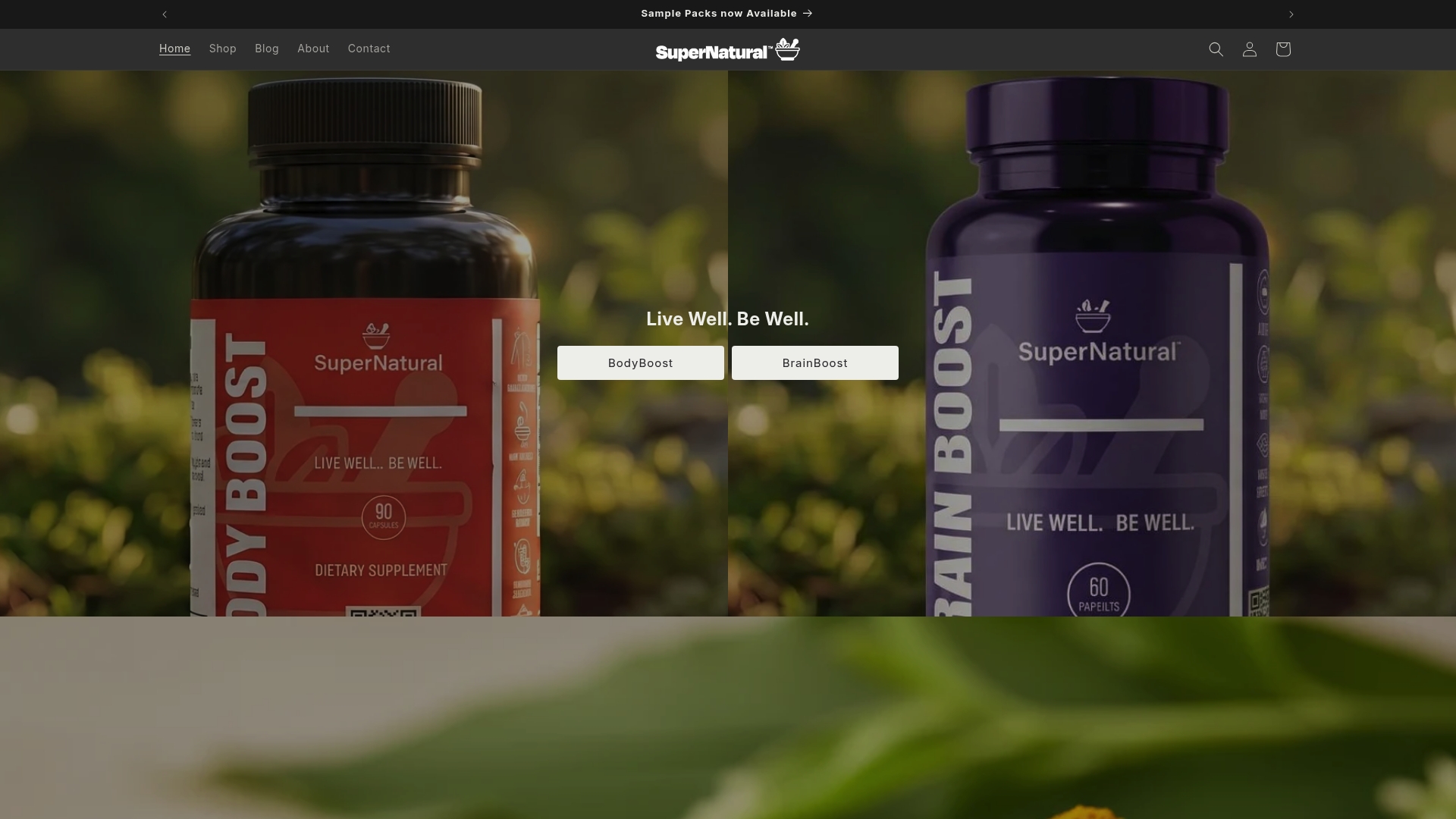
For cognitive health, BrainBoost applies the same advanced formulation philosophy to support focus, memory, and mental clarity. BodyControl and BodyBoost round out the line with targeted support for detoxification, inflammatory response, and immune function. Each product reflects our commitment to advanced supplement technology that delivers real, measurable results. If you are ready to experience what genuine supplement innovation looks like in practice, start with SuperNatural Supplements.
FAQ
What is supplement innovation in simple terms?
Supplement innovation is the use of new science, delivery technologies, and formulation methods to make dietary supplements more effective and better absorbed by the body. It covers everything from AI-driven ingredient discovery to advanced encapsulation systems.
What are some examples of innovative supplements?
Supplement innovation examples include Sirio Europe’s LifeChews (plant-based chewable tablets with 198% better bioavailability), Akk ProBio (the first FDA-notified gut-derived Akkermansia muciniphila probiotic), and SuperNatural Supplements’ BioSoluble® Curcumin™ with patented absorption technology.
What are the main benefits of supplement innovation?
The benefits of supplement innovation include higher nutrient absorption, faster and more targeted delivery to specific biological pathways, stronger clinical evidence of effectiveness, and improved product formats that make daily use easier and more consistent.
How do the latest trends in supplements reflect innovation?
The latest trends in supplements include AI-accelerated R&D, mechanism-driven formulation targeting specific biological pathways, personalized nutrition based on individual biomarkers, and a shift toward validated science using biomarker testing and real-world clinical studies rather than subjective claims.
How can you identify a genuinely innovative supplement?
Look for published bioavailability data with specific percentage improvements, documented regulatory status such as FDA NDI notification, clinical studies measuring biomarker-level outcomes, and transparent disclosure of the delivery technology used in the formulation.
This article is provided for educational and informational purposes only and does not constitute providing medical advice or professional services. Always consult with a qualified and licensed physician or other medical care provider. Statements have not been evaluated by the Food & Drug Administration. This product is not intended to diagnose, treat, cure, or prevent any disease.