

Synergistic nutrition is defined as the practice of combining specific nutrients or foods so they produce greater health benefits together than they would individually. This concept, also called food synergy or nutrient synergy in clinical research, sits at the center of modern dietary science. The core insight is simple but profound: the whole is more powerful than the sum of its parts. When you pair vitamin C with plant-based iron, your body absorbs the iron far more effectively than it would from either food alone. For health-conscious people focused on sharper thinking, sustained energy, and long-term resilience, understanding these interactions is one of the most practical steps you can take.
What is synergistic nutrition and how does it work?
Synergistic nutrition works through a set of biochemical mechanisms that change how your body absorbs, transports, and uses nutrients. The most studied mechanism is bioavailability enhancement. Bioavailability simply means how much of a nutrient actually reaches your cells after you eat it. Certain nutrient combinations raise that number significantly, while others can lower it.
The food matrix plays a central role here. The food matrix refers to the physical and chemical structure of whole foods, including fiber, water content, cell walls, and thousands of phytonutrients. This structure modulates nutrient absorption and controls how quickly nutrients enter your bloodstream. A slow, steady release from a whole food keeps blood levels stable. A rapid spike from an isolated supplement often leads to excretion before your cells can use what was delivered.
Here is what this looks like at the cellular level:
- Bioavailability amplification: Vitamin C converts non-heme iron (the kind found in plants) from its less absorbable ferric form into the more absorbable ferrous form. This single pairing can meaningfully reduce anemia risk and raise energy levels.
- Fat-soluble vitamin activation: Vitamins A, D, E, and K require dietary fat to be absorbed at all. Eating a salad with fat-free dressing wastes most of the fat-soluble nutrients in the greens.
- Antioxidant network effects: Polyphenols show higher bioavailability and stronger antioxidant activity when consumed alongside vitamin C or healthy fats, creating a protective network rather than isolated defense.
- Microbiome support: Fiber slows digestion, stabilizes blood sugar, and delivers fermentable compounds to the lower gut, where they feed beneficial bacteria. No isolated supplement replicates this cascade.
Pro Tip: Pair your iron-rich lentils or spinach with a squeeze of lemon juice or a side of bell pepper. The vitamin C content converts the iron into a form your body can actually use, making the meal significantly more effective for energy support.
Contrast this with isolated supplements. A single-nutrient pill delivers a concentrated dose, but without the food matrix, your body often treats it as a bolus, absorbing what it can quickly and excreting the rest. The food matrix enables sustained release that isolated supplements simply cannot replicate. This is not a flaw in supplement manufacturing. It is a fundamental property of how digestion works.
What are the best synergistic nutrition examples?
Practical food pairings make this concept real. The following combinations are among the most well-researched and easiest to apply daily.

| Food Pairing | Synergistic Benefit | Why It Works |
|---|---|---|
| Spinach + lemon juice | Improved iron absorption | Vitamin C converts non-heme iron to absorbable form |
| Tomatoes + olive oil | Higher lycopene uptake | Fat carries fat-soluble lycopene into the bloodstream |
| Turmeric + black pepper + fat | Dramatically increased curcumin absorption | Piperine and fat together unlock curcumin bioavailability |
| Yogurt + oats or banana | Stronger microbiome support | Probiotics thrive when fed prebiotic fiber |
| Berries + walnuts | Enhanced antioxidant protection | Polyphenols and healthy fats amplify each other’s effects |
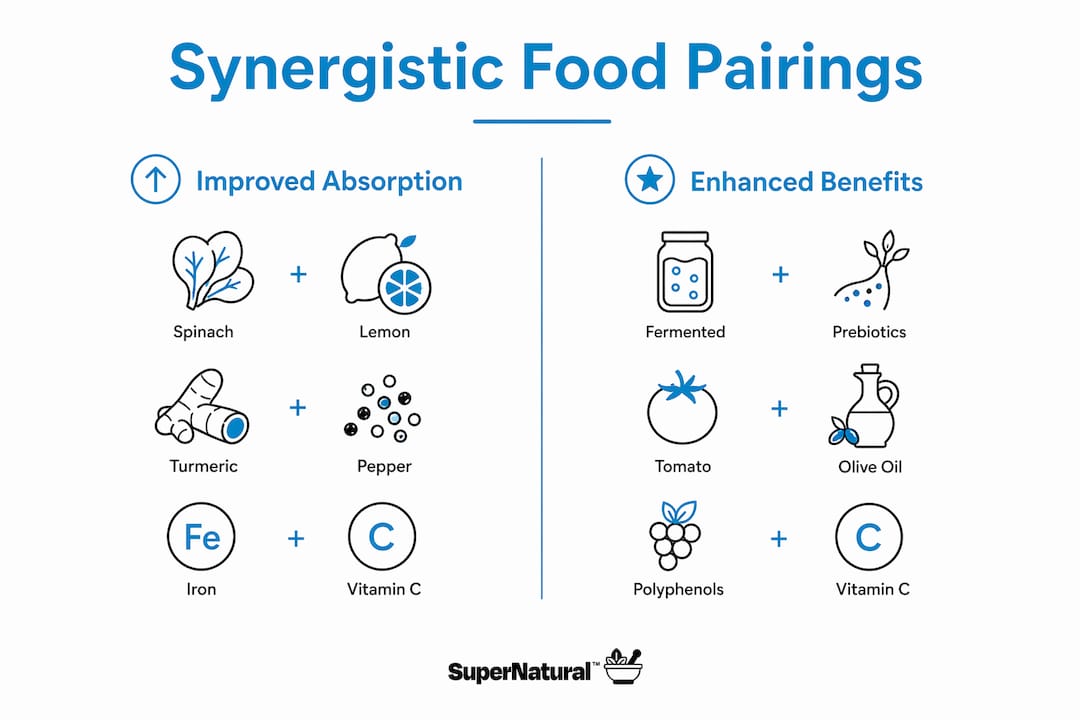
The turmeric example deserves special attention. Piperine, found in black pepper, can increase curcumin’s bioavailability by up to 2,000%. That number is not a typo. Curcumin is a fat-soluble compound, so it also needs dietary fat present for the body to absorb it properly. This is a three-factor synergy: curcumin, piperine, and fat must all be present together. Remove any one element and absorption drops sharply. For a deeper look at how this works at the molecular level, the science of curcumin absorption explains the full picture.
Fermented foods combined with fiber-rich prebiotics promote a resilient, balanced microbiome that supports long-term metabolic health. Think of it this way: probiotics are the seeds, and prebiotic fiber is the soil. You can plant seeds in concrete, but they will not grow. The same logic applies to gut bacteria without fiber to feed them.
Pro Tip: Add a drizzle of extra-virgin olive oil to your tomato-based dishes. Tomatoes consumed with healthy fats like olive oil or avocado show significantly higher lycopene absorption, which supports both cardiovascular and immune health.
Cognitive function also benefits directly from these pairings. Polyphenols paired with vitamin C reduce oxidative stress in brain tissue and improve nutrient delivery to neurons. Blueberries with a handful of almonds, or green tea alongside a citrus fruit, are simple daily habits that support focus and mental clarity over time. For more on nutrition strategies for cognition, the connection between diet and attention is well-documented.
Why whole food synergy outperforms isolated supplements
Whole foods carry what researchers call the “entourage effect.” This term describes how fiber, phytonutrients, antioxidants, and micronutrients work together inside a single food to produce effects that no isolated compound can match. A banana, for example, delivers potassium, fiber, vitamin B6, and antioxidants simultaneously. A potassium supplement delivers only potassium.
Dietary patterns built on complex macronutrient mixtures, such as the Mediterranean diet, promote cellular regeneration, balanced hormones, and reduced risk of chronic disease. This is not coincidence. These patterns are built on foods that naturally contain synergistic combinations. The research supports whole food dietary patterns over isolated supplements for managing chronic conditions effectively.
“Whole food synergy maximizes bioavailability because the food matrix modulates digestion and nutrient release in ways that isolated supplements cannot replicate. Supplements miss the entourage effect provided by fiber and phytonutrients working together.”
Isolated supplements also suffer from what nutritionists call the bolus effect. When you swallow a high-dose vitamin C tablet, your blood levels spike rapidly and then drop as your kidneys excrete the excess. Whole foods containing vitamin C release it gradually alongside fiber and other compounds, keeping blood levels stable for longer. This matters for supporting immune health naturally, where consistent nutrient availability beats short-term spikes every time.
A key misconception is using supplements to patch a poor diet. Synergistic nutrition redirects focus to whole foods and their dynamic nutrient interactions, rather than isolated compounds trying to compensate for dietary gaps. Supplements have a role, but they work best when they are designed with synergistic principles built in, not as a replacement for food-based nutrition. Strategies for managing joint health and chronic conditions similarly emphasize dietary patterns over single-ingredient fixes.
How to apply synergistic nutrition principles for focus and well-being
Putting these principles into practice does not require a complete lifestyle overhaul. Small, deliberate changes to how you build meals produce real results over time. Here is a practical framework:
-
Build meals around complementary nutrient pairs. Start with a protein or fiber base, then add a fat source and a vitamin-rich vegetable. This structure naturally creates synergistic conditions without requiring you to memorize every pairing.
-
Add fat to every meal containing fat-soluble vitamins. Vitamins A, D, E, and K are absorbed only in the presence of fat. A handful of nuts, a drizzle of olive oil, or half an avocado transforms a nutrient-light salad into a genuinely nourishing meal.
-
Pair plant-based iron sources with vitamin C at every meal. If you eat lentils, beans, tofu, or leafy greens, add citrus, bell pepper, or tomato to the same meal. This single habit addresses one of the most common nutritional gaps in plant-forward diets.
-
Include fermented foods alongside fiber-rich foods daily. Yogurt with oats, kimchi with brown rice, or kefir with a piece of fruit all create the probiotic-prebiotic pairing that supports a healthy gut microbiome. The microbiome influences mood, immunity, and cognitive clarity.
-
Prioritize ingredient quality over quantity. Effective nutrient synergy requires bioactive compounds that are intact and potent. Overcooked vegetables, highly processed foods, and low-quality supplements all reduce the synergistic potential of your diet. Fresh, minimally processed ingredients give you the most active compounds to work with.
-
Avoid oversimplifying pairings. Curcumin absorption, for example, requires fat, piperine, and the curcumin compound itself. Focusing on only one factor misses the full picture. Think in systems, not single ingredients. For a broader view of how supplement synergy extends these principles, the relationship between food and targeted supplementation is worth understanding.
The cognitive benefits of these habits compound over time. Reduced oxidative stress, stable blood sugar, and a well-fed microbiome all contribute to sharper focus, better mood regulation, and more consistent energy throughout the day.
Key Takeaways
Synergistic nutrition produces measurably greater health benefits than isolated nutrients because the food matrix, phytonutrients, and complementary compounds work together in ways no single supplement can replicate.
| Point | Details |
|---|---|
| Definition of food synergy | Nutrients combined produce greater benefits than consumed individually, a core principle of modern dietary science. |
| Bioavailability is the key mechanism | Pairings like vitamin C with iron or fat with fat-soluble vitamins directly increase how much your body absorbs and uses. |
| Curcumin requires three factors | Piperine, healthy fat, and curcumin must all be present together for absorption to reach its potential. |
| Whole foods outperform isolated supplements | The food matrix provides sustained nutrient release and the entourage effect that single-compound supplements cannot match. |
| Practical application is straightforward | Building meals around complementary pairs and prioritizing ingredient quality delivers synergistic benefits without complexity. |
What we have learned from years of working with synergistic nutrition
The most common mistake we see is treating nutrition as a checklist. People count milligrams of vitamin D or grams of protein, then wonder why they still feel sluggish or foggy. The checklist approach ignores the relationships between nutrients, and those relationships are where the real results live.
We have watched health-conscious people make dramatic improvements in focus and energy not by adding more supplements, but by changing how they combined the foods they were already eating. Spinach with lemon instead of spinach alone. Turmeric in a dish with olive oil instead of a dry capsule taken with water. These are not dramatic changes. They are precise ones.
The shift from “what should I take” to “how should I combine what I eat” is the most underrated move in modern nutrition. It does not require a bigger supplement budget. It requires a better understanding of how nutrients interact. That understanding is what synergistic nutrition gives you. Start with one pairing this week. Build from there. The results are cumulative, and they are real.
— SuperNatural
SuperNatural Supplements and the science of synergistic absorption
SuperNatural Supplements was built on the same principles this article covers: that nutrients work best when they are designed to work together.
The flagship BioSoluble® Curcumin™ uses a patented process that addresses the exact absorption challenge described above, delivering curcumin in a form the body can actually use rather than simply pass through. For those focused on cognitive health, BrainBoost is formulated specifically for advanced cognitive support, drawing on synergistic nutrient principles to support focus and mental clarity. If immune function is your priority, BodyBoost applies the same approach to immunity. Each product reflects a commitment to bioavailability, not just ingredient lists.
FAQ
What is synergistic nutrition in simple terms?
Synergistic nutrition means combining specific foods or nutrients so they produce greater health benefits together than they would separately. The classic example is pairing vitamin C with plant-based iron to significantly improve iron absorption.
How does synergistic nutrition support focus and cognition?
Polyphenols paired with vitamin C or healthy fats show higher bioavailability and reduce oxidative stress in brain tissue, supporting clearer thinking and more consistent mental energy over time.
Why do whole foods outperform isolated supplements for nutrient synergy?
Whole foods contain a food matrix of fiber, phytonutrients, and micronutrients that modulates digestion and enables sustained nutrient release. Isolated supplements deliver a rapid dose that the body often excretes before cells can fully use it.
What is the best example of synergistic nutrition for curcumin?
Curcumin requires both black pepper’s piperine and dietary fat to be absorbed effectively. Piperine alone can increase curcumin bioavailability by up to 2,000%, but fat must also be present for this fat-soluble compound to enter the bloodstream.
Can synergistic nutrition principles apply to supplements as well as food?
Yes. Supplements designed with synergistic principles, such as combining curcumin with absorption-enhancing compounds, can mirror food-based synergy. The key is that the supplement must account for bioavailability factors, not just ingredient quantity.
This article is provided for educational and informational purposes only and does not constitute providing medical advice or professional services. Always consult with a qualified and licensed physician or other medical care provider. Statements have not been evaluated by the Food & Drug Administration. This product is not intended to diagnose, treat, cure, or prevent any disease.