

A natural detox workflow is the purposeful, daily support of your body’s built-in systems to remove metabolic waste and environmental toxins efficiently. Your liver, kidneys, gut, skin, lungs, and lymphatic system run this process continuously. The goal is not to force a cleanse but to remove obstacles and give each system what it needs to work well. Short-term detox kits rarely deliver lasting results. Sustainable habits do.
What organs and systems drive the natural detox process?
Your liver is the central hub of detoxification. It works in two enzymatic stages: Phase I and Phase II liver detox pathways. Phase I breaks down toxins into reactive intermediates. Phase II then conjugates those intermediates into water-soluble compounds the body can excrete. When Phase II lags behind Phase I, those reactive intermediates accumulate and cause cellular damage. Specific nutrient cofactors, including B vitamins, magnesium, and sulfur-containing amino acids, keep both phases balanced.
Your kidneys filter roughly 200 liters of blood daily, excreting waste through urine. Hydration supports kidney filtration, bile flow, and lymphatic drainage, making water intake one of the most direct levers you control. The gut eliminates solid waste and prevents toxin reabsorption when bowel movements are regular. The skin excretes waste through sweat. The lungs expel volatile compounds with every exhale.

The brain has its own dedicated waste clearance system called the glymphatic network. During sleep, the brain expands internal space by 60%, flushing metabolic waste, including proteins linked to Alzheimer’s disease, at twice the waking rate. That single fact reframes sleep from a passive rest state into an active detox event. Skipping sleep does not just make you tired. It leaves neurological waste behind.
Here is a quick reference for each system’s primary role:
| System | Primary detox function | Key support strategy |
|---|---|---|
| Liver | Phase I and II enzymatic breakdown | Nutrient cofactors, cruciferous vegetables |
| Kidneys | Blood filtration and urinary excretion | Adequate hydration (8+ glasses daily) |
| Gut | Solid waste elimination, toxin barrier | Fiber, regular bowel movements |
| Lymphatic system | Immune waste transport | Movement, dry brushing |
| Brain (glymphatic) | Neurological waste clearance | 7–9 hours of quality sleep |
| Skin | Sweat-based excretion | Exercise, sauna, hydration |
Supporting all six systems simultaneously is what separates a real cleansing method from a marketing gimmick.
What lifestyle habits support an effective detox routine?
Sustainable detox is built on four daily practices: hydration, sleep, movement, and diet quality. Each one directly feeds one or more of the organ systems described above.
-
Hydrate consistently. Drink at least 8 glasses of water daily. Electrolytes, particularly sodium, potassium, and magnesium, maintain fluid balance and support kidney filtration. Plain water works. Adding a pinch of mineral-rich sea salt or eating potassium-rich foods like avocado and banana keeps electrolytes in range without expensive supplements.
-
Protect your sleep. The glymphatic system only fully activates during deep sleep. Aim for 7–9 hours nightly. Sleeping on your side appears to enhance glymphatic flow compared to sleeping on your back, based on current neurological research. Consistent sleep and wake times matter more than total hours alone.
-
Move your body regularly. At least 150 minutes per week of moderate-intensity exercise improves circulation, reduces inflammation, and enhances systemic waste removal. That works out to 30 minutes five days a week. Walking, cycling, and swimming all qualify. The lymphatic system has no pump of its own. Muscle contractions during movement are what push lymph fluid through the body.
-
Clean up your diet. Reducing processed foods, sugar, and alcohol lowers the toxic burden on your liver and gut. Cruciferous vegetables (broccoli, cauliflower, Brussels sprouts), alliums (garlic, onion), and high-fiber foods actively support liver enzyme activity and gut transit.
Pro Tip: Intermittent fasting triggers autophagy, a cellular recycling process linked to metabolic repair and toxin clearance. A simple 12-hour overnight fast, say 7:00 PM to 7:00 AM, is enough to initiate this process without disrupting daily life.
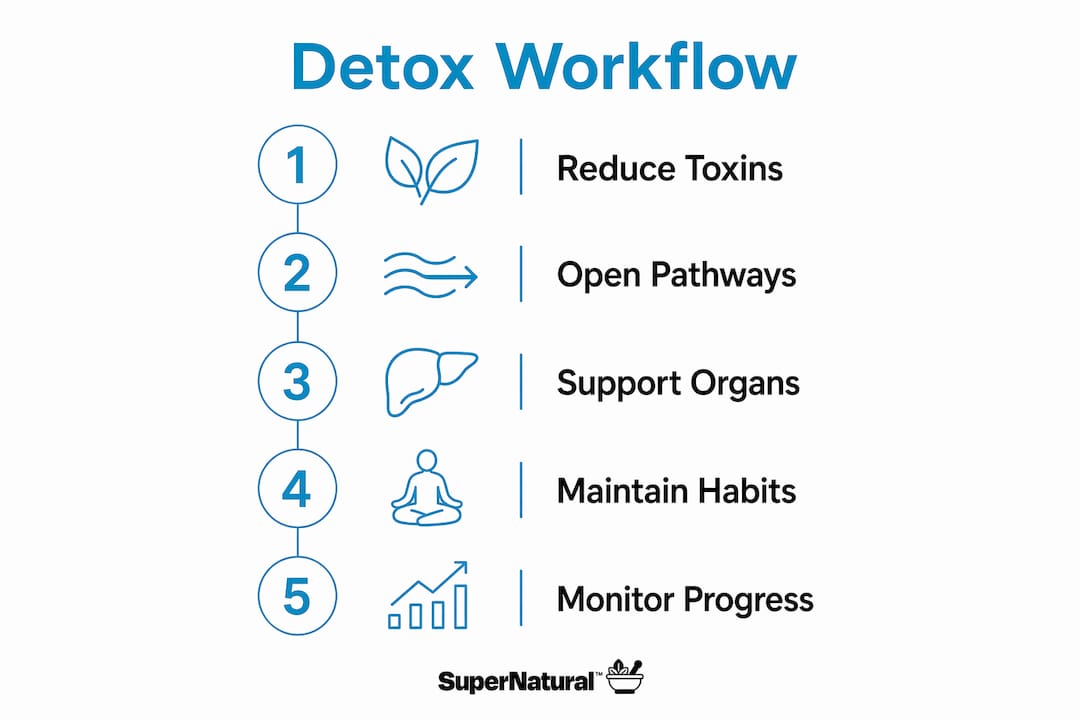
How to design a natural detox workflow step by step
A structured detox protocol spans 4–6 weeks and moves through foundational to advanced practices in a specific order. Rushing to the advanced steps without completing the foundational ones is the most common mistake people make.
Weeks 1–2: Reduce toxic input and open elimination pathways
- Remove alcohol, processed foods, refined sugar, and synthetic personal care products where possible.
- Establish bowel regularity. Aim for 1–3 bowel movements daily. Add fiber (psyllium husk, ground flaxseed, or vegetables) and increase water intake if needed.
- Set a consistent sleep schedule. This alone improves glymphatic clearance within days.
- Begin daily movement. Even 20-minute walks count.
Weeks 3–4: Support liver detox phases nutritionally
- Add cruciferous vegetables to at least two meals daily. Broccoli sprouts are especially rich in sulforaphane, a compound that activates Phase II enzymes.
- Increase protein intake slightly. Glycine and other amino acids are required cofactors for Phase II conjugation.
- Consider targeted supplements (see the next section for evidence-based options).
- Begin dry brushing before showers to stimulate lymphatic flow. Use a natural bristle brush and stroke toward the heart.
Weeks 5–6: Integrate advanced practices and monitor response
- Add diaphragmatic breathing exercises. Deep breathing moves lymph and supports lung-based excretion.
- Experiment with a 12–16 hour intermittent fasting window if tolerated.
- Track energy, digestion, skin clarity, and sleep quality. These are your real-time indicators of progress.
- Adjust based on response. Fatigue or headaches signal that elimination pathways need more support, not that you should push harder.
Pro Tip: Think of your detox workflow like a drainage system. You clear the pipes before turning up the water pressure. Open the colon, kidneys, and liver before attempting any cellular detox protocol.
What are the most common detox mistakes to avoid?
The single biggest mistake in any detox routine is mobilizing stored toxins before the elimination pathways are clear. This is the core principle behind the Drainage Funnel concept: you must open the colon first, then the kidneys and liver, before attempting cellular or tissue-level detox. Skipping this sequence causes toxins to recirculate rather than exit the body.
“Most commercial detox kits focus on aggressive top-down toxin mobilization without opening elimination pathways first, which can cause adverse reactions rather than benefits. True detox progress is gentle and requires balancing mobilization with open pathways.”
Common warning signs that your detox workflow needs adjustment:
- Persistent fatigue or brain fog. This often means the liver is processing faster than the gut can eliminate.
- Headaches in the first week. Usually a sign of dehydration or insufficient fiber to bind and excrete mobilized toxins.
- Skin breakouts or rashes. The skin compensates when the liver and gut are overloaded. Increase water, fiber, and rest.
- Nausea or digestive upset. A signal to slow down, reduce supplement doses, and prioritize bowel regularity.
Regular bowel movements, ideally 1–3 per day, are the clearest sign your elimination pathway is open. If you are not hitting that frequency, address it with fiber and hydration before adding any detox supplements or protocols.
What role do supplements and foods play in natural cleansing?
Food is the foundation. No supplement replaces a diet built around whole, fiber-rich, plant-dense meals. That said, specific compounds do have strong clinical evidence for supporting liver detox phases and overall cleansing.
Foods with the strongest evidence:
- Cruciferous vegetables (broccoli, kale, arugula): activate Phase II enzymes via sulforaphane and indole-3-carbinol.
- Alliums (garlic, onion, leeks): provide sulfur compounds that support glutathione production, the liver’s primary antioxidant.
- Beets: support bile flow and liver phase activity.
- Fiber-rich foods (legumes, oats, ground flaxseed): bind toxins in the gut and accelerate elimination.
- Antioxidant-rich berries: reduce oxidative stress generated during Phase I liver activity.
Supplements with clinical backing:
Milk thistle (silymarin), NAC, glycine, and sulforaphane each support liver antioxidation and Phase II enzyme activity. Alpha-lipoic acid adds broad antioxidant coverage and helps regenerate glutathione. These are not magic bullets. They work best when layered on top of the lifestyle practices described earlier.
Pro Tip: Always introduce new supplements one at a time, spaced a week apart. This lets you identify which one is helping, and which one might be causing a reaction.
The science on detox supplementation is clear on one point: supplements support the process. They do not replace sleep, hydration, movement, or dietary quality. Overusing detox products without clinical guidance can overload Phase I without adequately supporting Phase II, producing the exact reactive intermediates you are trying to clear.
Key Takeaways
A natural detox workflow works because it supports the body’s continuous, built-in elimination systems through consistent daily habits rather than short-term interventions.
| Point | Details |
|---|---|
| Open elimination pathways first | Clear the colon and kidneys before attempting any cellular or tissue-level detox protocol. |
| Sleep is active detox | The brain clears neurological waste at twice the waking rate during 7–9 hours of quality sleep. |
| Diet outperforms supplements | Cruciferous vegetables, alliums, and fiber support liver enzymes more reliably than any single supplement. |
| Exercise moves lymph | At least 150 minutes of moderate weekly movement is required to drive lymphatic waste clearance. |
| Watch your symptoms | Fatigue, headaches, and skin issues signal blocked elimination, not detox progress. |
What we have learned from years of watching people detox
The most consistent pattern we see is this: people who struggle with detox are almost always trying to run before they can walk. They buy an aggressive cleanse kit, skip the foundational steps, and then feel terrible by day three. They call it a “detox reaction” and push through. What they are actually experiencing is toxin recirculation from a clogged drainage system.
Real progress looks boring from the outside. It is drinking enough water, eating broccoli, going to bed on time, and walking 30 minutes a day. Week two feels the same as week one. By week four, sleep is deeper, digestion is smoother, and energy is steadier. That is what evidence-based natural detox actually looks like.
We also see people underestimate the brain. The glymphatic system is one of the most compelling arguments for prioritizing sleep we have ever encountered. Cutting sleep to make time for a morning detox ritual is counterproductive. The ritual cannot compensate for what you lose by skipping the brain’s primary waste clearance window.
The other thing worth saying plainly: detox is not a phase you complete. Your liver runs Phase I and Phase II every single day. Your kidneys filter blood around the clock. Supporting those systems is a permanent commitment, not a six-week project. The people who see lasting results are the ones who build these habits into their normal life and stop looking for a shortcut.
— SuperNatural
How SuperNatural Supplements fits into your detox routine
Lifestyle habits carry the load in any detox plan. Targeted supplementation can add meaningful support when the foundation is already in place.
SuperNatural Supplements uses a patented BioSoluble® Curcumin™ process that delivers significantly higher bioavailability than standard curcumin. Curcumin supports a healthy inflammatory response and antioxidant defense, both of which are directly relevant to managing the oxidative stress generated during liver Phase I activity. BodyControl is formulated specifically to promote detoxification and a healthy inflammatory response, making it a natural fit alongside the dietary and lifestyle practices covered in this guide. If you are building a serious detox routine, these are the kinds of science-backed tools worth considering alongside your food and sleep habits.
FAQ
What is a natural detox workflow?
A natural detox workflow is a structured set of daily habits that support the liver, kidneys, gut, lymphatic system, and brain in removing metabolic waste and environmental toxins. It prioritizes opening elimination pathways before attempting any cellular-level cleansing.
How long does a natural detox protocol take?
A structured detox protocol typically spans 4–6 weeks, moving from reducing toxic input and establishing elimination pathways in the first two weeks to nutritional liver support and advanced practices in the final weeks.
Why does sleep matter for detoxification?
During sleep, the brain’s glymphatic system expands internal space by 60% and clears metabolic waste, including Alzheimer’s-related proteins, at twice the waking rate. Seven to nine hours of quality sleep nightly is a non-negotiable part of any complete detox routine.
What foods best support liver detox phases?
Cruciferous vegetables like broccoli and kale activate Phase II liver enzymes via sulforaphane. Alliums such as garlic and onion supply sulfur compounds that boost glutathione, the liver’s primary antioxidant. Fiber-rich foods bind toxins in the gut and speed elimination.
What are the signs of a poorly designed detox routine?
Persistent fatigue, headaches, skin breakouts, and nausea in the first week typically indicate that elimination pathways are blocked and toxins are recirculating. The fix is more hydration, more fiber, and more rest, not a more aggressive protocol.
This article is provided for educational and informational purposes only and does not constitute providing medical advice or professional services. Always consult with a qualified and licensed physician or other medical care provider. Statements have not been evaluated by the Food & Drug Administration. This product is not intended to diagnose, treat, cure, or prevent any disease.